




Digbeth, once a gritty post-industrial neighbourhood in Birmingham, is rapidly transforming into one of the UK’s leading creative hubs, drawing global investors, developers, and entertainment industry heavyweights. On 21 October, West Midlands Mayor Richard Parker unveiled the next phase of this ambitious regeneration, highlighting the area’s potential to rival other creative centres like Manchester’s Media City.
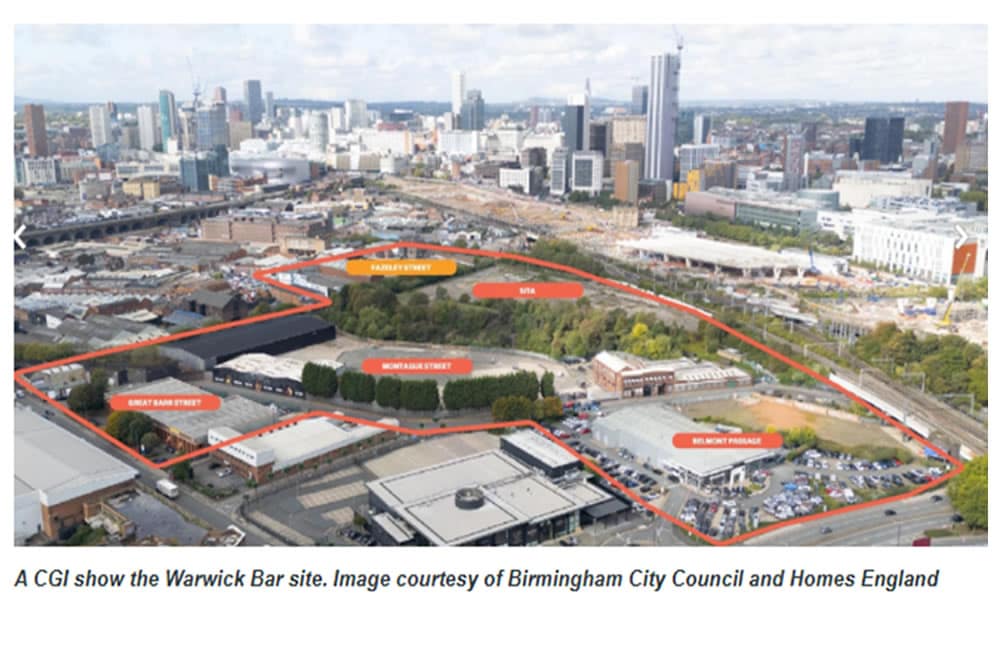
Speaking at Steven Knight’s new Digbeth Loc. Studios alongside Lisa Nandy, Secretary of State for Culture, Media and Sport, Mayor Parker announced two flagship initiatives: the Warwick Bar Prospectus and Production Central WM. The Warwick Bar Prospectus sets out a vision for redeveloping sites covering an area equivalent to 22 football pitches, with plans to deliver at least 1,700 new homes and more than 110,000 sq. ft of creative workspace. Production Central WM, a new film production office, aims to connect producers with locations, local crew, and suppliers, helping to attract both large and small screen projects to the region.
“Digbeth will be bigger, better, and bolder than Manchester’s Media City,” Mayor Parker said. “Its central location and abundance of investment opportunities make it unique. A place known for its grit and graft, it is at the cusp of its renaissance as a top location for the creative industries. The BBC and Steven Knight are just some of the partners investing heavily in Digbeth’s future because they know this place, at the heart of the country, has the backing of industry and government, and a wealth of local talent to work with. Together, we’ll write a new chapter in Digbeth’s history that puts our region centre stage for the creative industries.”
Culture Secretary Lisa Nandy highlighted the economic and cultural potential of Digbeth. “As an MP in Greater Manchester, I have witnessed the transformational impact Media City has had on my region. That is why I am so excited about these plans for Digbeth. Birmingham and the West Midlands are full of untapped creative potential, and this development will enable more creatives from the region to tell their own stories, create world-class content, and drive economic growth.”
Steven Knight, creator of Peaky Blinders, emphasized the versatility of the West Midlands as a filming location. “The West Midlands is old, new, green field, brown field, urban, rural, posh, poor, 16th century to 21st century…most of which has never been shot. And it costs less than most other places. If you want to shoot here, we now have a brand-new, super-fit-for-purpose film production office which matches the region’s ambitions. It’s called Production Central WM, and whatever location you want, we can find it within an hour’s drive of New Street Station. Try us.”
Digbeth’s rise has been accelerated by infrastructure projects such as the nearby HS2 Curzon Street Station, the forthcoming Metro tram route, and the thriving creative cluster at the Custard Factory. Knight’s Digbeth Loc. Studios will produce the next two series of Peaky Blinders and were also used by Netflix for a movie adaptation. Meanwhile, the BBC is converting the former Tea Factory into its new broadcasting centre, with network television production spend expected to almost double from £24 million to £40 million annually by 2027, generating an estimated £282 million economic benefit for the region by 2031.
Local creative hubs such as the Banana Warehouse, Grand Union at Junction Works, and The Bond support the burgeoning sector, hosting popular productions including MasterChef, Silent Witness, and Garden Rescue. The £25 million Creative Places Growth Fund, provided by the Department for Culture, Media and Sport, further underpins the region’s creative development, offering finance, mentoring, and networking opportunities for businesses, freelancers, and young talent.
Pat Ritchie CBE, Chair of Homes England, said: “Warwick Bar sits in a unique position, leveraging HS2 connectivity, proximity to a growing city centre, Digbeth’s creativity and heritage, and the skills in the Birmingham Knowledge Quarter. The Warwick Bar Prospectus presents an exciting opportunity for delivery partners to be part of one of the most important development opportunities in Birmingham, driving Digbeth’s ongoing transformation.”
Cllr John Cotton, Leader of Birmingham City Council, added: “Digbeth’s continued emergence as a buzzing creative quarter and centre for TV and film production is key to Birmingham’s growing reputation as a city of unmatched potential and economic growth. The Warwick Bar Prospectus and Production Central WM build upon significant council investment, providing high-quality jobs, homes, and opportunities for our city.”
The recent announcements, made during the Regional Investment Summit co-hosted by Chancellor Rachel Reeves, Mayor Parker, and Secretary of State for Business and Trade Peter Kyle, showcased the West Midlands as a premier destination for creative industry investment. With world-class infrastructure, government support, and a vibrant creative talent pool, Digbeth is positioned to cement its status as the UK’s leading creative quarter, fueling economic growth and cultural innovation for years to come.

