




The project includes a deep-sea transshipment port, an international airport, power infrastructure, and a planned township intended to support economic activity and logistics operations in the Andaman and Nicobar archipelago. Indian officials argue that the initiative will strengthen the country’s ability to compete with major regional shipping hubs such as Singapore and Colombo while boosting naval and commercial presence in the eastern Indian Ocean.
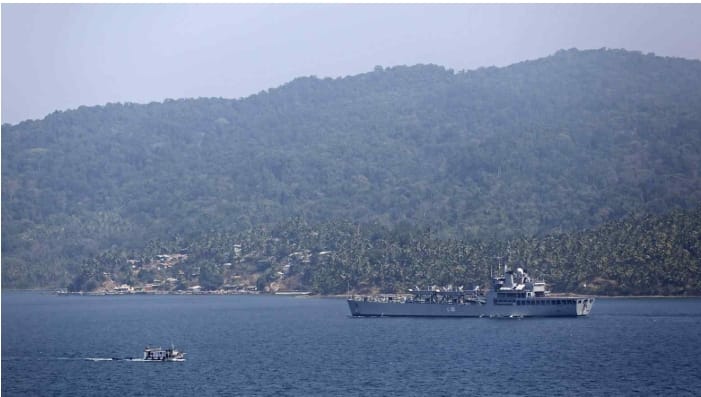
Strategically, Great Nicobar occupies a highly sensitive location close to the Malacca Strait, through which a substantial share of global trade and energy shipments pass each year. Policymakers in New Delhi increasingly view the island chain as critical to India’s wider Indo-Pacific strategy amid intensifying geopolitical competition in Asia and growing Chinese maritime influence across the region.
Supporters of the project say the development could transform India into a stronger player in global shipping and supply chains. They argue that a domestic transshipment hub would reduce India’s dependence on foreign ports, improve trade efficiency, and create jobs and investment opportunities in a region that has historically remained underdeveloped.
However, the ambitious plan has also triggered significant environmental concerns from scientists, conservationists, and indigenous rights groups. Great Nicobar Island is home to dense tropical forests, rare wildlife species, and ecologically sensitive coastal ecosystems. Critics warn that large-scale construction could threaten biodiversity, damage coral reefs, and disrupt fragile habitats already vulnerable to climate change and rising sea levels.
Concerns have also been raised about the potential impact on indigenous communities, particularly the Shompen tribe, whose traditional way of life could be affected by rapid urbanization and increased human activity on the island.
Despite the criticism, Indian authorities appear determined to move forward, arguing that environmental safeguards and sustainable planning measures will be integrated into the project. The government maintains that balancing economic growth, national security, and environmental protection remains central to its approach.
As competition for influence in the Indo-Pacific intensifies, Great Nicobar is emerging not only as an infrastructure project but as a symbol of India’s growing geopolitical and maritime ambitions.
India is accelerating plans for a massive infrastructure and transshipment project on Great Nicobar Island, a strategic territory located near the Malacca Strait, one of the world’s busiest maritime trade corridors. Valued at more than $10 billion, the development is being promoted by New Delhi as a key pillar of its Indo-Pacific ambitions and a long-term investment in maritime security, trade connectivity, and regional influence.
The project includes a deep-sea transshipment port, an international airport, power infrastructure, and a planned township intended to support economic activity and logistics operations in the Andaman and Nicobar archipelago. Indian officials argue that the initiative will strengthen the country’s ability to compete with major regional shipping hubs such as Singapore and Colombo while boosting naval and commercial presence in the eastern Indian Ocean.
Strategically, Great Nicobar occupies a highly sensitive location close to the Malacca Strait, through which a substantial share of global trade and energy shipments pass each year. Policymakers in New Delhi increasingly view the island chain as critical to India’s wider Indo-Pacific strategy amid intensifying geopolitical competition in Asia and growing Chinese maritime influence across the region.
Supporters of the project say the development could transform India into a stronger player in global shipping and supply chains. They argue that a domestic transshipment hub would reduce India’s dependence on foreign ports, improve trade efficiency, and create jobs and investment opportunities in a region that has historically remained underdeveloped.
However, the ambitious plan has also triggered significant environmental concerns from scientists, conservationists, and indigenous rights groups. Great Nicobar Island is home to dense tropical forests, rare wildlife species, and ecologically sensitive coastal ecosystems. Critics warn that large-scale construction could threaten biodiversity, damage coral reefs, and disrupt fragile habitats already vulnerable to climate change and rising sea levels.
Concerns have also been raised about the potential impact on indigenous communities, particularly the Shompen tribe, whose traditional way of life could be affected by rapid urbanization and increased human activity on the island.
Despite the criticism, Indian authorities appear determined to move forward, arguing that environmental safeguards and sustainable planning measures will be integrated into the project. The government maintains that balancing economic growth, national security, and environmental protection remains central to its approach.
As competition for influence in the Indo-Pacific intensifies, Great Nicobar is emerging not only as an infrastructure project but as a symbol of India’s growing geopolitical and maritime ambitions.

