



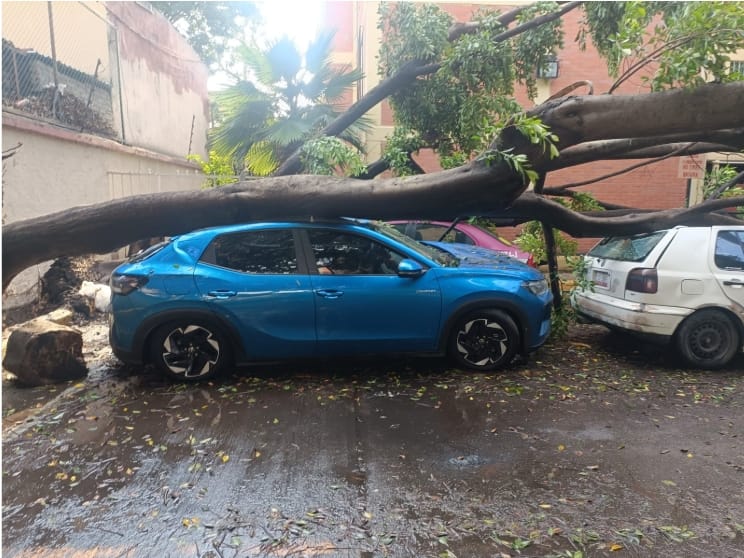
Mexico City — A sudden and violent storm swept through Mexico City shortly after a football match between Mexico and South Africa, unleashing heavy rainfall and powerful winds that caused significant disruption across multiple districts, including Miguel Hidalgo.
What began as an ordinary evening quickly turned into a scene of chaos as dark skies gave way to torrential rain and strong gusts that battered the city. Residents across several neighbourhoods reported rapidly deteriorating weather conditions, with little warning before the storm intensified.
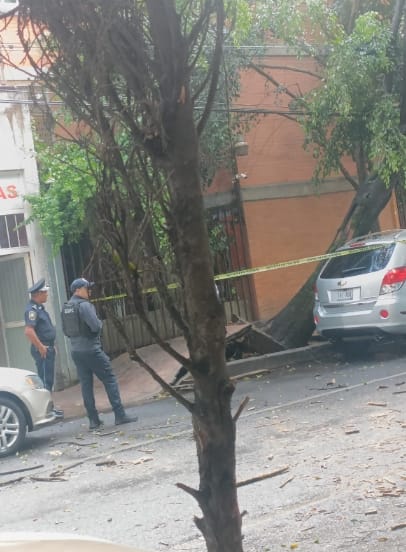
The most severe impact was felt in residential and commercial areas where trees were uprooted, vehicles were damaged, and power infrastructure was severely affected. Fallen electricity lines left several communities without power, while blocked roads and scattered debris made movement difficult in many parts of the city.
Emergency response teams were deployed across affected districts to clear fallen trees, restore access to key routes, and assess structural damage. Authorities worked through the night as residents attempted to secure properties and deal with the immediate aftermath of the storm.
In Miguel Hidalgo, one of the city’s key residential and administrative areas, residents described witnessing strong winds that shook buildings and caused trees to collapse under the pressure. Several parked vehicles were struck by falling branches and uprooted trees, leading to extensive damage and financial losses for affected families.
Among those affected was a local resident whose newly purchased vehicle was destroyed when a large tree fell onto it during the height of the storm. The incident highlighted the sudden and unpredictable nature of the weather event, which escalated within minutes and caught many residents off guard.
Eyewitness accounts suggest that the rainfall intensified rapidly during and immediately after the match, with wind speeds increasing to levels strong enough to dislodge trees and damage outdoor infrastructure. Streets were quickly flooded in some areas, compounding the challenges faced by emergency services and residents alike.
Francis Ejike, who received updates from family members living in the city, described the severity of the situation and the speed at which the storm developed.
“The rainfall was extremely heavy, and the winds were very strong,” he said. “Trees were knocked down in several places, electricity was cut off in some areas, and many vehicles were damaged. My wife’s cousin had just bought a new car, which was parked inside their compound under a tree. Unfortunately, the tree came down during the storm and damaged the vehicle along with several others nearby.”
According to local residents, the combination of intense rainfall and high winds created dangerous conditions on roads and residential streets. Fallen branches, broken signage, and scattered debris obstructed traffic movement, forcing drivers to take alternative routes or abandon journeys altogether until conditions improved.
While no fatalities were immediately reported, authorities confirmed that assessments were ongoing to determine the full extent of the damage. Emergency teams continued to inspect affected neighbourhoods, particularly areas with older trees and exposed power lines, where risks remained elevated.
Weather experts have linked the increasing frequency and intensity of such storms to broader climatic changes affecting urban environments. They warn that rapidly developing weather systems are becoming more common, increasing the likelihood of flash flooding, wind damage, and widespread disruption in densely populated cities like Mexico City.
In the aftermath of the storm, residents across Miguel Hidalgo and surrounding districts began the process of clearing debris, assessing property damage, and waiting for the restoration of essential services such as electricity and water supply. Many expressed concern about the vulnerability of urban infrastructure to extreme weather events that can escalate within a short period.
As cleanup operations continue, the storm has reignited discussions about disaster preparedness, urban planning, and the resilience of city infrastructure in the face of increasingly unpredictable weather patterns. For many affected families, the focus now remains on recovery and rebuilding after a night that transformed ordinary city life into scenes of sudden destruction.

