




The West Midlands’ business, professional and financial services (BPFS) sector is at the heart of Mayor Richard Parker’s ambitious plans to reignite the regional economy and create thousands of well-paid jobs for local people.
Already the UK’s largest BPFS cluster outside London, the sector boasts 48,000 firms employing more than 342,000 people across banking, legal services, accountancy, insurance, consultancy, and fintech. Of those, around 178,000 roles are in high-value, knowledge-intensive services. According to Reed.co.uk, professionals in the region’s financial services earn an average of £79,466, while average salaries across the wider BPFS sector stand at £45,000—more than 21% above the UK average wage of £37,430.
Mayor Parker sees this as both a foundation and a springboard. “Our booming business, professional and finance sector is a real West Midlands success story – but we can never be complacent,” he said. “We must be at the forefront of the new technologies sweeping the industry. My Growth Plan sets out how we will future-proof and continue to grow this sector so we can create thousands more well-paid jobs that people can build their futures around.”
The Mayor’s Growth Plan identifies BPFS as one of five high-growth sectors with the potential to transform the regional economy. The plan stresses that sustaining momentum will require creating the right conditions for businesses: affordable places to live, a highly skilled workforce, and reliable transport connections. These, Parker said, are central to ensuring that the region remains an attractive alternative to London for both global corporations and innovative start-ups.
The sector has enjoyed remarkable growth, expanding by 30% over the last five years. Birmingham alone has become home to global players including Goldman Sachs, HSBC, and Deutsche Bank, alongside the “Big Four” professional services firms—PwC, Deloitte, KPMG, and EY. Together, BPFS generates nearly a quarter of the region’s total economic output and employs 13% of its workforce.
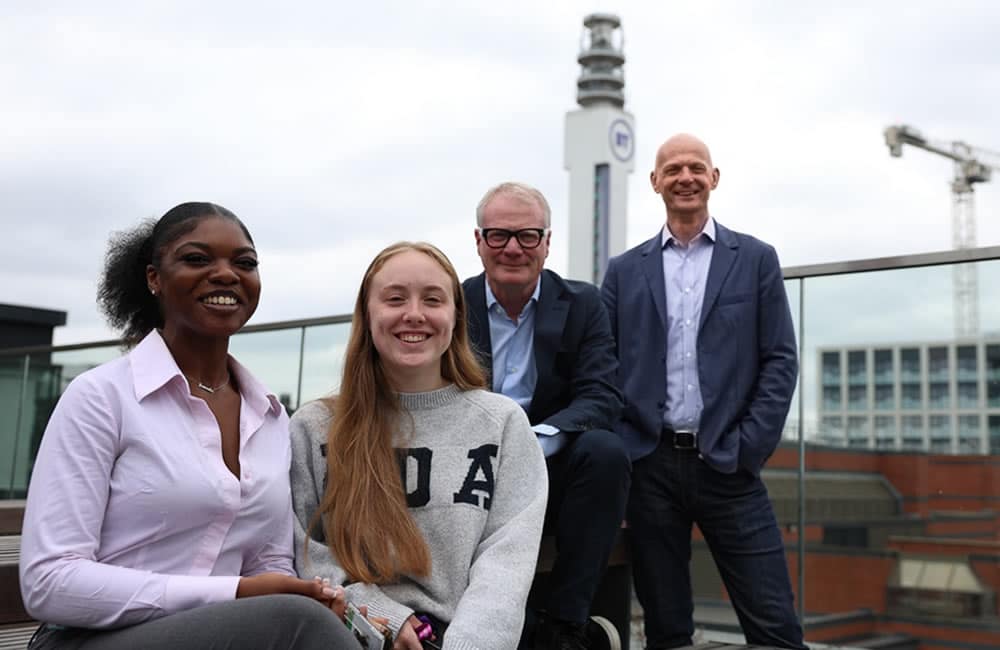
One company that embodies this growth is global professional services firm Accenture, which recently opened new 9,000 sq. ft. offices at Cornerblock in Birmingham’s city centre. During a recent visit to the new offices, Mayor Parker met with apprentices Manuela Ikpasa and Maddie Sanderson, both of whom are part of Accenture’s drive to nurture local talent.
Manuela, 19, spoke about her experience: “I’m enjoying having a role on a team where I feel just as valued as the other, more experienced staff. I think a lot of people assume apprentices are overlooked, but that is not the case here. Feeling valued makes work fun and rewarding.”
Maddie echoed her colleague’s sentiments: “The most enjoyable part of the apprenticeship at Accenture is being able to choose the direction of your learning and career whilst making an impact on real industry projects.”
For Parker, apprentices like Manuela and Maddie illustrate the importance of next-generation skills in ensuring the long-term health of the BPFS sector. His Growth Plan emphasises technology-driven innovation, urging greater investment in research and development and stronger collaboration between the region’s universities and businesses. Digital adoption, fintech leadership, and advanced skills are seen as central to positioning the West Midlands as a global hub for modern financial and professional services.
The Government has also backed the region as a fintech centre of excellence, aligning with the UK’s wider Modern Industrial Strategy, which identifies the West Midlands as a future hub for professional services. Parker sees this as an opportunity to amplify the sector’s role as a catalyst for the rejuvenation of the entire regional economy.
“Our region has proved an attractive alternative to London for many global players. We now need to build on that momentum,” the Mayor said. “That means not only supporting businesses but ensuring our people have the skills to thrive. If we get this right, we can unlock huge opportunities and raise living standards, putting thousands of pounds back into the pockets of working people.”
With a blend of global firms, cutting-edge innovation, and local talent, the West Midlands’ business and financial services sector stands as one of the region’s greatest assets. Under Parker’s Growth Plan, it could also become one of the most powerful engines of inclusive economic renewal.

