



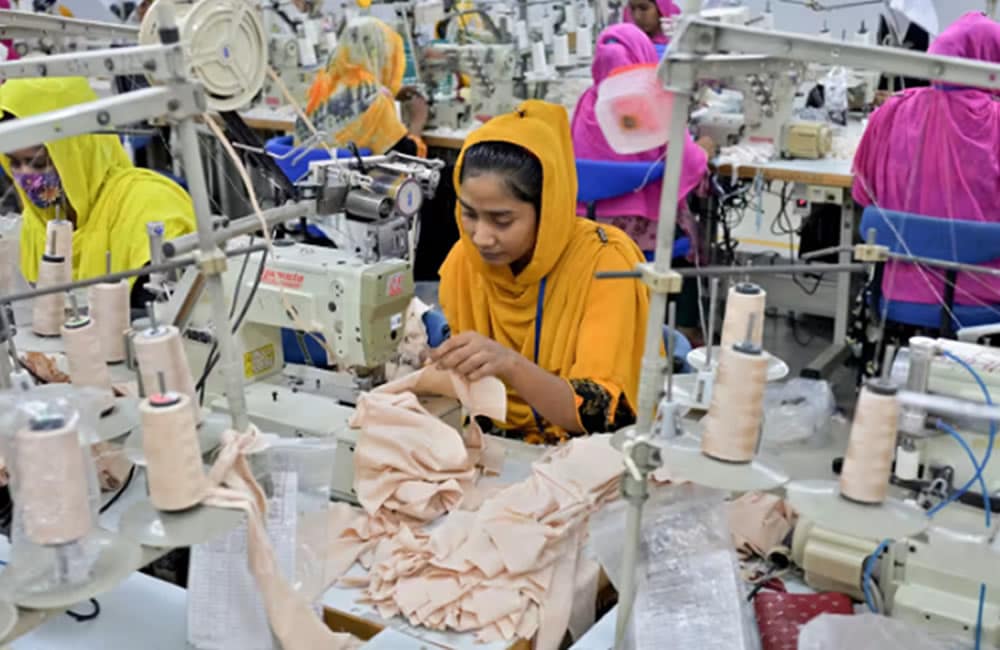
Bangladesh’s garment industry, the second-largest in the world after China, is emerging as a key beneficiary of shifting trade winds as U.S. tariffs redirect sourcing away from traditional giants. With Washington imposing new duties on imports from China and India, American buyers are increasingly turning to Bangladesh for apparel orders, injecting new momentum into the country’s export-driven economy.
The U.S. is the single largest export market for Bangladesh’s ready-made garments (RMG), which account for more than 80% of the country’s total exports. In recent months, industry insiders report a notable uptick in orders from American retailers and fashion brands, eager to mitigate the rising costs of sourcing from tariff-hit China and India.
For many Bangladeshi manufacturers, the shift has been welcome but not without challenges. Factory owners highlight that while volumes are increasing, profit margins remain under strain due to higher raw material costs, wage pressures, and global inflationary trends. There is also concern that U.S. consumers may ultimately face higher retail prices, dampening demand in the long run.
“Buyers are diversifying their supply chains, and Bangladesh is gaining from that realignment,” said Rubana Huq, former president of the Bangladesh Garment Manufacturers and Exporters Association (BGMEA). “But we must recognize that with higher costs of production globally, the retail shelves in America will not remain immune—prices will inevitably reflect the pressures.”
The diversification of supply chains comes as part of a broader push by U.S. companies to reduce dependence on China, amid ongoing geopolitical tensions and trade disputes. India, once seen as a promising alternative, has been hit by tariff adjustments as well, pushing American buyers to explore Bangladesh, Vietnam, and other emerging hubs. Among these, Bangladesh stands out for its established infrastructure, competitive labor force, and deep expertise in large-scale garment production.
Despite the opportunities, challenges loom large. Industry leaders caution that without sustained investment in technology, compliance, and supply chain resilience, Bangladesh could struggle to maintain its edge. Energy shortages, rising transportation costs, and stricter global sustainability requirements remain pressing concerns. Additionally, as retailers shift orders quickly to avoid tariffs, the risk of overreliance on a temporary trade realignment could expose manufacturers to volatility if policies change again.
The government of Bangladesh has pledged support, announcing measures to streamline export procedures and invest in logistics infrastructure to meet the growing international demand. Industry associations are also calling for greater diversification of the country’s garment portfolio, including expanding into higher-value fashion products, sportswear, and technical textiles to avoid being locked into low-margin segments.
For U.S. retailers, the sourcing transition presents its own dilemma. While shifting to Bangladesh helps offset immediate tariff costs, many are wary of passing on higher expenses to consumers already grappling with inflation. Analysts predict that the average American household may see modest price increases on clothing items in the coming months, though the scale will depend on how long tariffs remain in place.
In the words of one Dhaka-based manufacturer, “We see more business today, but the sustainability of this growth depends on how we adapt. If we just fill orders without investing in the future, we risk losing our advantage when the trade winds shift again.”
As Bangladesh rides this wave of redirected orders, the balance between short-term gains and long-term competitiveness will determine whether the industry can turn a moment of opportunity into lasting growth.

