




A conflict involving Taiwan would inflict far greater damage on the global economy than a disruption in the Strait of Hormuz, according to analysts, underscoring how the world’s most critical supply chains have shifted from energy to technology.
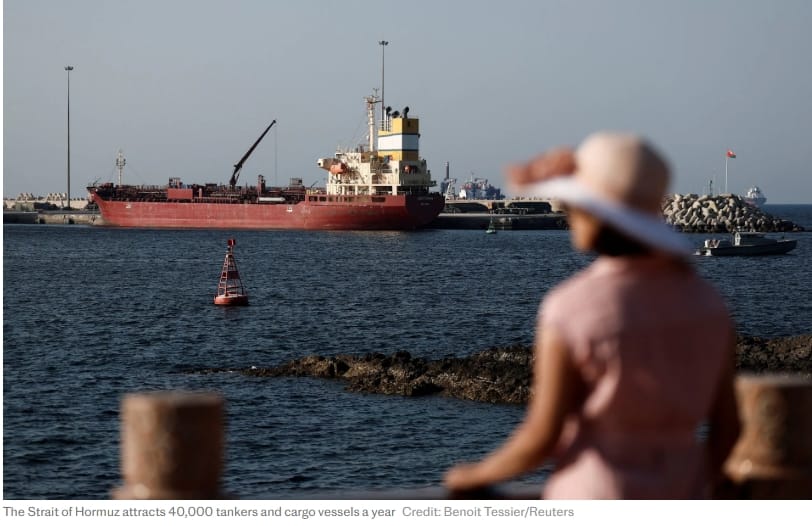
For decades, the Strait of Hormuz has been viewed as the most dangerous economic chokepoint on the planet. Roughly a fifth of global oil supply passes through the narrow waterway, making it a perennial flashpoint for market volatility. Any sustained disruption—whether from conflict or blockade—would send energy prices surging, triggering inflationary pressures and slowing growth across both advanced and emerging economies.
Yet the potential fallout from a crisis in Taiwan is now seen as far more profound. The island sits at the heart of the global semiconductor industry, producing the advanced chips that power everything from smartphones and electric vehicles to data centres and defence systems. A disruption to Taiwan’s manufacturing capacity would reverberate across virtually every modern industry.
At the centre of this ecosystem is Taiwan Semiconductor Manufacturing Company (TSMC), which dominates the production of cutting-edge chips. Many of the world’s largest technology firms—including Apple, Nvidia and Qualcomm—depend heavily on its output. Any interruption, even temporary, could halt production lines worldwide, disrupt global trade, and wipe trillions from financial markets.
Unlike oil, which can be sourced from multiple regions and released from strategic reserves in times of crisis, advanced semiconductors are far harder to replace. Alternative manufacturing capacity is limited, highly specialised, and years away from matching Taiwan’s scale and sophistication. This lack of redundancy makes the global economy particularly vulnerable.
A Taiwan crisis would also hit shipping and trade flows across East Asia, one of the world’s busiest commercial regions. Major sea lanes surrounding the island are critical for the movement of goods between Asia, Europe and North America. Any conflict would likely trigger widespread disruption, compounding the shock from halted semiconductor production.
In contrast, while a closure of the Strait of Hormuz would cause an immediate spike in oil prices, markets have developed some resilience. Strategic petroleum reserves, diversified supply routes, and the gradual shift toward renewable energy sources provide buffers that did not exist in previous decades.
The broader geopolitical implications further amplify the risk. A Taiwan conflict could draw in major powers, escalate tensions across the Indo-Pacific, and fragment global trade systems. Sanctions, export controls, and financial decoupling could deepen the economic impact well beyond the immediate theatre of conflict.
The comparison highlights a fundamental shift in global vulnerability. Where oil once defined economic stability, semiconductors and advanced manufacturing now play a central role. As a result, the risks tied to Taiwan are no longer regional—they are systemic, with the potential to reshape the global economy in ways that far exceed the shock of an energy supply disruption.

