



Lai Ching-te has reaffirmed Taiwan’s right to engage with the international community following a diplomatic visit to Eswatini, drawing sharp criticism from China. The trip, aimed at strengthening ties with one of Taiwan’s few remaining formal allies, has once again highlighted the intensifying geopolitical tensions surrounding the island’s global presence.
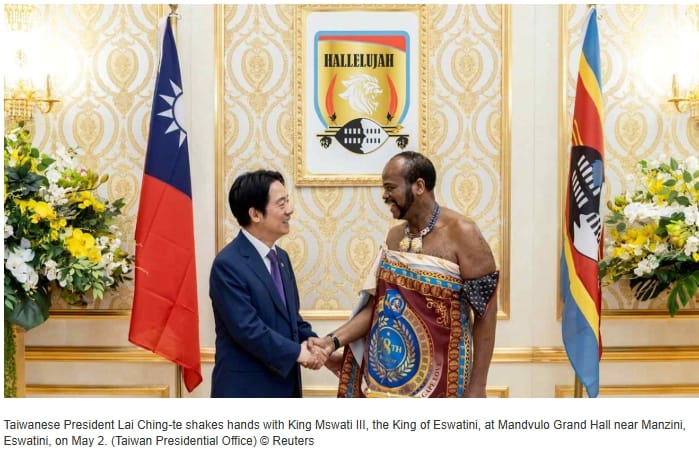
Speaking after the visit, Lai emphasized that Taiwan, formally known as the Republic of China (Taiwan), has both the right and the responsibility to interact with partners worldwide. He framed the outreach as part of a broader effort to contribute to global development, deepen cooperation, and uphold shared democratic values. Eswatini, which maintains full diplomatic relations with Taipei, has long been a key partner in Africa, benefiting from Taiwanese support in sectors such as healthcare, education, and infrastructure.
Beijing, however, condemned the visit in stark terms, reiterating its position that Taiwan is a breakaway province and warning against any actions that could be interpreted as legitimizing its sovereignty. Chinese officials used unusually strong language to denounce the trip, underscoring the sensitivity of Taiwan’s diplomatic engagements. China has consistently sought to isolate Taiwan internationally, pressuring countries to switch recognition to Beijing under its “One China” principle.
The exchange reflects a broader contest for influence, as Taiwan works to maintain and expand its limited diplomatic network while China leverages its economic and political weight to curtail those efforts. In recent years, several countries have shifted recognition from Taipei to Beijing, leaving Taiwan with a shrinking pool of formal allies. Against this backdrop, visits like Lai’s to Eswatini carry symbolic and strategic importance.
Analysts note that Taiwan has increasingly focused on strengthening unofficial ties with major economies and participating in global forums where possible, even as formal diplomatic space narrows. Initiatives in trade, technology, and humanitarian assistance have become central to its international strategy, allowing Taipei to remain engaged despite constraints.
For Eswatini, the partnership with Taiwan offers access to development assistance and technical expertise, while also signaling an independent foreign policy stance. The relationship continues to stand out in a region where most countries recognize Beijing.
As tensions persist, Lai’s remarks underscore Taiwan’s determination to assert its international role, even in the face of mounting pressure from China.


