



A deepening rift between the Economic Community of West African States and military-led governments in the Sahel is testing the future of regional unity in West Africa. The standoff—centered on Mali, Burkina Faso, and Niger—has evolved from a dispute over coup-led transitions into a broader confrontation over sovereignty, security, and the credibility of democratic norms.
ECOWAS, long regarded as one of Africa’s most assertive regional blocs, has taken a hard line against the succession of military takeovers that have swept the Sahel since 2020. The organization imposed sanctions, travel bans, and economic restrictions, while repeatedly demanding clear timelines for a return to civilian rule. In the case of Niger, ECOWAS even threatened military intervention following the 2023 coup, underscoring its willingness to enforce its protocols on unconstitutional changes of government.
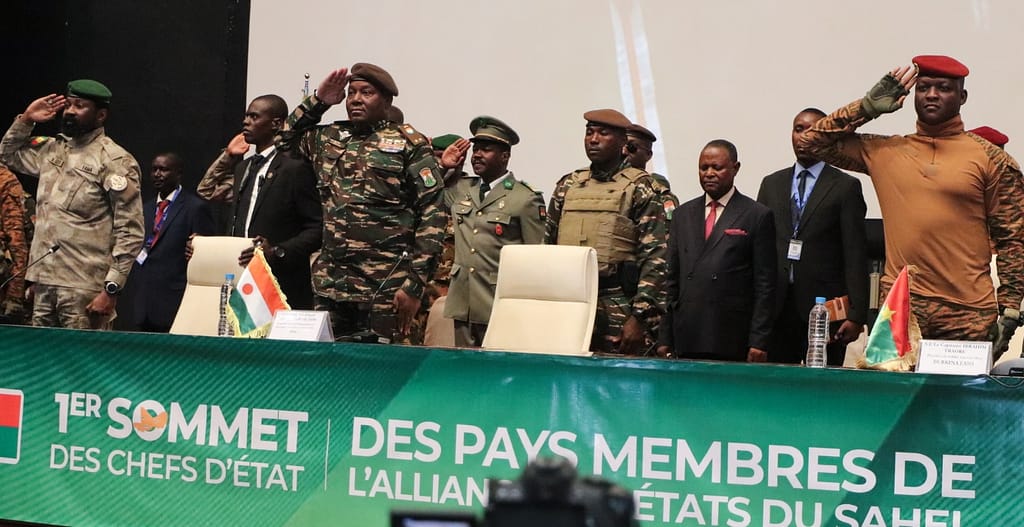
The juntas, however, have pushed back forcefully. Leaders in Bamako, Ouagadougou, and Niamey have portrayed ECOWAS measures as externally driven and disconnected from local realities. They argue that their interventions were necessary to restore stability in countries grappling with jihadist insurgencies, weak institutions, and widespread public disillusionment with civilian governments. In a dramatic escalation, the three countries announced plans to withdraw from ECOWAS, signaling a potential fracture in the regional architecture that has underpinned economic and political cooperation for decades.
At the heart of the dispute lies a fundamental disagreement over priorities. ECOWAS emphasizes constitutional order and democratic governance as the foundation for long-term stability. The Sahel juntas, by contrast, frame security as the immediate concern, insisting that counterinsurgency efforts must take precedence over electoral timelines. This divergence has complicated mediation efforts, with trust between the parties steadily eroding.
The confrontation also reflects shifting geopolitical currents. The Sahel states have increasingly distanced themselves from traditional Western partners, particularly former colonial power France, and sought new alliances. This realignment has added another layer of complexity to the crisis, raising questions about external influence and the evolving balance of power in the region.
For ordinary citizens, the consequences are tangible. Sanctions have disrupted trade, strained economies, and heightened humanitarian pressures in already vulnerable states. At the same time, insecurity continues to plague large swathes of the Sahel, with armed groups exploiting governance gaps and regional fragmentation.
Analysts warn that a prolonged rupture could weaken ECOWAS itself, undermining its ability to coordinate responses to crises and maintain economic integration. The bloc’s credibility hinges on its capacity to enforce its principles while remaining responsive to the concerns of member states. A failure to reconcile these competing imperatives risks setting a precedent that could embolden future coups elsewhere in the region.
Yet pathways to de-escalation remain. Dialogue, phased transition plans, and targeted easing of sanctions have all been proposed as means to rebuild trust. Much will depend on whether both sides can find common ground between the demands of governance and the urgency of security.
As the standoff continues, the outcome will shape not only the political trajectory of the Sahel but also the future of regional cooperation in West Africa.

