




In a terrifying show of nature’s power, Hurricane Melissa smashed into Jamaica as the strongest storm ever recorded for the island and barreled into eastern Cuba only hours later, packing sustained winds of around 120 mph as authorities scrambled to protect lives and infrastructure.
When Melissa made landfall near New Hope, Jamaica, it was already a Category 5 hurricane with sustained winds reaching 185 mph — placing it among the most intense tropical cyclones ever recorded in the Atlantic.
The southern parish of St. Elizabeth bore the brunt of the impact, where authorities described entire communities as “under water” and more than half a million people were left without power.
In the early hours of October 29, the storm crossed over to eastern Cuba, striking near Chivirico as a still ferocious Category 3 storm. Evacuations had already been ordered for more than 735,000 residents.
The threat was far from over: warnings of life-threatening flooding, storm surge up to 12 feet, and destructive landslides echoed across the provinces of Granma, Santiago de Cuba, Guantánamo, Holguín and Las Tunas.
Prime Minister Andrew Holness declared Jamaica a “disaster area,” warning that the damage to hospitals, homes and roads was already massive — and the full toll still unknown.
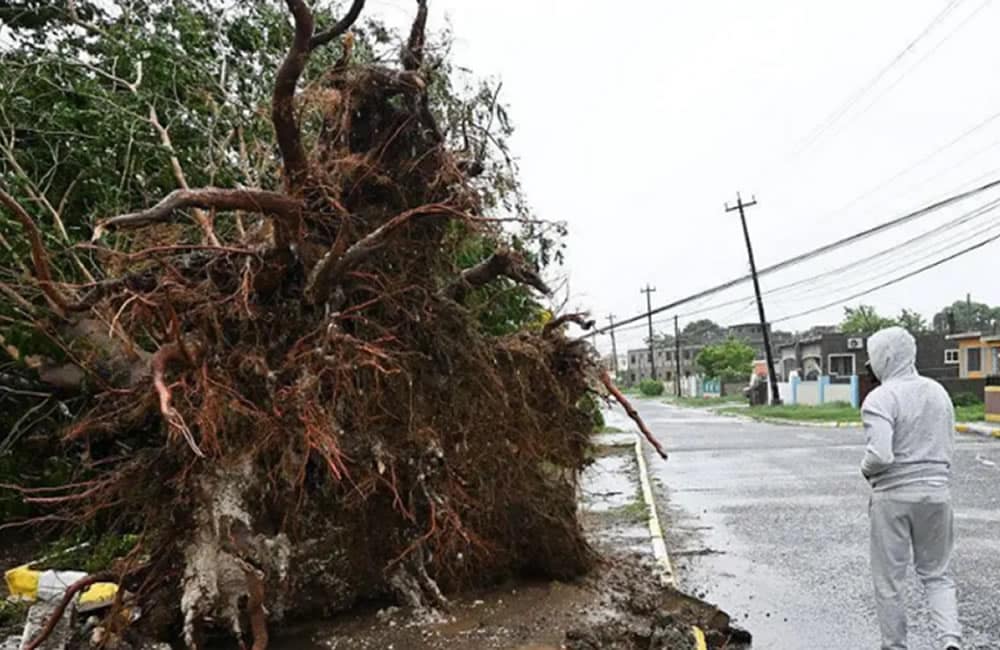
Rescue operations were hampered by broken infrastructure, blocked roadways, and widespread power outages. At one point, internet connectivity fell to 42 % of normal levels across the island.
In St. Elizabeth, storm surge and flooding forced entire communities to seek refuge. The government opened hundreds of shelters — more than 800 nationwide — yet as Melissa closed in, only a fraction of residents had evacuated. “This is not the time to be brave,” warned Desmond McKenzie, deputy chair of Jamaica’s Disaster Risk Management Council.
As Melissa roared into Cuba, President Miguel Díaz‑Canel addressed the nation, urging calm and cooperation while acknowledging the country’s economic vulnerabilities. “We know there will be a lot of damage,” he admitted.
Hundreds of thousands had been moved from their homes, especially in low-lying and coastal areas vulnerable to surge and flooding. Cuban authorities shut down power across the eastern provinces and prepared for a potential humanitarian crisis in a country already strained by shortages and infrastructure challenges.
Meteorologists pointed to an alarming feature of Melissa: its rapid intensification. The hurricane escalated quickly over exceptionally warm ocean waters, increasing from a tropical disturbance to a Category 5 storm in days.
Researchers suggest the surge in intensity aligns with the patterns of climate change: warmer seas, weaker steering currents, slower motion — conditions that give hurricanes time to strengthen and linger over vulnerable land.
With the storm’s eye moving on, the next phase is recuperation. In Jamaica, airports are being reopened to facilitate emergency relief. In Cuba, efforts to restore power and clear roads are underway. But the scale of the challenge is immense. Jamaica’s tourism-dependent economy was already fragile. Agriculture — an essential part of both countries’ livelihoods — faced widespread damage from floods and high winds.
Both nations face not just the physical destruction of homes and infrastructure, but potential secondary crises: water-borne disease outbreaks, displacement of communities, and protracted power and water outages. The humanitarian response must be swift, coordinated and strategically scaled.
Melissa is not just a major storm; it may be a signal of increased extremes to come. Caribbean leaders have called for global action on climate justice, noting that island nations disproportionately shoulder the costs of storms they did not create.
The economic fallout could be staggering: infrastructure repair, interruption to tourism and agriculture, and increased debt burdens.
For residents, the impact goes beyond broken windows and flooded roads. Sleep-deprived parents sheltering children, fishermen losing boats to the surf, and farmers watching crops float away all remind us that for many, disaster is not only immediate but generational.
Relief and rescue: Emergency crews, international aid organisations and local governments must prioritize life-saving operations — food, water, shelter, electricity. Damage assessment: Rapid but accurate surveys of homes, hospitals, farms and roads will inform where funds and resources must go first.
Recovery planning: Rebuilding with resilience in mind — stronger building codes, flood-resistant infrastructure, disaster-ready communities — is essential.
Global solidarity: The Caribbean has long been under-resourced to deal with climate disasters. Global mechanisms like debt relief, aid for adaptation and technology transfer will matter.
Prepare for the next one: Meteorologists warn this won’t be the last megastorm. Communities, nations and the world must treat Melissa as both tragedy and warning.
Hurricane Melissa ripped through the Caribbean with fury and precision, leaving behind devastation in Jamaica and looming threats over Cuba. For both countries, and for the region, it is a stark reminder: nature doesn’t wait for warnings, but preparation matters. And as the waters recede and recovery begins, the choices made now will define how well communities rebound, rebuild and resist the storms of tomorrow.

