




IKEA, the Swedish home furnishings giant, is reshaping its strategy for the Indian market with a bold expansion plan that combines smaller, city-friendly outlets with large-scale supply chain investments. The shift marks a departure from the brand’s traditional reliance on massive, warehouse-style stores, signaling its intent to adapt to India’s dense urban environments and fast-evolving consumer needs.
Since opening its first store in Hyderabad in 2018, IKEA has steadily tested the Indian market, learning how best to balance affordability, accessibility, and cultural preferences. Its newest approach involves rolling out compact stores and showrooms embedded within city centers—locations where customers can browse select furniture lines, pick up smaller home products, and place digital orders for larger items delivered directly to their homes.
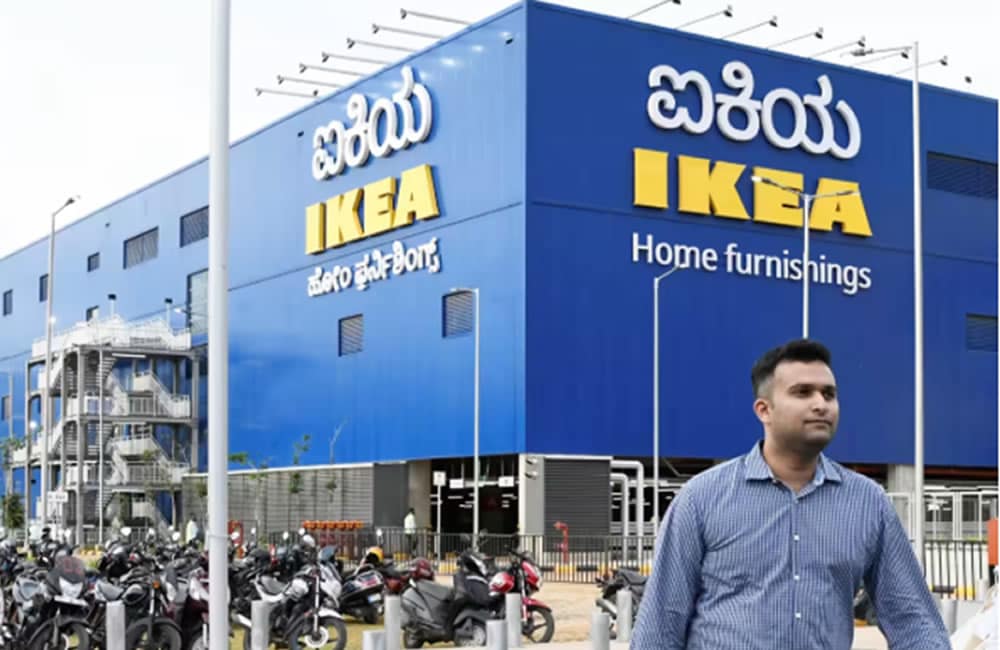
This hybrid retail model is designed to solve two of the biggest challenges IKEA faces in India: long travel distances to its large-format outlets and the growing demand for convenience among younger, urban shoppers. Cities like Mumbai, Bengaluru, and Delhi, where space is scarce but consumer spending is rising, are central to this strategy.
“We recognize that India is unique, with dense urban clusters and limited household space,” said Susanne Pulverer, CEO and CSO of IKEA India. “Our goal is to bring IKEA closer to where people live while ensuring affordability and quality remain our hallmarks.”
Beyond store formats, IKEA is also investing heavily in its supply chain. The company is expanding warehousing capacity, strengthening last-mile delivery networks, and working with local suppliers to reduce costs and improve speed. By sourcing more goods domestically, IKEA aims not only to keep prices competitive but also to contribute to India’s manufacturing ecosystem.
Industry analysts see this as a smart adaptation. Indian customers are aspirational but also price-conscious, often comparing global lifestyle brands with local alternatives. IKEA’s efforts to localize its products—such as offering smaller furniture tailored for compact homes and cookware suited to Indian kitchens—have been critical in winning over first-time buyers.
The timing of IKEA’s renewed push is significant. India’s home furnishings market is projected to grow sharply in the next five years, driven by rising incomes, rapid urbanization, and an expanding middle class. Unlike Europe or North America, where the brand’s iconic out-of-town megastores thrive, India demands flexibility and customization. IKEA’s city-centric approach acknowledges this reality.
Another cornerstone of the strategy is digital integration. Online shopping now accounts for a growing share of IKEA’s India sales, accelerated by the pandemic and shifting consumer habits. Compact outlets, therefore, serve not just as retail spaces but also as experience centers where customers can touch, test, and design their homes with expert guidance before completing purchases online.
Still, the journey is not without hurdles. High real estate costs in city centers, regulatory approvals, and intense competition from domestic players such as Pepperfry, Urban Ladder, and HomeTown present challenges. But IKEA is betting that its global reputation for design and affordability, combined with local adaptation, will give it an edge.
For India, IKEA’s investment also carries broader economic significance. The brand has committed to increasing local sourcing, generating thousands of jobs, and supporting sustainable practices in manufacturing and logistics. This aligns with government initiatives encouraging global companies to “Make in India” while expanding access to world-class goods for Indian households.
With compact shops, integrated digital platforms, and an expanding supply chain, IKEA is signaling that it sees India not just as a growth market but as a laboratory for the future of urban retail. If the model succeeds here, it could influence how the company approaches other high-density markets across Asia and beyond.

