




A growing number of deals between the United States and the Democratic Republic of the Congo—including access to gold and other critical minerals—are reshaping the global resource landscape. Framed as a strategic partnership, the agreements aim to unlock investment, stabilise conflict zones, and reduce Western dependence on rival powers. But beneath the surface, the deals are sparking intense debate: are they a win for development, or a new form of resource control?
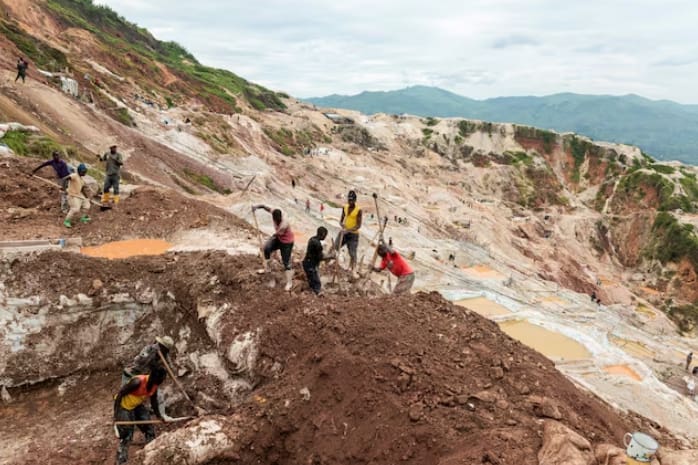
At the centre of the arrangement is a broad minerals pact signed in late 2025, giving U.S. companies preferential access to a range of Congolese assets, including gold projects, alongside copper, cobalt, lithium and coltan. The Congolese government has even submitted a list of dozens of mining opportunities to Washington as part of the deal, signalling its willingness to open up the sector.
From Washington’s perspective, the strategy is clear: secure supply chains for critical minerals essential to technology, defence, and energy transition industries—while countering China’s long-standing dominance in Congo’s mining sector.
Supporters argue the agreement could be transformative for Congo’s economy. Increased U.S. investment may bring improved infrastructure, modern mining practices, and higher transparency standards compared to existing arrangements.
The deal is also tied to a broader U.S.-brokered peace framework in the region, with economic cooperation seen as a pathway to stability in conflict-affected eastern Congo.
“There is real potential here,” one policy analyst noted. “If managed properly, it could diversify partners, reduce overreliance on a single foreign power, and create jobs.”
Additionally, U.S. involvement could formalise parts of the mining sector that are currently informal or controlled by armed groups—especially in gold-rich and mineral-heavy regions.
However, critics warn the deal raises serious sovereignty and governance questions. Some provisions reportedly grant U.S. firms preferential rights to strategic assets and even a role in overseeing parts of the mining sector.
Civil society groups in Congo have already challenged the agreement in court, arguing it risks handing control of national resources to foreign interests.
There are also fears that local communities may see little benefit. In eastern Congo, where many mineral deposits—including gold—are located, conflict remains rife, and armed groups often control mining zones.
“We are exploited,” one local perspective captured the sentiment, reflecting long-standing grievances that Congo’s vast mineral wealth has rarely translated into broad-based prosperity.
Geopolitically, the deal is part of a wider contest between global powers. Analysts warn that competition between the U.S. and China over Congo’s resources could intensify instability rather than resolve it.
The U.S.–Congo mining deals—including gold—are neither entirely good nor entirely bad. They represent opportunity wrapped in risk.
If governed transparently, they could drive investment, improve security, and help Congo capture more value from its resources. But if poorly managed, they risk repeating a familiar pattern: foreign extraction, local exclusion, and deepening inequality.
Ultimately, the outcome will depend less on the deal itself—and more on how it is implemented, regulated, and who truly benefits.

