



The government of Mexico has deployed thousands of additional soldiers to contain a surge of violence following the death of notorious cartel leader Nemesio Oseguera Cervantes, widely known as “El Mencho.”
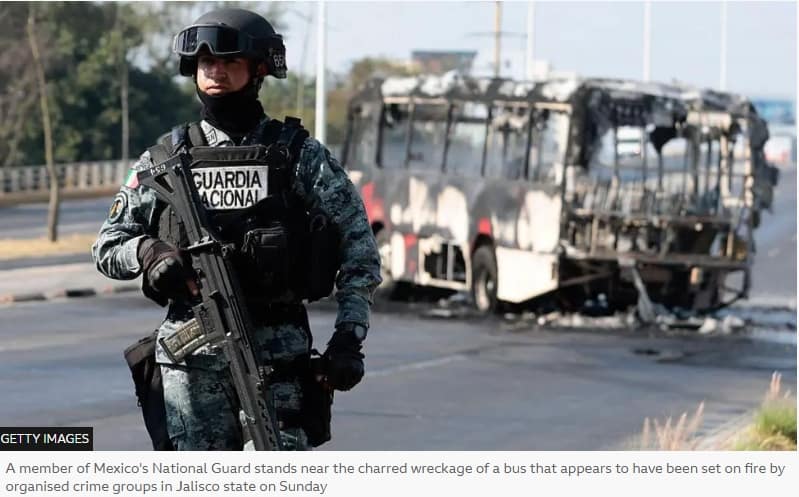
Authorities confirmed that unrest has spread across at least 20 states since the powerful drug lord died in custody on Sunday, shortly after being captured by Mexican special forces in the western state of Jalisco.
Defence Secretary Ricardo Trevilla announced that an extra 2,500 troops were deployed to western Mexico on Monday, bringing the total number of security forces mobilised since Sunday to approximately 9,500. The reinforcements aim to stabilise key regions where cartel-linked violence has escalated, including road blockades, arson attacks, and armed clashes with federal forces.
“El Mencho” led the feared Jalisco New Generation Cartel (CJNG), one of the most powerful and violent criminal organisations in the country. Long considered Mexico’s most wanted man, he had evaded capture for years despite a massive manhunt supported by domestic and international intelligence efforts.
According to Trevilla, the cartel leader was apprehended after security forces tracked the movements of a romantic partner he was scheduled to meet. Special forces conducted a targeted operation that led to his arrest, but officials say he died in custody shortly thereafter. The precise circumstances of his death have not yet been fully disclosed, adding to tensions on the ground.
The aftermath has been deadly. At least 25 members of Mexico’s National Guard have been killed in Jalisco state alone since the violence erupted, the country’s security minister confirmed. Clashes between cartel gunmen and federal troops have intensified, with authorities reporting attacks on military convoys and strategic infrastructure.
Security analysts warn that the power vacuum created by El Mencho’s death could trigger internal fractures within the CJNG or provoke retaliatory offensives aimed at demonstrating strength. Cartel succession battles have historically fuelled further instability, particularly in regions already contested by rival criminal groups.
The Mexican government has framed the troop deployment as a decisive move to prevent broader escalation. Officials insist that restoring order remains a top priority, emphasising coordination between the army, National Guard, and local police forces.
However, the surge in violence underscores the persistent challenges facing Mexico’s security strategy. While high-profile arrests and targeted operations have disrupted cartel leadership structures, critics argue that deeper structural reforms — including judicial strengthening, anti-corruption measures, and social investment — are essential for long-term stability.
As troops patrol highways and urban centres across western Mexico, the country remains on edge. The death of one of the hemisphere’s most notorious drug lords marks a significant moment in Mexico’s fight against organised crime — but the unfolding response from CJNG will determine whether this development brings lasting security gains or ignites a new chapter of cartel conflict.

