




Tensions across the Middle East escalated dramatically as the confrontation involving Iran, the United States and regional allies triggered what the International Energy Agency (IEA) has described as the largest disruption to global oil markets in modern history. The surge in hostilities has shaken energy markets, raised fears of wider regional instability and placed major oil infrastructure and cities on high alert.
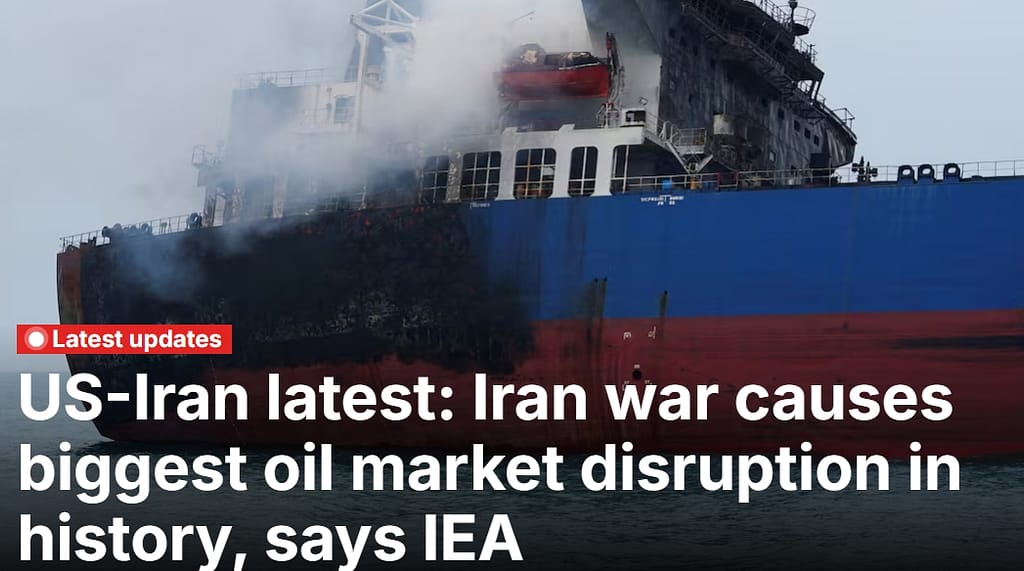
According to the IEA, emergency measures to stabilise supply were implemented after attacks and security threats affected shipping routes, oil facilities and major ports across the Gulf region. The agency’s director said the decision to release strategic oil reserves had an immediate and “strong impact” on markets, helping to prevent further price spikes and panic trading.
Across the region, governments condemned what they described as aggressive drone operations linked to Iran. The United Arab Emirates strongly criticised what officials called “unprovoked attacks” after drones targeted key locations in neighbouring countries and the Gulf. Emirati diplomatic adviser Anwar Gargash said the UAE remained firm in its stance against Iranian aggression and reaffirmed the country’s commitment to protecting regional stability and international shipping lanes.
Security concerns intensified when a drone crashed in Dubai, prompting authorities to respond to what they described as a “minor incident.” The drone reportedly struck a residential tower before emergency services quickly extinguished a fire caused by the impact. Officials said the situation was brought under control without major casualties, though the incident highlighted the growing vulnerability of major cities to aerial attacks.
Elsewhere in the Gulf, drones reportedly struck facilities near Kuwait International Airport, temporarily disrupting airport operations and forcing heightened security measures. In another alarming development, the UAE condemned a drone strike that targeted the Salalah Port in Oman, a key maritime gateway for regional trade and logistics.
Energy infrastructure also came under pressure in Iraq, where authorities suspended operations at a major oil export port after tanker vessels were attacked. The shutdown raised immediate concerns about supply interruptions, contributing to volatility in global oil prices and reinforcing fears of a prolonged energy crisis.
Meanwhile, regional air defence systems remained on high alert. In Saudi Arabia, authorities intercepted a drone heading toward the high-security Diplomatic Quarter in Riyadh, an area that houses embassies and international missions. Officials confirmed the drone was neutralised before reaching its intended target.
The conflict has also spilled into other parts of the Middle East. In Beirut, at least eight people were reportedly killed after an Israeli strike hit the city’s beachfront area where displaced families had been sheltering in tents. The incident further inflamed tensions and drew condemnation from humanitarian organisations concerned about the rising civilian toll.
Amid the escalating crisis, former U.S. President Donald Trump claimed the United States had effectively “won” against Iran but insisted that further action may be necessary to “finish the job.” His remarks added to the already intense political debate surrounding the conflict and the possibility of broader military engagement.
For its part, Iran signalled that a potential truce could only be considered if the United States and Israel pledged to halt further strikes. Iranian officials suggested that guarantees against future attacks would be necessary before any ceasefire discussions could proceed.
With drone strikes, port disruptions, and mounting casualties, the crisis has rapidly evolved into one of the most volatile geopolitical confrontations in recent years. Analysts warn that unless diplomatic channels reopen soon, the conflict could deepen, further destabilising the Middle East and continuing to rattle global energy markets.

