



Nigeria’s financial industry is entering a period of heightened stress as macroeconomic pressures, currency volatility, and rising credit risks expose structural weaknesses across parts of the banking sector. While the system remains broadly stable, analysts say certain institutions are facing mounting balance sheet strain, prompting closer scrutiny from regulators led by the Central Bank of Nigeria.
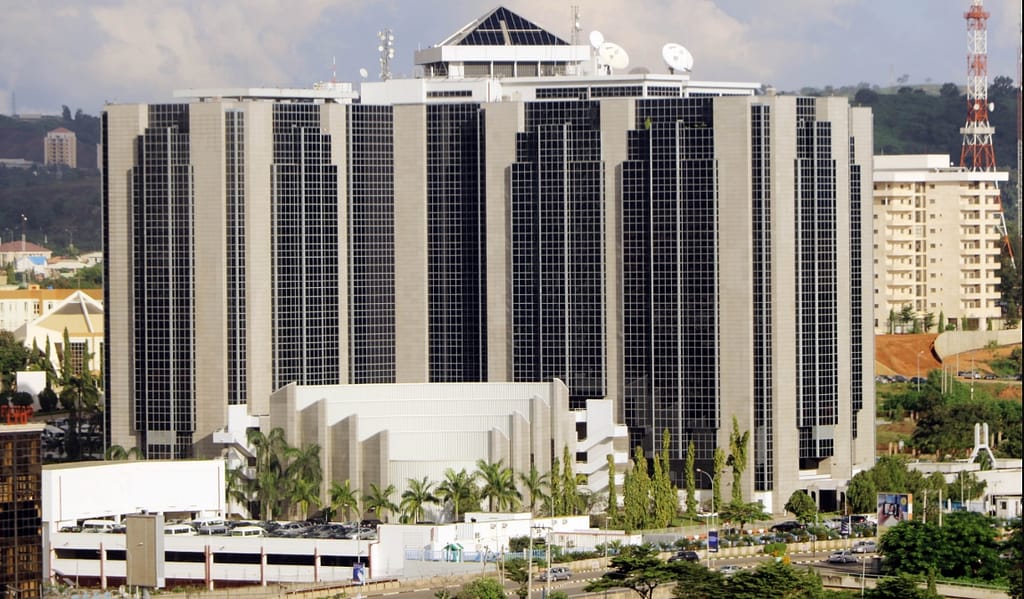
At the heart of the challenge is a combination of high inflation, foreign exchange scarcity, and tightening liquidity conditions that have reshaped how banks operate in Nigeria. The naira’s continued volatility has increased the cost of foreign currency obligations, while borrowers—particularly in the energy, manufacturing, and import-dependent sectors—are struggling to service dollar-linked loans.
A senior banking analyst based in Lagos said, “The Nigerian banking sector is not in crisis, but it is under significant strain. The pressure is uneven—some banks are well capitalised and diversified, while others are heavily exposed to foreign exchange risk and non-performing loans.”
One of the key concerns is the rising level of non-performing loans (NPLs), particularly among mid-tier banks with high exposure to sectors affected by inflation and exchange rate instability. As borrowing costs increase and consumer purchasing power weakens, repayment capacity has declined.
Banks with significant exposure to oil servicing contracts and import financing have been particularly affected. Delays in foreign exchange settlement and higher repayment burdens on dollar-denominated loans have created liquidity mismatches.
A financial consultant in Abuja explained, “The biggest issue is not just credit risk—it is currency risk. Many banks lent in dollars or financed import-heavy businesses, and the devaluation of the naira has made repayment significantly more difficult.”
While regulators have not publicly singled out institutions for distress, market analysts point to weaker capital adequacy buffers in some mid-sized lenders compared to tier-one banks. Larger institutions such as First Bank of Nigeria, Zenith Bank, Access Holdings, and Guaranty Trust Holding Company are generally viewed as more resilient due to stronger capital bases and diversified revenue streams.
However, smaller and mid-tier banks are believed to be more exposed to sectoral concentration risks, particularly in retail lending and foreign exchange-dependent corporate loans.
A senior investment banker noted, “The gap between tier-one banks and smaller institutions is widening. The stronger banks have better access to capital markets and more diversified income, while weaker ones are feeling the full impact of macroeconomic shocks.”
Nigeria’s persistently high inflation has also added pressure on the banking sector. The CBN’s monetary tightening stance, including higher benchmark interest rates, has increased the cost of borrowing for businesses and households.
While higher interest rates can improve bank margins in theory, they also increase default risk. Many borrowers are now struggling to meet repayment obligations, especially in the small and medium enterprise (SME) segment.
A Lagos-based SME owner said, “Loan repayments have become extremely difficult. Costs are rising everywhere—fuel, rent, logistics—and banks are not flexible because their own funding costs are also increasing.”
In response to these challenges, the Central Bank of Nigeria has intensified regulatory oversight and introduced measures aimed at stabilising the financial system. These include tighter capital requirements, enhanced stress testing, and closer monitoring of foreign exchange exposures.
The CBN has also continued efforts to stabilise the foreign exchange market through policy adjustments and liquidity interventions aimed at reducing speculative pressure on the naira.
A CBN official, speaking anonymously, stated, “Our priority is financial system stability. We are closely monitoring banks’ exposure to foreign exchange risks and ensuring that capital adequacy ratios remain within acceptable thresholds.”
The central bank has also encouraged banks to strengthen their risk management frameworks and improve loan recovery mechanisms. In addition, there has been increased emphasis on recapitalisation discussions, particularly for institutions that may struggle to meet future capital requirements.
Industry observers believe that a broader recapitalisation exercise may be on the horizon. With inflation eroding capital buffers in real terms and risk exposure increasing, some analysts argue that Nigerian banks may need to raise additional capital to remain competitive and stable.
A financial policy expert said, “Recapitalisation is almost inevitable. The scale of the economy has changed, inflation has changed the value of capital, and banks need stronger buffers to absorb shocks.”
However, there are concerns that raising capital in current market conditions may be challenging, particularly for weaker institutions. Equity markets remain sensitive to macroeconomic uncertainty, and investor appetite is uneven.
Foreign exchange scarcity remains one of the most significant structural challenges facing the sector. Banks rely heavily on dollar liquidity to meet international obligations, but limited supply has created delays and increased operational risk.
Import-dependent businesses, which form a large portion of bank lending portfolios, are particularly vulnerable. As access to forex remains constrained, repayment cycles are disrupted, further increasing pressure on balance sheets.
A trade economist explained, “Until Nigeria resolves its foreign exchange liquidity challenges, banks will continue to operate under structural stress. It is not just a banking issue—it is a broader macroeconomic issue.”
Outlook for the Sector
Despite the challenges, Nigeria’s banking system remains fundamentally resilient due to strong regulatory frameworks and the presence of well-capitalised tier-one banks. However, risks are clearly rising, and the disparity between strong and weak institutions is widening.
Analysts expect the CBN to maintain tight oversight while continuing reforms aimed at stabilising the currency, improving liquidity, and strengthening financial sector resilience.
A final assessment from a Lagos-based economist summed up the situation: “Nigeria’s banking sector is not facing collapse, but it is undergoing stress testing in real time. How banks respond now will determine the stability of the system in the years ahead.”
As economic conditions remain uncertain, the interplay between regulation, capital strength, and macroeconomic stability will define the next phase of Nigeria’s financial industry evolution.

