





In a startling development that has sent ripples through Nigeria’s political and military landscape, the nation’s armed forces have initiated a high-stakes investigation into approximately 20 officers detained over an alleged coup plot. The timing of this revelation—just days before the country’s Independence Day—has intensified concerns about the stability of the military and the government’s control over its institutions.
According to military intelligence sources, the detained officers, which include a brigadier general and a colonel, were allegedly involved in a conspiracy to overthrow President Bola Tinubu’s administration. Reports suggest that these officers had planned to execute coordinated attacks on top government officials, including the president, with the aim of installing a military regime. The plot was reportedly in its advanced stages, with a tentative date set for the coup, but it was foiled after the plans were leaked within the military ranks. The Defence Headquarters has confirmed that the arrested officers are being investigated for “indiscipline and breach of service regulations,” with preliminary findings indicating that their grievances stemmed from “career stagnation and failure in promotion examinations”
In the wake of the alleged coup attempt, President Tinubu’s administration has faced mounting pressure to address the situation. The government initially denied reports of a coup plot, labeling them as “false and spurious.” However, the subsequent detention of senior military officers and the ongoing investigation have lent credence to the allegations. In a bid to restore confidence and assert control, President Tinubu has undertaken a significant reshuffling of the nation’s top security officials. The Chief of Defense Staff, Chief of Naval Staff, and Chief of Air Staff have all been replaced, with new appointments made to strengthen Nigeria’s national security architecture
This incident is not the first time Nigeria has grappled with military insubordination and coup attempts. The country has a history marked by several military takeovers, with the most notable being the 1966 coup that led to the assassination of Prime Minister Sir Abubakar Tafawa Balewa and the eventual rise of military rule. In subsequent decades, Nigeria experienced multiple coups and counter-coups, leading to prolonged periods of military dictatorship. The return to civilian rule in 1999 marked a significant shift, but the military’s influence remained a potent force in the background.
The recent events have inevitably drawn comparisons to past military interventions. Analysts warn that if the current crisis is not managed effectively, it could signal a regression to the era of military dominance in Nigerian politics.
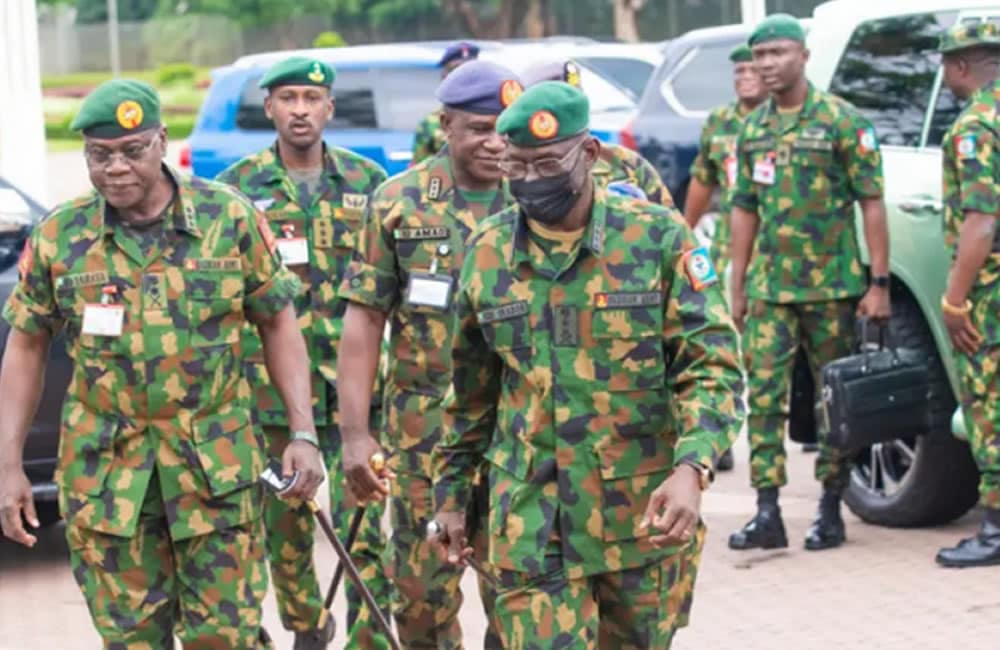
The Nigerian public has expressed a mixture of shock and apprehension regarding the alleged coup plot. Many citizens are concerned about the implications for democracy and the rule of law. The military’s role in governance has been a contentious issue, and the recent developments have reignited debates about the balance of power between civilian authorities and the armed forces.
As the investigation unfolds, the key questions remain: Was this an isolated act of rebellion, or does it reflect deeper fissures within the military establishment? The outcome of this probe will likely have far-reaching consequences for Nigeria’s political landscape and its democratic institutions. For now, the nation watches closely, hoping for a resolution that upholds the principles of civilian rule and national stability.

