




Israel is facing mounting international outrage after an airstrike in Gaza killed five journalists from Al Jazeera, including prominent correspondent Anas Al-Sharif, in what the network has called a “targeted assassination.”
The strike hit a tent within the Al-Shifa medical complex in Gaza City, where the journalists had been sheltering, according to hospital director Dr. Muhammad Abu Salmiya. The attack also claimed the lives of reporter Mohammed Qreiqeh, and cameramen Ibrahim Zaher, Mohammed Noufal, and Moamen Aliwa.
Al Jazeera issued a forceful statement condemning the killings, accusing Israel of deliberately targeting its team. “The order to assassinate Anas Al-Sharif, one of Gaza’s bravest journalists, and his colleagues, is a desperate attempt to silence the voices exposing the impending seizure and occupation of Gaza,” the network said.
Israel’s military has defended the strike, alleging that Al-Sharif was a Hamas operative posing as a journalist — a claim met with skepticism by rights groups. Jodie Ginsberg, chief executive of the Committee to Protect Journalists (CPJ), said her organisation has “yet to see any credible evidence” linking Al-Sharif to Hamas. She noted that Israeli officials had made similar allegations for months, particularly after Al-Sharif’s emotional on-air report on starvation in Gaza.
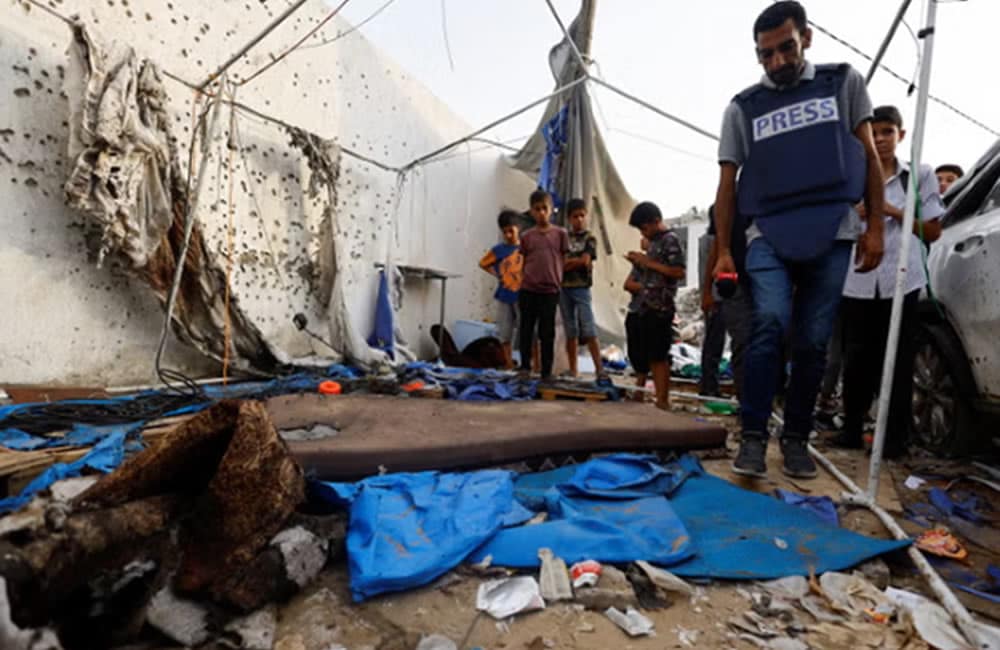
“We’ve asked for evidence repeatedly from Israel,” Ginsberg told Sky News, highlighting that the CPJ had previously raised concerns about repeated threats against the journalist. Last month, the group called on the international community to protect him.
Hundreds gathered outside the Al-Shifa Hospital complex on Monday to mourn the five journalists, as well as a medic killed in the same strike. The bodies, wrapped in white shrouds, were carried through the crowd in a mass funeral procession.
Ahed Ferwana of the Palestinian Journalists Syndicate accused Israel of systematically targeting reporters, urging urgent intervention from the global community.
Former UK Labour leader Jeremy Corbyn called the killings “sickening beyond words” and condemned what he described as an attempt to silence coverage of alleged war crimes. “Shame on all those who empowered Israel to murder with impunity,” Corbyn posted on X.
The killings come as Israeli Prime minister Benjamin Netanyahu vows to “finish the job” in Gaza with a plan to fully occupy Gaza City. The UN has warned that such an operation could trigger “another calamity” for the already besieged population.
The offensive, now approaching its second year, has killed or displaced tens of thousands of Palestinians. Many who remain face worsening famine, with reports of civilians being forced into desperate measures to secure food.
A joint investigation by local reporters described conditions in the north of Gaza as “impossible,” with accounts of armed men threatening to kill residents unless they surrendered flour.
Australia joined France, Britain, and Canada this week in announcing recognition of a Palestinian state. Prime Minister Anthony Albanese said the move reflects the urgent need for a political solution.
The Israeli ambassador to Australia, Amir Maimon, criticised the decision, claiming it undermined Israel’s security and rewarded terrorism. “By recognising a Palestinian state now, Australia elevates the position of Hamas… while weakening the cause of those working to achieve genuine, lasting peace,” Maimon said.
Meanwhile, scrutiny has intensified over the UK’s arms exports to Israel. Official figures show that Britain approved £127 million in military equipment sales to Israel in the final quarter of 2024. Critics argue the exports undermine calls for restraint.
In the hours after confirmation of his death, Al-Sharif’s pre-written final message was shared with his more than 500,000 followers on X. The note read:
“If these words reach you, know that Israel has succeeded in killing me and silencing my voice. First, peace be upon you and Allah’s mercy and blessings.”
The message has since been widely shared by journalists, activists, and political leaders, becoming a rallying cry for press freedom advocates.
For Al-Jazeera, the loss is deeply personal as well as professional. Colleagues describe Al-Sharif as fearless, compassionate, and committed to documenting the war’s human cost. His death — and that of his colleagues — has renewed calls for independent investigations into attacks on journalists in conflict zones.
The CPJ says at least 150 journalists and media workers have been killed in Gaza since the war began, making it one of the deadliest conflicts for the press in modern history.
As Gaza reels from both human loss and political upheaval, the deaths of Al-Sharif and his colleagues underscore the peril faced by those working to bring the reality of war to the world. For many, their deaths raise a troubling question: if even the most visible journalists are not safe, who will remain to bear witness?

