



A major geopolitical realignment is unfolding across the Sahel region as the military-led governments of Burkina Faso, Mali, and Niger deepen political and military cooperation in a move that could significantly reshape power dynamics in West Africa.
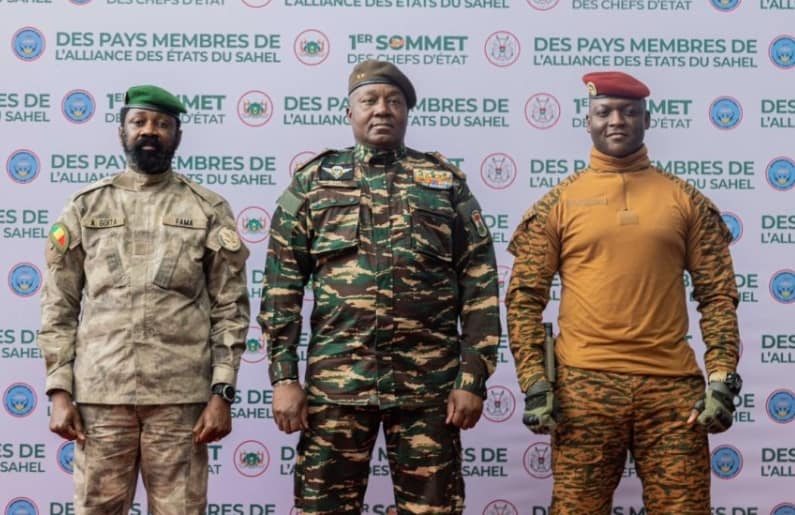
The three countries, all currently governed by military juntas following coups in recent years, have strengthened ties through the Alliance of Sahel States, a regional bloc created after deteriorating relations with France, the European Union, and several Western governments.
At the centre of the growing alliance is Burkina Faso’s military leader, Ibrahim Traoré, who has emerged as one of the most outspoken anti-Western voices in Africa. Since taking power in 2022, Traoré has repeatedly accused former colonial powers, particularly France, of exploiting African nations while failing to provide genuine security support against extremist violence in the Sahel.
“We will no longer allow foreign powers to dictate Africa’s future,” Traoré declared during a recent regional summit in Ouagadougou. “The Sahel must defend its sovereignty and chart its own destiny.”
The Alliance of Sahel States was initially established as a mutual defence pact between the three nations following growing insecurity linked to jihadist insurgencies operating across the region. However, the alliance has rapidly evolved into a broader political and strategic partnership aimed at reducing Western influence and increasing regional autonomy.
The three governments have expelled French military forces, reduced security cooperation with Western allies, and increasingly turned toward Russia for military assistance, equipment, and political support.
In Niger, military leader Abdourahamane Tchiani has defended the alliance as necessary for protecting regional sovereignty. Meanwhile, Mali’s transitional leader Assimi Goïta has similarly accused Western governments of interfering in African affairs under the guise of democracy promotion and counterterrorism.
Analysts say the emergence of the Sahel alliance represents one of the most significant geopolitical shifts in Africa in recent years. The region has become a battleground for influence involving Western powers, Russia, China, and regional actors competing for strategic partnerships, security access, and economic influence.
Russia’s growing presence in the Sahel has attracted international attention. Moscow has expanded military cooperation with the three governments through security agreements, training support, and arms supplies. Russian flags have increasingly appeared during pro-junta rallies across parts of the region, symbolising growing anti-Western sentiment among sections of the population.
Political analyst Dr. Mamadou Diarra described the alliance as “a rebellion against decades of Western dominance in Francophone Africa.”
“For many young people in the Sahel, these juntas represent resistance against old power structures,” Diarra explained. “Whether they succeed or fail economically is another question entirely.”
Despite the growing nationalist rhetoric, the region continues to face severe security and economic challenges. Islamist insurgencies remain active across large parts of the Sahel, while poverty, displacement, and humanitarian crises continue to affect millions.
Critics also warn that the concentration of military power and weakening democratic institutions could increase political instability over time. Western governments have expressed concern about declining democratic governance and human rights conditions under the military regimes.
Nevertheless, the Alliance of Sahel States is rapidly becoming a powerful symbol of Africa’s changing geopolitical landscape, where some nations are increasingly seeking alternatives to traditional Western alliances and asserting greater control over their political and security futures.

