



When Seyi Makinde assumed office as Governor of Oyo State in May 2019, many observers described his emergence as a turning point in the state’s political history. A trained engineer and successful businessman, Makinde came into power under the platform of the People’s Democratic Party (PDP), defeating the incumbent party in what many analysts described as a protest vote against the established political order. His victory signaled not only a shift in leadership but also a change in expectations about governance, transparency, and development.
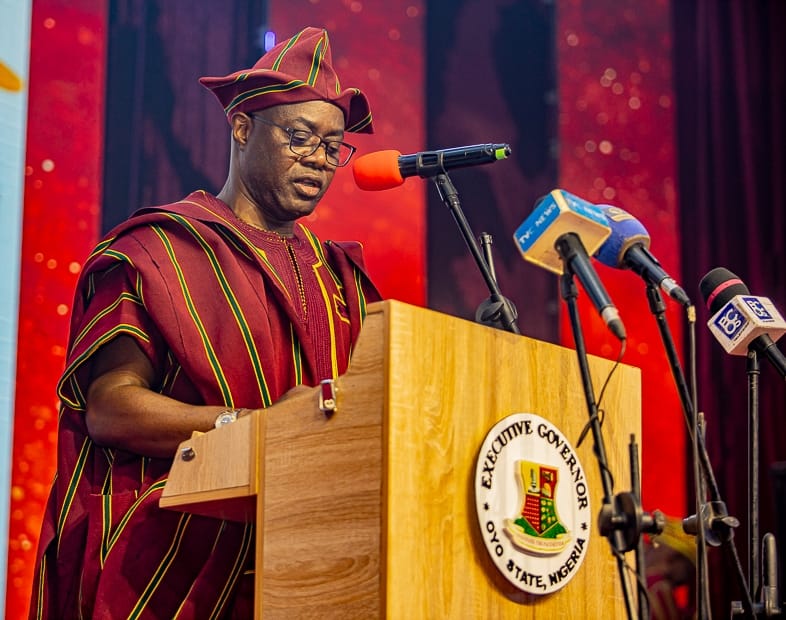
From the outset, Makinde presented himself as a technocratic leader determined to modernize governance. His campaign promise of “Omituntun,” a Yoruba phrase meaning “fresh start,” became the central theme of his administration. The slogan resonated strongly with citizens who were eager for improvements in infrastructure, economic opportunities, and public services.
One of the most visible aspects of Makinde’s governance has been his focus on infrastructure development. His administration embarked on extensive road construction and rehabilitation projects across the state, particularly in the capital city of Ibadan. Several major roads connecting economic hubs and rural communities were upgraded, easing transportation and boosting local commerce.
Analysts note that improving road networks was a strategic choice aimed at stimulating economic activity. As one local policy analyst observed, “Makinde understood early that infrastructure is not just about roads; it is about unlocking productivity in agriculture, trade, and urban development.”
Another significant achievement was the revival of the Fasola Agribusiness Industrial Hub in Oyo, a project designed to transform agriculture from subsistence farming into a commercial enterprise. The initiative aimed to attract private investment, create jobs, and strengthen the state’s food production capacity.
Education also received attention under Makinde’s administration. One of his early policies was the removal of certain school fees in public secondary schools, a move intended to increase access to education. The state also recruited thousands of teachers to address long-standing shortages in the education sector.
Makinde’s background in business shaped his approach to financial management. His administration introduced reforms aimed at improving transparency in government spending and boosting internally generated revenue without placing excessive burdens on citizens.
Observers often point to his decision to publicly declare the state’s financial position and debt profile shortly after assuming office as a sign of his commitment to openness. In his words, “Government must operate with the same accountability that we expect from private institutions.”
These reforms helped stabilize the state’s finances and created room for investment in key sectors such as infrastructure and healthcare.
Makinde’s leadership was also tested during the global health crisis caused by COVID-19. Ibadan became one of the early centers of the outbreak in southwestern Nigeria. The governor’s decision to be transparent about his own infection with the virus was widely praised for reducing stigma and promoting public awareness.
His administration implemented containment measures, public health campaigns, and economic support initiatives aimed at mitigating the impact of the pandemic on residents.
However, critics argue that Makinde’s governance style has sometimes been perceived as overly centralized. Some political stakeholders believe that broader consultation with party leaders and community groups could have strengthened consensus-building within the state’s political environment.
Beyond governance, Makinde has played an increasingly influential role in regional politics. Within the People’s Democratic Party, he emerged as one of the prominent voices advocating for internal reforms and regional balance.
His political maneuvering during national party negotiations demonstrated both strategic skill and independence. As one political commentator noted, “Makinde has positioned himself as a bridge between technocratic governance and traditional political structures.”
Yet this political assertiveness has also generated tensions within the party, with some critics accusing him of pursuing an independent agenda that sometimes conflicts with national party leadership.
Despite notable achievements, Makinde’s administration has faced criticism in several areas. Security concerns remain a persistent challenge across parts of the state, particularly in rural areas where farmers have reported incidents of violence and disputes over land use.
Opposition figures have also argued that while infrastructure projects have been visible, more could have been done to strengthen industrialization and large-scale job creation. Youth unemployment, a major concern across Nigeria, continues to pose economic and social challenges.
Some critics also believe the administration could have accelerated reforms in urban planning, environmental management, and housing development in rapidly expanding areas of Ibadan.
Another area where observers say improvements could have been made is communication. Although the administration frequently highlights its achievements, some analysts believe stronger engagement with grassroots communities would help ensure that policies are better understood and supported by citizens.
As Makinde’s tenure continues to shape the political narrative of Oyo State, his legacy is likely to be defined by several key factors.
First, he may be remembered for reintroducing technocratic thinking into state governance—a style that blends professional expertise with political leadership.
Second, his administration’s focus on infrastructure and agricultural development could leave lasting economic impacts, particularly if projects such as the Fasola Agribusiness hub reach their full potential.
Third, Makinde’s influence within national opposition politics may position him as a significant figure in shaping the future direction of the People’s Democratic Party.
Ultimately, his political legacy will depend not only on the projects completed during his administration but also on how effectively those initiatives translate into long-term improvements in the lives of ordinary citizens.
As one senior political observer summarized: “Seyi Makinde represents a different kind of Nigerian governor—one who entered politics from outside the traditional political class. Whether history judges his experiment as transformative will depend on how sustainable his reforms prove to be.”
For now, his leadership continues to define the evolving political landscape of Oyo State, leaving a legacy that is both impactful and still unfolding.

