





By, Ralph Springton (Alberta, Canada)
The world is entering a new era where economic strategies are no longer dictated purely by free market logic or comparative advantage—but increasingly by political power, national interest, and the tectonic shifts in global influence. This is the dawn of geoeconomics: a hybrid domain where states use economic tools—trade, investment, regulation, technology access—as instruments of geopolitical strategy.
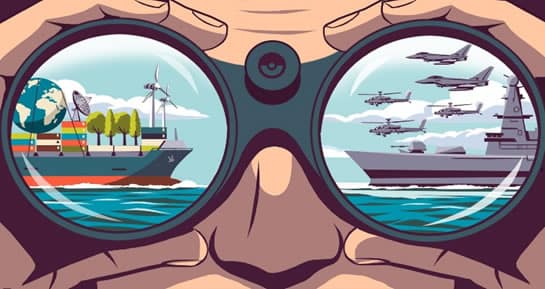
In this emerging landscape, China and the United States are the two dominant architects. Their competition is not merely military or ideological, but deeply embedded in trade routes, digital infrastructure, semiconductors, green energy, and supply chain dominance. The goal is clear: shape the global economic order in one’s own image—what some analysts now call “geofinance.”
Unlike the post-Cold War period of liberal economic expansion, where globalization was largely apolitical, today’s financial and trade systems are increasingly weaponized. The U.S., for example, has ramped up its use of export controls, investment screening, and sanctions—especially in sensitive sectors like advanced microchips. China, on the other hand, is leveraging its Belt and Road Initiative and state-led investment in critical technologies to secure influence across Africa, Asia, and Latin America.
, These shifts are challenging the very fabric of multilateralism and global capitalism. Traditional frameworks—like the WTO, IMF, and even the World Bank—are under stress as nations prioritize national resilience and strategic autonomy over open-market cooperation.
This geopolitical economy is also reshaping the corporate world. Multinational companies can no longer simply chase profit; they must now navigate political risks, supply chain vulnerabilities, and align with the strategic goals of their home governments. Tech firms, in particular, find themselves at the frontlines of global power tussles—from the TikTok ban debates to semiconductor export battles.
Emerging economies, including in Africa, are increasingly being courted by both blocs. They are receiving competing infrastructure offers, digital networks, and financial partnerships, but often at the cost of difficult political alignments. The result is a complex diplomatic balancing act, where nations must ask: who do we trade with, partner with, or risk offending?
What’s more, climate finance and green industrial policy have entered the geoeconomic toolbox. The U.S.’s Inflation Reduction Act and the EU’s Green Deal Industrial Plan are not just about saving the planet—they’re also about securing leadership in the next energy revolution.
For the average citizen or business owner, these trends might feel distant, but their effects are real. From rising costs due to trade fragmentation, to tech access restrictions, to investment volatility tied to foreign policy decisions, geoeconomics now touches every corner of the global marketplace. For Africa, and indeed the diaspora, the message is clear: understanding global power dynamics is no longer optional—it’s essential to economic survival and strategic opportunity. The new age of geoeconomics is not just about big nations vying for supremacy. It’s about every region finding its voice—and protecting its economic future in a deeply interconnected, yet increasingly divided world.

