




U.S. President Donald Trump has openly criticised UK Prime Minister Keir Starmer for what he described as “taking far too long” to grant permission for American forces to use British military bases in operations related to the growing conflict with Iran. The remarks, made in an interview with The Daily Telegraph, underline a rare diplomatic tension between two long-standing allies amidst one of the most volatile international crises in recent history.
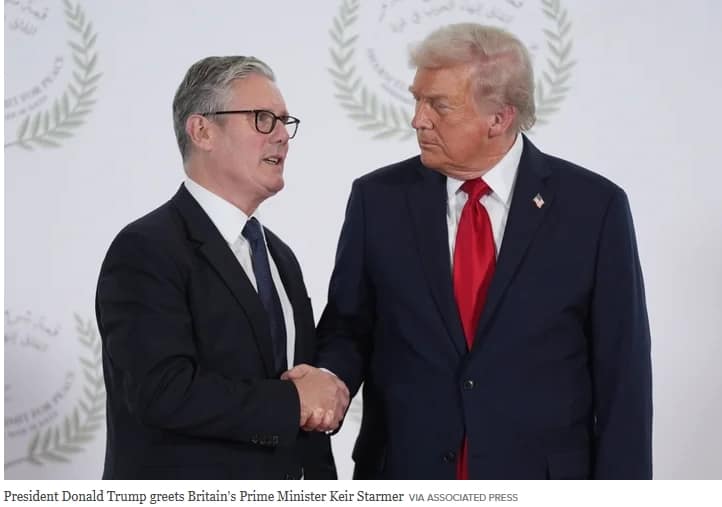
Trump’s comments centre on the timing and legal caution exhibited by Starmer’s government in the immediate aftermath of the U.S. and Israeli air strikes on Iran — operations that killed Supreme Leader Ayatollah Ali Khamenei and dramatically escalated the war. The president said the initial refusal to allow use of key airbases — notably Diego Garcia in the Indian Ocean and RAF facilities — delayed potential strategic action, and left him “very disappointed in Keir.”
“It sounds like he was worried about the legality,” Trump told the paper, suggesting that Starmer’s hesitation was rooted in concerns over international law rather than strategic considerations. Trump maintained that, eventually, the decision to permit U.S. use of British bases for defensive missions was “useful” — but that the delay was avoidable and atypical for the “special relationship” between Washington and London.
The dispute also touched on broader bilateral policies, including the UK’s controversial plan to transfer sovereignty of the Chagos Islands to Mauritius — a move linked to the future of the Diego Garcia base. Trump, who initially supported the sovereignty deal, later reversed his stance and criticised Starmer’s government for what he called a “very woke thing” that complicated defence arrangements. He argued that retaining ownership of the islands would have simplified legal issues surrounding the use of the base.
From Downing Street’s perspective, however, the government’s approach has been one of caution and legal responsibility. Starmer’s offices stressed that the UK’s shift to allow use of airbases came only after Iran’s wave of retaliatory attacks — including an Iranian drone strike on RAF Akrotiri in Cyprus — posed a direct threat to British and allied personnel. A government spokesperson highlighted that the permission granted was for specific defensive actions, not participation in offensive strikes inside Iran.
Analysts say Starmer’s stance reflects the delicate balance he is trying to maintain: upholding international law and avoiding deeper entanglement in the conflict, while also supporting collective defence efforts alongside the U.S. and other NATO allies. Pressure comes from multiple directions at home, with some urging stronger support for U.S. actions and others calling for restraint, reflecting public unease about Britain’s role in a widening war.
The dispute over base access and timing of approval illustrates how the Iran conflict — now rapidly escalating across the Middle East — is testing not just battlefield alliances but diplomatic bonds, legal norms and long-held assumptions about Western collaboration in times of crisis.

