




Facing mounting economic pressure from rising U.S. tariffs, Vietnam has unveiled a sweeping $49 billion domestic investment plan, aimed at buttressing growth through a concerted shift toward internal development. With its export-driven model increasingly vulnerable, the country is pivoting toward infrastructure build-out, high-tech advancements, and private sector empowerment to sustain economic momentum.
Once lauded as a manufacturing star in global supply chains, Vietnam’s economy now grapples with an escalating tariff landscape. Exports to the U.S.—which has long been Vietnam’s most important market—are now burdened by duties reaching as high as 46%, marking a significant blow to the country’s growth trajectory.
In this context, the government’s launch of domestic-led projects worth $49 billion signals a strategic countermeasure. Although the exact composition of the investment package remains patchy, signals point to ambitious plans across multiple fronts—from transport and energy infrastructure to technological industries and beyond
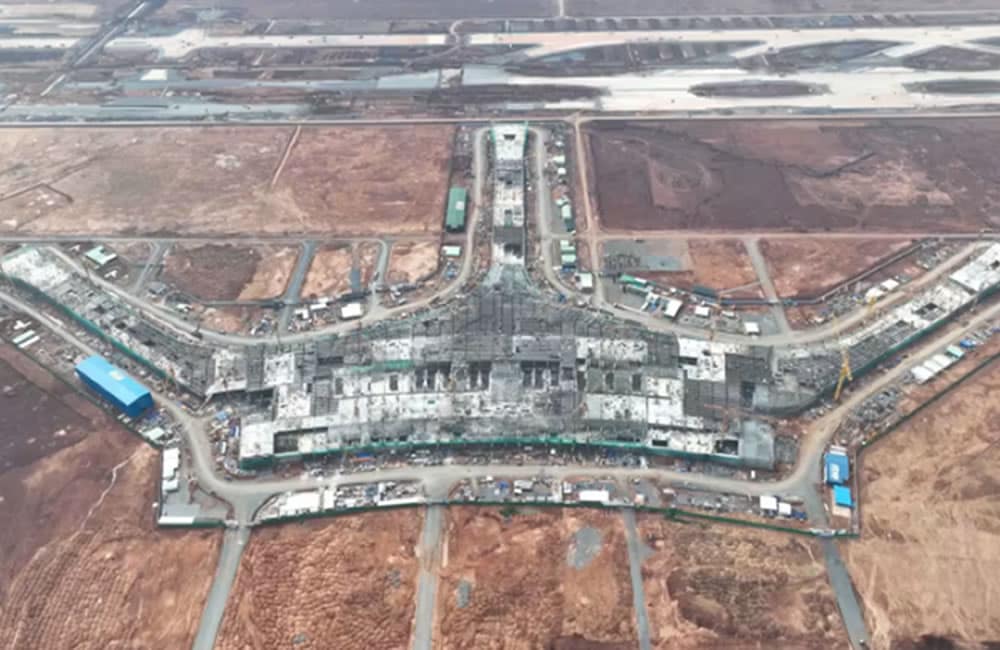
Backing this shift is a broader economic transformation underway. Vietnam has begun repositioning itself as an innovation-driven economy, setting its sights on becoming Asia’s next “tiger economy” by 2045. This entails heavy investment in high-tech sectors such as semiconductors, artificial intelligence, renewable energy, and even nuclear power. Notably, a $67 billion North–South high-speed rail corridor is already approved, linking Hanoi and Ho Chi Minh City via fast rail connection
At the same time, the government is actively bolstering private enterprise through regulatory reforms, enhanced access to credit, and explicit policies designating private firms as the primary economic engine under Resolution 68. The ambitious goal: elevate at least 20 domestic firms to global prominence by 2030
Vietnam’s domestic support industries are also being retooled to reduce reliance on imports. Once largely dependent on foreign materials—particularly from China—Vietnam is scaling up its local suppliers in textiles, electronics, and automotive components. For instance, the textile sector is targeting a localization rate of 45–50% this year; electronics firms are working to meet half their input needs domestically by 2025
That said, Vietnam’s journey is not without risk. Economists warn that public investment efforts have historically faced disbursement hurdles, and the success of the $49 billion package hinges on bureaucratic capacity, transparency, and efficient execution
Furthermore, the country must grapple with longer-term challenges such as climate change, an aging workforce, and entrenched institutional resistance—all threats that could undermine the reform agenda
Meanwhile, the U.S.-Vietnam trade landscape continues to evolve. Though tariffs remain steep, a recent bilateral framework has lowered duties from 46% to 20% on U.S. imports of Vietnamese goods. However, transshipped items—often routed via third countries to sidestep tariffs—will still attract a punitive 40% tariff, aimed at preventing circumvention
This layered policy backdrop—tariff relief on one hand, but lingering structural constraints and global headwinds on the other—underscores why Vietnam is doubling down on domestic resilience.

