




By Mojisola Alaiya (Nigeria)
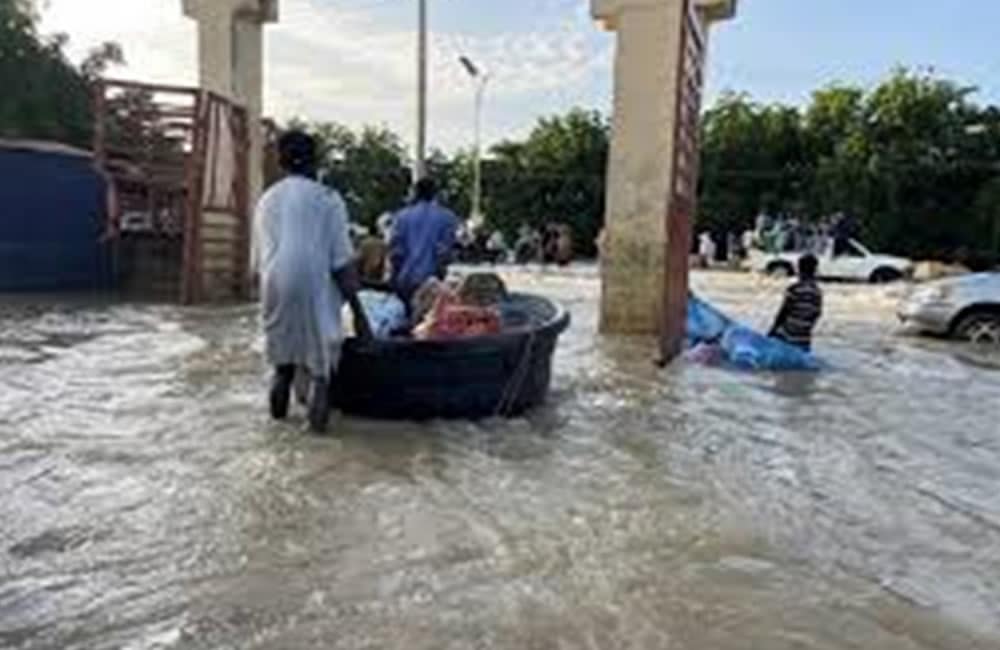
When the rains began in the early hours of Sunday, July 27, the residents of Yola South in Adamawa State had no idea the calm drizzle would become a disaster.
“It started as a gentle rain,” said Amina Bala, a mother of three who now sleeps on a mat at Aliyu Musdafa College, one of the makeshift shelters for displaced families. “Within hours, water rushed into our home. We barely escaped with our lives.”
By the next morning, much of her community had been submerged. Homes were destroyed, and families torn apart. Over 36 communities in the state have been affected, and as rescue efforts continue, the death toll has risen to 26, according to the Adamawa State Police Command—up from the initial 22 reported earlier. Some 5,560 people have been displaced, with many now living in overcrowded temporary shelters.
“We’re still looking for my cousin,” said Malam Ibrahim, standing near the site of what used to be his family’s home. “She tried to go back for her baby’s food. That was the last we saw of her.”
The National Emergency Management Agency (NEMA), in collaboration with the United Nations Office for the Coordination of Humanitarian Affairs (OCHA) and the state government, is working to provide basic necessities—food, clean water, and medical support.
“There are so many needs,” said Dr. Esther Okocha, a volunteer with a local health NGO. “We have pregnant women, children with fevers, and families who’ve lost everything. It’s a humanitarian crisis unfolding before our eyes.”
Governor Ahmadu Fintiri, who visited the victims at the shelter on Monday, expressed deep sorrow. “We mourn with those who have lost loved ones and livelihoods. The government will investigate the cause of the flood and ensure this never happens again.”
He also addressed growing rumours that mining activities in the area triggered the flood. “Those claims are false,” he said firmly. “Our investigations so far show no link between this disaster and any mining operations in the state.”
Yet not everyone is convinced that this was merely an act of nature.
Mohammed S. Mohammed, Adamawa’s Commissioner for Environment, pointed to years of neglect and environmental mismanagement. “The flood was worsened by illegal buildings constructed on waterways and rampant dumping of refuse,” he said. “People have built homes where rivers should flow.”
According to the commissioner, the government is now mapping critical drainage paths and reclaiming blocked waterways. “We’re reviewing the right of way and will enforce stricter penalties on environmental violations going forward.”
Unfortunately, Adamawa’s tragedy is part of a broader pattern across Nigeria. The Nigerian Meteorological Agency (NiMET) has warned that more flash floods are expected this year. Since May, over 400 flood-related deaths have been recorded nationwide, and the United Nations estimates that more than a million people were displaced by floods in 2024 alone.
States like Ondo, Rivers, Niger, and Kwara have already faced similar crises. Adamawa is the most recent name on a growing list of flood-devastated regions.
Despite the loss, some residents are choosing resilience.
“We lost our home, but not our faith,” said Isa Adamu, a retired schoolteacher helping organize food distribution at the shelter. “Our people are strong. We just need support to rebuild.”
For others, the trauma is still raw.
“My daughter cries every night,” said Amina Bala. “She keeps asking, ‘When are we going back home?’ But I don’t know what to tell her. Our home is gone.”
As aid continues to arrive and cleanup begins, residents of Adamawa are left grappling not just with physical destruction, but with grief, uncertainty, and the urgent question: Could this have been prevented?

