



As the global economy moves into 2026, momentum remains mixed. According to Coface, global growth is expected to reach +2.6% in 2026, a slight dip from +2.8% in 2025, amid an international environment marked by persistent geopolitical, financial, and social risks. Despite these challenges, Africa is projected to outperform the global average, with growth forecast at +4.3%, up slightly from +4.2% in 2025.
Coface has adjusted its risk assessments for 2026, making seven country risk changes (six upgrades) and nine sector rating changes (seven upgrades), reflecting both opportunities and ongoing vulnerabilities in the global economy.
The previous year demonstrated the resilience of globalisation, as companies with international operations adapted effectively to evolving economic conditions. Global growth in 2025 remained in line with Coface’s forecast of +2.8%, even amid volatility caused by trade tensions, geopolitical upheavals, and financial market pressures.
Two key factors explain this resilience. First, the shocks experienced in 2025 were relatively minor compared to the uncertainty already present in global markets. Second, businesses, particularly those engaged in international trade, were able to adapt to new challenges, underlining the continued strength and interdependence of globalisation.
The new year, however, has started under a cloud of uncertainty. Geopolitical tensions in Latin America, Iran, and Greenland have emerged alongside financial risks related to high debt and asset valuation levels in a persistently high-interest-rate environment. Macroeconomic risks persist, including US economic policy uncertainty, potential trade clashes, and weakening international cooperation. Social and political risks are also evident, particularly in Europe, where growing public discontent is visible, alongside health and climate challenges worldwide.
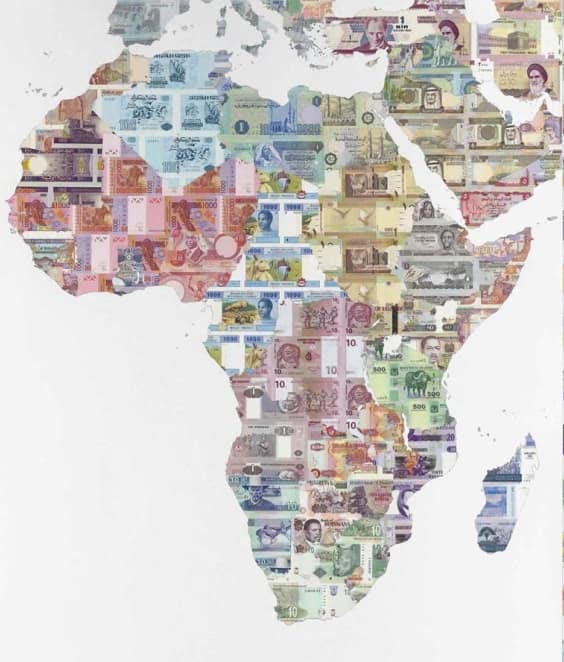
Against this backdrop, Africa is expected to continue showing solid growth in 2026. Coface projects the continent’s GDP to expand by +4.3%, driven in part by favorable commodity dynamics. Prices for key imports such as food and energy are expected to remain moderate, while exports of minerals and metals are seeing strong demand.
Countries such as Zambia and the Democratic Republic of Congo benefit from copper exports, Ghana from gold, and Guinea from bauxite and iron ore. Rising commodity prices are likely to strengthen local currencies, lower imported inflation, and support foreign exchange reserves, easing pressure on public finances in countries with high financing needs.
Aroni Chaudhuri, Africa Chief Economist at Coface, notes: “Alongside the direct impact on growth, these trends support stronger currencies, thus lower imported inflation, and enable the building of FX reserves. Less pressure on the external accounts will also provide some leeway for countries with strained public accounts and that still face high financing needs.”
The global economic environment remains uneven. In the United States, GDP is projected to grow by +2.2%, supported by robust consumer spending, despite a 15% rise in corporate bankruptcies in the latter half of 2025. In the Eurozone, growth is expected to reach around +1%, boosted by Germany’s investment-driven rebound, while France is forecast to stabilize at +0.9%, constrained by a stubborn public deficit above 5% of GDP. Poland and other Central European nations continue to show stronger growth, with Poland projected at +3.8%.
In Asia, China’s growth is expected to slow to +4.4%, impacting regional momentum. Southeast Asia displays mixed resilience, while India continues to act as a global growth engine, supported by strong domestic demand and proactive public policies, with a projected +6.1% growth.
South Africa is set to benefit from increased mining activity, which will stimulate related industries through sectoral linkages. A stronger rand and lower fuel prices are expected to keep inflation within the central bank’s target range of 3%, enabling potential monetary easing in 2026.
Morocco is forecast to grow by +4.4%, driven by construction linked to infrastructure investment in preparation for the 2030 FIFA World Cup. Agricultural production is expected to recover following favorable weather, while tourism remains strong, with nearly 20 million visitors recorded in 2025. Manufacturing growth may slow due to weak European automotive demand, but low inflation will support both consumption and investment.
Oil prices are projected to ease from USD 68 per Brent barrel in 2025 to around USD 60, reflecting moderate demand and increased supply. While geopolitical risks could cause temporary volatility, energy prices are expected to remain broadly neutral for inflation.
Global trade also defied expectations in 2025, growing 3.9% despite US tariffs and trade tensions. Strong US imports contributed to this growth, while the effective average tariff rate fell to 9.4% in November, much lower than anticipated during heightened trade tensions with China.
Coface’s analysis suggests that while the global economy faces persistent challenges, Africa is poised for continued, robust growth in 2026. The continent’s resilience is underpinned by favorable commodity prices, currency stability, and strategic investments across key sectors. Sound economic performance, particularly in resource-rich nations, offers opportunities for development and stronger fiscal and external positions across the region.

