




The United Kingdom has stepped carefully — but unmistakably — into the latest Middle East escalation, authorising the United States to use British military facilities for limited defensive operations against Iranian missile capabilities, while declining to participate in direct offensive strikes on Tehran.
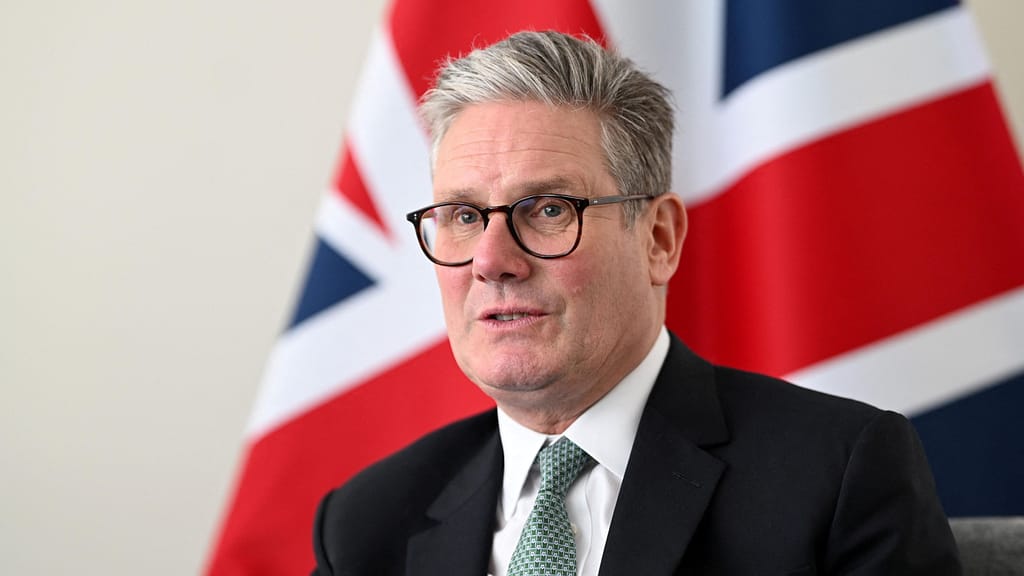
Prime Minister Keir Starmer has framed the move as a matter of protection rather than provocation: a calculated effort to safeguard British personnel and interests without widening the war. In a region already on edge following U.S.–Israel operations against Iran, the government’s position signals solidarity with allies — but also restraint.
Though the government has not publicly detailed the operational scope, defence analysts point to several key installations central to the UK–U.S. security partnership.
Foremost among them is RAF Akrotiri, Britain’s principal air base in the Eastern Mediterranean. Long used for missions across the Middle East, the base has reportedly faced heightened security threats in recent days.
Further afield lies Diego Garcia, the strategically remote atoll jointly operated by the UK and U.S., often described as one of the most important Western military hubs in the Indo-Pacific and Gulf corridors.
Closer to home, RAF Fairford remains capable of hosting American strategic bombers, reinforcing the depth of operational interoperability between London and Washington.
These bases function as more than airstrips; they are intelligence nodes, logistics centres and rapid-response platforms — tangible expressions of the transatlantic alliance.
Crucially, Downing Street has drawn a sharp distinction between defensive cooperation and offensive war participation. The UK has not joined the recent U.S.–Israel strikes on Iranian territory. Instead, it has permitted narrowly defined defensive actions — reportedly targeting missile depots and launch systems deemed immediate threats to British or allied forces.
British assets have also been involved in intercepting drones and missiles aimed at regional partners, part of what officials describe as collective self-defence under international law.
The nuance matters. After the protracted wars in Iraq and Afghanistan, public tolerance for another open-ended conflict is limited. By stressing legal justification and proportionality, the government aims to reassure Parliament and the public that this is not a march toward war, but a shield against it.
The decision reflects a delicate diplomatic choreography. On one hand, it reassures Washington that the UK remains a dependable ally. On the other, it preserves Britain’s claim to independent judgment.
London’s message is clear: it will defend its citizens and treaty obligations, but it will not automatically align with every offensive measure. That calibrated posture seeks to maintain credibility in both Western capitals and among Gulf partners wary of unchecked escalation.
Yet the balancing act carries real risks. Tehran could interpret any facilitation as participation, exposing British interests worldwide to retaliation. With substantial numbers of British nationals living and working across the Gulf, evacuation planning and diplomatic engagement have become urgent priorities.
There is also the domestic front. Westminster debates are likely to intensify, probing the legal basis and long-term strategy. Public confidence will hinge on transparent communication — and on whether defensive measures succeed in preventing further escalation.
Britain’s current approach amounts to a tightrope walk: defending lives and alliances while striving to avoid direct belligerence. In a region defined by rapid escalation and fragile deterrence, even limited actions can carry outsized consequences.
For now, the government is betting that a disciplined, legally framed defensive posture will contain threats without dragging the UK into a broader war. Whether that balance can hold in an increasingly combustible Middle East remains the defining question of this moment.

