




The African Continental Free Trade Area is steadily gaining traction, offering fresh momentum to intra-African trade even as structural challenges continue to test its full potential.
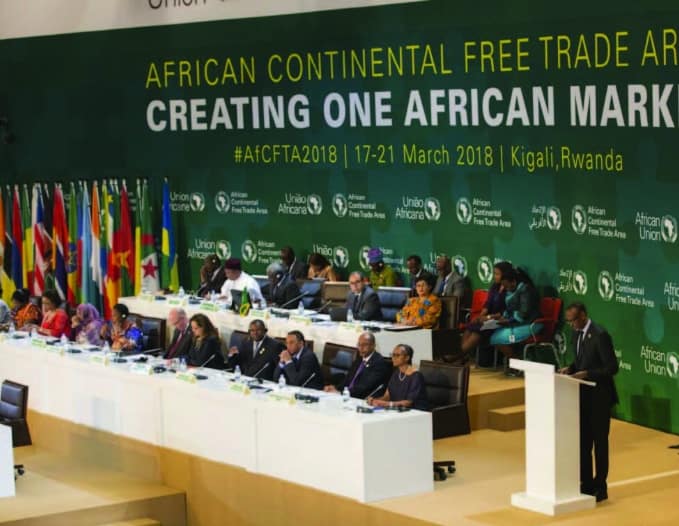
Launched with the ambition of creating the world’s largest free trade area by number of participating countries, AfCFTA aims to break down long-standing barriers that have historically limited trade between African economies. Early signs suggest progress, with a growing number of businesses beginning to explore cross-border opportunities under the framework.
Officials say the agreement is already helping to simplify tariffs on selected goods and harmonise trade procedures, making it easier for companies—particularly small and medium-sized enterprises—to expand beyond their domestic markets.
“We are seeing encouraging movement in regional trade corridors,” said a senior trade policy expert. “For the first time in decades, there is a coordinated push to make African markets more accessible to each other.”
Despite this progress, the pace of implementation remains uneven. Infrastructure deficits—ranging from poor road and rail networks to limited port capacity—continue to constrain the efficient movement of goods across borders. In many regions, transporting products between neighbouring countries can still be more expensive and time-consuming than shipping them overseas.
Regulatory fragmentation also poses a significant hurdle. Differing customs procedures, standards, and documentation requirements create bottlenecks that slow down trade and increase costs for businesses. While AfCFTA seeks to harmonise these systems, aligning policies across dozens of countries is a complex and gradual process.
“Policy alignment is not something that happens overnight,” noted an economist specialising in regional integration. “There are real differences in national priorities, administrative capacity, and economic structure that must be addressed.”
For businesses on the ground, the opportunities are balanced by practical realities. A logistics operator in West Africa described the situation succinctly: “The idea is powerful, but execution is everything. Until roads improve and border processes become smoother, companies will continue to face delays.”
Nevertheless, momentum is building. Pilot trade initiatives under AfCFTA have begun to demonstrate what is possible, with selected goods moving more efficiently across participating countries. Governments are also investing in digital customs systems and trade facilitation measures aimed at reducing friction at borders.
The private sector is increasingly engaged, recognising the long-term potential of a more integrated continental market of over a billion people. Sectors such as manufacturing, agriculture, and retail stand to benefit significantly if trade barriers are reduced and supply chains become more interconnected.
Analysts argue that the success of AfCFTA will ultimately depend on sustained political will and coordinated investment in infrastructure and institutions. Without these, the agreement risks falling short of its transformative promise.
Still, the direction of travel is clear. As incremental gains accumulate, the African Continental Free Trade Area is moving from vision to reality—slowly reshaping how trade is conducted across the continent and laying the groundwork for a more connected economic future.

