




Africa’s technology ecosystem is experiencing a renewed wave of global investor interest, as startups across Nigeria, Kenya, and Egypt position themselves at the forefront of innovation in fintech, healthtech, and artificial intelligence.
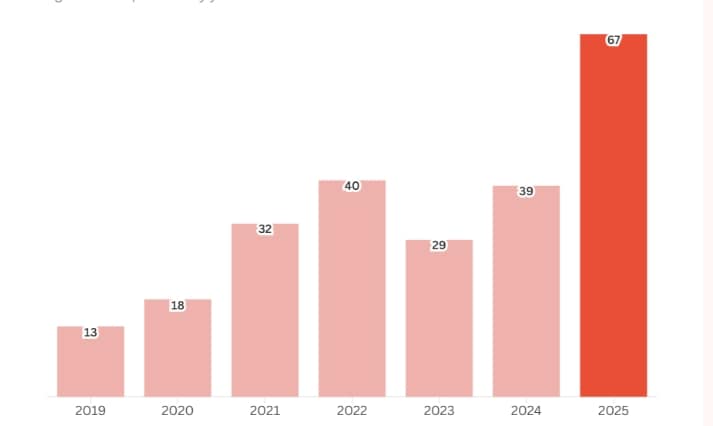
After a period of cautious investment driven by global economic uncertainty, venture capital is once again flowing into the continent, with investors drawn by a combination of rapid digital adoption, underserved markets, and scalable business models. Industry observers say the shift reflects growing confidence in the long-term potential of Africa’s digital economy.
“We’re seeing a more mature ecosystem emerge,” said a partner at a London-based venture capital firm. “Founders are building solutions tailored to real problems—payments, healthcare access, logistics—and that’s exactly what global investors are looking for.”
Fintech remains the dominant sector, accounting for a significant share of funding activity. Startups are expanding access to digital payments, credit, and financial services for millions of people who have historically been excluded from formal banking systems. In Nigeria, companies are leveraging mobile platforms to simplify transactions and cross-border payments, while in Kenya, innovation continues to build on the country’s strong mobile money foundation.
Egypt, meanwhile, is gaining recognition as a fast-growing hub for both fintech and broader technology ventures, supported by a large domestic market and increasing government backing for entrepreneurship.

“Egypt offers scale, talent, and improving infrastructure,” said a Cairo-based startup founder. “Investors are beginning to see it not just as a local market, but as a gateway to the wider region.”
Beyond fintech, healthtech is emerging as a critical growth area. Startups are deploying digital tools to bridge gaps in healthcare delivery, from telemedicine platforms to data-driven diagnostics. The COVID-19 pandemic accelerated demand for such solutions, and the momentum has continued as governments and private sector players seek more resilient health systems.
Artificial intelligence is also gaining traction, with a new generation of startups applying machine learning to sectors such as agriculture, finance, and urban planning. While still in its early stages, AI innovation is attracting attention from global investors eager to tap into new markets and data-driven opportunities.
However, the funding resurgence is not without challenges. Startups continue to navigate issues including currency volatility, regulatory complexity, and infrastructure gaps. Access to follow-on funding remains a concern, particularly for companies looking to scale beyond early-stage investment.
“There’s more capital available now, but it’s also more selective,” noted an African venture analyst. “Investors are focusing on fundamentals—revenue, governance, and clear paths to profitability.”
Governments across the continent are also playing a role, introducing policies aimed at supporting innovation, improving digital infrastructure, and attracting foreign investment. In some cases, regulatory reforms have helped create more enabling environments for startups to thrive.
Despite these hurdles, the broader outlook remains optimistic. Africa’s young, tech-savvy population and rapidly expanding internet penetration continue to drive demand for digital services, creating fertile ground for innovation.
For global investors, the appeal is increasingly clear. “This is one of the last high-growth frontiers in technology,” said an executive at an international investment firm. “The risks are real, but so is the upside.”
As capital flows return and ecosystems deepen, Africa’s tech sector is entering a new phase—one defined not just by potential, but by execution. And with startups in Nigeria, Kenya, and Egypt leading the charge, the continent is steadily cementing its place on the global innovation map.

