



Ethiopia is rapidly emerging as one of Africa’s most powerful economic success stories, with new international projections indicating that the country could become the continent’s fastest growing major economy in 2026.
According to recent IMF-linked economic forecasts, Ethiopia is expected to record economic growth of approximately 9.2 percent in 2026, placing it among the world’s fastest expanding economies and reinforcing its growing influence within East Africa’s economic landscape.
The projected growth comes at a significant moment for the country, which only a few years ago faced severe political instability, conflict, inflationary pressure, and humanitarian crises. Today, however, economists increasingly point to Ethiopia as an example of how aggressive infrastructure investment, industrial expansion, and long-term economic planning can transform a developing economy despite major challenges.
Analysts say Ethiopia’s economic momentum is being driven by four major factors: large-scale infrastructure development, manufacturing growth, agricultural reforms, and rising industrial production.
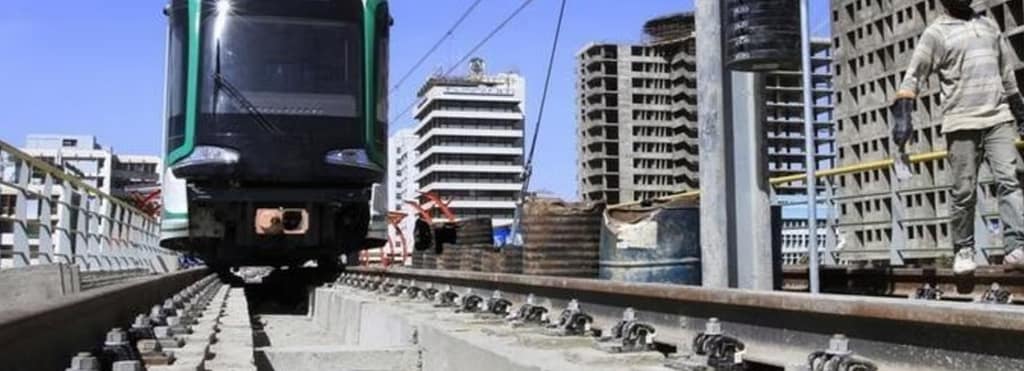
Over the past decade, the Ethiopian government has invested heavily in roads, railways, industrial parks, aviation, energy, and telecommunications. Much of this investment was designed to position the country as a manufacturing and logistics hub for East Africa.
One of the most symbolic projects remains the Addis Ababa–Djibouti railway, which has strengthened Ethiopia’s access to international trade routes through the Port of Djibouti. The country has also expanded hydroelectric power generation through projects such as the Grand Ethiopian Renaissance Dam, widely regarded as one of Africa’s largest energy infrastructure projects.
Prime Minister Abiy Ahmed has repeatedly described economic transformation as central to Ethiopia’s long-term stability and regional influence.
“Our goal is to build an economy that creates jobs, strengthens industries, and positions Ethiopia as a leading African economic power,” Abiy said during a recent economic forum in Addis Ababa.
Manufacturing has become another key pillar of Ethiopia’s economic rise. International companies, particularly from China, Turkey, and the Middle East, have increasingly invested in Ethiopian industrial parks focused on textiles, garments, leather processing, pharmaceuticals, and consumer goods production.
Economists note that Ethiopia’s relatively large population of more than 120 million people provides both a substantial labour force and a rapidly expanding consumer market. This demographic advantage is attracting investors looking for long-term growth opportunities within Africa.
Agriculture also continues to play a central role in Ethiopia’s economy. The government has introduced reforms aimed at modernising farming techniques, improving irrigation systems, increasing food production, and expanding export-oriented agriculture. Coffee exports remain a major source of foreign exchange earnings, while wheat production has increased significantly in recent years.
Industrial production is similarly expanding as Ethiopia seeks to reduce dependence on imports and strengthen domestic manufacturing capacity. Government policies encouraging local production, export growth, and industrial self-sufficiency are beginning to reshape parts of the economy.
Despite the optimistic projections, Ethiopia still faces major economic and political challenges. Inflation remains high, foreign currency shortages continue to affect businesses, and concerns persist regarding debt sustainability and political tensions in some regions of the country.
The aftermath of the conflict in the Tigray region also continues to impact national recovery efforts, while unemployment and poverty remain pressing issues for millions of Ethiopians.
Nevertheless, many international observers believe Ethiopia’s long-term economic potential remains enormous.
Economic analysts argue that if Ethiopia sustains its current growth trajectory, the country could significantly alter the balance of economic influence within East Africa over the next decade. Traditionally, countries such as Kenya have dominated the region’s commercial and financial sectors. However, Ethiopia’s combination of population size, industrial ambition, and infrastructure expansion is increasingly positioning it as a major regional competitor.
Some experts believe Ethiopia could eventually become one of Africa’s leading manufacturing centres, particularly if it succeeds in expanding exports, improving investor confidence, and stabilising its political environment.
The country’s economic rise also reflects a broader shift taking place across Africa, where several nations are increasingly focusing on industrialisation, regional trade, infrastructure development, and economic diversification rather than relying solely on raw material exports.
For investors, policymakers, and regional governments, Ethiopia’s progress is being closely watched as a potential model for long-term economic transformation in Africa.
While challenges remain substantial, Ethiopia’s projected growth in 2026 signals a country determined to redefine its economic future and strengthen its place among Africa’s rising economic powers.
If current trends continue, Ethiopia’s economic story may become one of the defining African growth narratives of the next decade.

