



A growing coalition of African leaders has called for urgent reforms to the global financial system, arguing that African economies are being unfairly punished by international lenders and credit rating agencies despite the continent’s enormous economic potential.
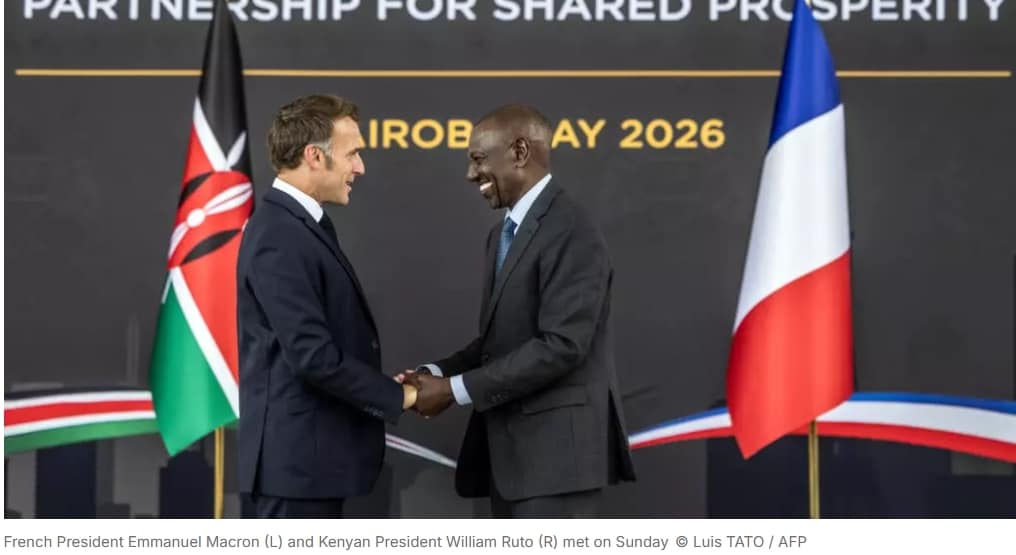
The demand came during the high-profile Africa Forward Summit held this week in Nairobi, Kenya, where more than 30 African heads of state, finance ministers, business leaders, and international investors gathered for discussions on trade, investment, debt, infrastructure, and economic growth.
The summit was jointly hosted by French President Emmanuel Macron and Kenyan President William Ruto, reflecting what many observers see as a renewed effort by France and European partners to strengthen economic and political ties with African nations amid rising global competition for influence on the continent.
At the heart of the summit was one key message from African leaders: the current global financial system is structurally unfair to Africa.
Speaking during the opening session, President Ruto criticised international credit agencies for what he described as the systematic mischaracterisation of African economies as “high-risk investment destinations,” arguing that such classifications continue to increase borrowing costs for African countries even when many economies are showing resilience and strong growth potential.
“We cannot continue to pay the highest price for capital simply because of outdated perceptions about Africa,” Ruto said. “Africa is not the problem. Africa is part of the global economic solution.”
African governments have long argued that they are often charged significantly higher interest rates than countries in other regions with similar or even weaker economic indicators. Leaders at the summit said the situation limits infrastructure development, slows industrial growth, and deepens debt burdens across the continent.
President Macron acknowledged growing frustrations over global financial inequality and called for what he described as a “new partnership based on fairness, investment, and mutual respect.”
“The world cannot speak about sustainable development while Africa continues to face unfair access to finance,” Macron stated during the summit. “The global financial architecture must evolve to reflect modern realities.”
The summit also produced major investment commitments estimated at over $1 billion, including a significant French-backed expansion project at the Port of Mombasa, one of East Africa’s most strategically important trade gateways.
The Mombasa Port expansion is expected to improve cargo handling capacity, strengthen regional trade logistics, and support economic integration across East and Central Africa. Kenyan officials described the investment as critical to positioning Kenya as a leading commercial hub on the continent.
French development agencies and private investors also announced new partnerships involving renewable energy, digital infrastructure, transportation, agriculture, and industrial manufacturing projects in several African countries.
Economic analysts say the summit represents a broader shift in how African nations are approaching international economic negotiations. Rather than focusing solely on aid and debt relief, many African governments are increasingly demanding structural reforms that would allow the continent to compete more fairly within the global economy.
Several African leaders at the summit stressed that the continent possesses some of the world’s fastest-growing populations, largest untapped consumer markets, and most valuable natural resources, yet still struggles to access affordable global capital.
The issue has become even more urgent as many African countries continue to recover from the combined economic effects of the COVID-19 pandemic, rising global inflation, climate-related disruptions, and international supply chain instability.
International financial institutions such as the International Monetary Fund and World Bank have previously acknowledged concerns about debt sustainability and financing gaps in developing economies. However, African leaders argue that reforms have been too slow and insufficient.
Beyond economics, the Nairobi summit also carried geopolitical significance. France has faced growing criticism and declining influence in parts of Africa in recent years, particularly in West Africa where military coups and anti-French sentiment have reshaped diplomatic relationships.
Analysts believe Macron’s appearance in Nairobi signals an attempt by France to reposition itself as a long-term economic partner rather than merely a political or military actor on the continent.
For many African governments, however, the priority remains economic sovereignty and fair access to global opportunities.
As the summit concluded, delegates agreed that Africa’s future growth would depend not only on internal reforms but also on changing how global financial systems engage with the continent.
The Nairobi gathering may therefore mark an important turning point in Africa’s push for greater influence in shaping the rules of global finance, investment, and economic development.

