



Investment by French institutions in African business and entrepreneurship marks a break with the old post-colonial order.
In a bid to reset its economic diplomacy in Africa, France has in recent years distanced itself from the paternalistic vocabulary of aid and development in its dealings with the continent. It is now more focused on engagement around investment, impact, solidarity and what its foreign office calls “balanced partnerships”.
As part of this strategic pivot, President Emmanuel Macron has repeatedly pressed French firms to invest more aggressively in Africa, arguing that hesitation on the part of French investors has allowed geopolitical rivals – including adversaries such as Russia – to gain ground in African markets where France once dominated.
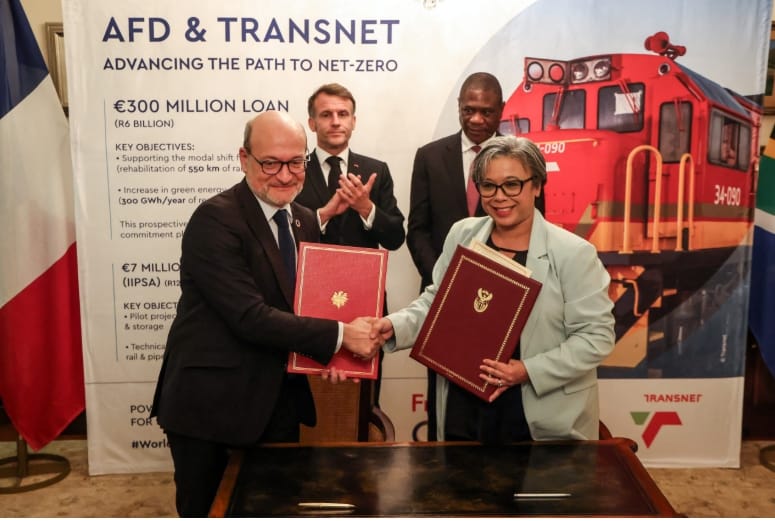
Under Macron’s watch, Paris has mobilised financing both for African companies and for French firms operating on the continent, with institutions such as Business France, Bpifrance and the Agence Française de Développement (AFD) channelling much of this support.
In 2025, Proparco, which is the AFD’s private‑sector arm, signed €2.5bn ($2.9bn) worth of projects around the world. Of this, €924m ($1bn) – 37% – was earmarked for Africa. Moreover, between 2022 and 2025 Proparco committed more than €4.6bn ($5.4bn) to Africa. “This reflects Proparco’s steadfast commitment to the continent,” the development finance institution said in a statement.
“Africa remains at the heart of Proparco’s strategy and [is] its leading geography, reflecting its longstanding partnerships across the continent to foster the emergence of African champions.”
Proparco says it has prioritised “renewed partnerships across key sectors addressing major continental challenges”, including the energy transition, connectivity and sustainable infrastructure, healthcare, industry and agribusiness.
It has also placed special emphasis on supporting entrepreneurs, start‑ups and the cultural and creative industries. In 2025, for example, €450m ($482m) was mobilised in support of small and medium enterprises (SMEs) and start‑ups in Africa through “Choose Africa”, its flagship initiative to support African entrepreneurial ecosystems.
So far, some of France’s biggest corporations appear to have heeded Macron’s call for more commercially‑led diplomacy in Africa. In recent years TotalEnergies, Orange, Bolloré Logistics, CMA CGM and other French multinationals have unveiled big‑ticket investments in their respective sectors across several African countries.
Among French firms operating in Africa, TotalEnergies has made the biggest investments in recent years. It is financing mega‑projects such as the East African Crude Oil Pipeline, a 1,443‑kilometre line connecting Uganda’s oil fields to the Indian Ocean via Tanzania. The pipeline is nearing completion, with commissioning of the first oil shipment expected later this year.
The energy major is also focused on reviving its Mozambique liquefied natural gas venture, expanding deep‑offshore gas operations in Nigeria, exploring South Africa’s Orange Basin and advancing green‑hydrogen plans in Mauritania.
Overall, France’s foreign direct investment (FDI) stock in Africa hovered between €60bn and €68bn ($70bn and $80bn) in 2024/25, according to UN Trade data. This is about 25% higher than the €52bn to €54bn ($61bn to $63bn) reported in 2018/19.
One major shift in France’s economic relationship with Africa is that it now trades more with English‑speaking economies than with its former Francophone colonies, a pivot that has been driven as much by opportunity as survival. Rising anti‑French sentiment in parts of West and Central Africa has adversely impacted French commercial activity in affected economies, pushing French firms to look for growth in stabler and more commercially vibrant anglophone markets across the continent.
Tellingly, Nigeria was France’s top trading partner in sub-Saharan Africa in 2024, ahead of South Africa and Côte d’Ivoire, according to data published by the French Treasury in September last year. Nigeria ranked first in the region for the third consecutive year with €4.9bn ($5.7bn) in trade flows. South Africa followed with €3.1bn ($3.6bn), while Côte d’Ivoire ranked third with €2.6bn ($3bn) . Angola came next with €2.1bn ($2.4bn), followed by Senegal at €1.2bn ($1.4bn) and Cameroon at €1bn ($1.17bn).
Overall, trade between France and sub-Saharan Africa totalled €24.1bn ($28.2bn) in 2024, marginally lower than the €24.3bn ($28.4bn) recorded a year earlier. In North Africa, France traded €14.8bn ($17.3bn) with Morocco and €11.1bn ($13bn) with Algeria in 2024
In a move symbolising France’s growing ties with English-speaking African countries, France and Kenya agreed to co‑host the Africa Forward Summit in Nairobi in May. “This is the first summit of its kind to be hosted and co-chaired with an English-speaking country. It reflects robust and balanced partnerships built in support of each country’s economic development – because they are based on real complementarities – and to the benefit of populations,” France’s foreign ministry said in a statement.
“These partnerships must also contribute to fairer and more inclusive global governance, which rejects bloc mindsets, predation and new imperialist tendencies,” it added.
A high‑level business forum co‑organised by Bpifrance, Business France and Proparco will open the two‑day Nairobi summit, underscoring France’s move to anchor its relationship with Africa in trade and investment.
Presidents William Ruto and Emmanuel Macron are expected to headline the forum, which will convene more than 2,000 African and European business leaders, investors and policymakers. The focus will be on private‑sector projects and investment, and discussions will span the energy transition, digital connectivity, food sovereignty and agribusiness, healthcare and pharmaceutical manufacturing, artificial intelligence, and the creative industries as an engine for economic growth, youth employment and entrepreneurship.
The summit will close with the Nairobi Declaration, which is expected to set out commitments on fairer global financial governance, climate resilience and joint investment frameworks between African and French partners.
For Kenya, there are benefits to hosting the summit beyond securing investment from France. Nairobi is keen to position itself as a regional gateway and diplomatic powerhouse, not just for France but for other nations seeking new alliances on the continent at a time of heightened global geopolitical uncertainty.
For France, a successful summit that delivers investments that align to Africa’s development agenda will help rebuild trust in its approach to economic diplomacy Africa. Although France’s foreign ministry insists that it promotes its legitimate interests in Africa through “partner-based approach founded on transparency and reciprocity”, critics argue that France’s track record tells a more complicated story.
They point to the colonial era when France extracted raw materials from its territories while using these regions as captive markets for French manufactured goods and services. The post-colonial era was not much of an improvement. The Françafrique model dominated during much of this period, and France used state‑to‑state aid, military presence and monetary control of the CFA zone to maintain unquestioned dominance.
It was only in the 2000s that a wave of liberalisation and privatisation in France’s economy pushed its multinationals to diversify beyond Africa’s energy and natural resources. This led to new investment in infrastructure, telecoms, and finance and expansion into markets where France historically did not have a big presence.
Under Macron, who was first elected in 2017, France’s economic ties with Africa have become more central to the broader diplomatic relationship between Africa and France. Macron has placed business and entrepreneurship at the centre of his Africa agenda, argues Frank Gerits, a research fellow at the University of the Free State, South Africa and assistant professor in the history of international relations at Utrecht University.
“Macron has put forward entrepreneurship as the best form of development assistance. This strategic pivot away from personal relationships with African leaders is rooted in Macron’s neoliberal beliefs. This is a political approach that favours free-market capitalism, deregulation and a reduction in government spending,” he says.
“Macron has pushed entrepreneurship as development assistance: promoting start-ups and training Africa’s youth… what Macron wants observers to notice is that increasingly, French development aid in Africa has to be run by French businesses,” Gerits notes.
“French corporations are no longer making money in secret, as in the era of Françafrique. This was a period when French presidents supported African dictators to maintain influence. Rather, Macron’s speeches put forward business activities and neoliberal values as French values that benefit the continent,” Gerits concludes.

