




Emilian Popa runs a healthtech company that does not behave like one.
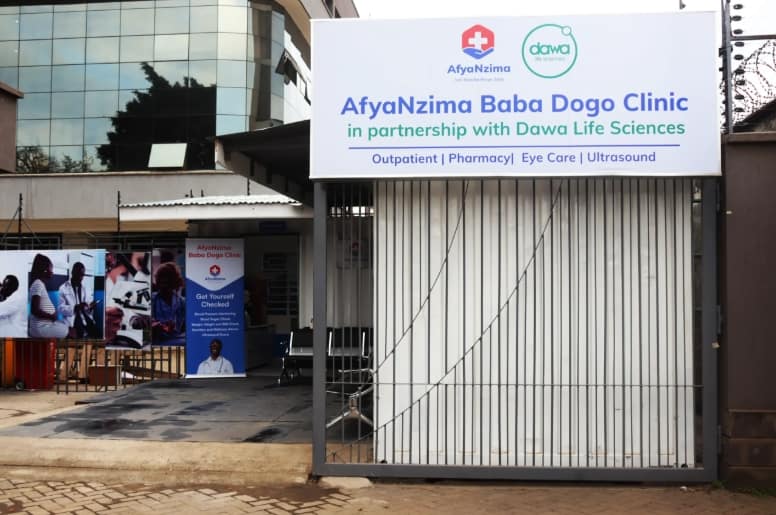
While investors spent years debating whether African healthtech could scale sustainably, Ilara Health concentrated on a narrower and more practical problem: small private clinics lack diagnostic equipment because they cannot afford to finance it. The company’s response has been straightforward. It supplies clinics with medical equipment on credit, layers in software and data tools, and gradually turns fragmented operators into part of a functioning network.
The model is beginning to achieve meaningful scale. Ilara says it has now served more than two million patients across around 3,000 clinics in Kenya and Uganda, a segment long considered too fragmented and informal to organise effectively.
Distribution before disruption
Popa, a former executive at Naspers and M-Kopa, approached healthcare primarily as a distribution challenge. His premise was simple: demand for diagnostics already exists, but financing does not.
A small clinic may need an ultrasound machine or blood analyser, yet few can afford the upfront capital required to purchase one outright. Ilara bridges that gap by combining equipment with financing and software services. Clinics gain access to tools that increase their capabilities, while Ilara benefits from recurring relationships and growing operational data.
Over time, the business has evolved into a multi-layered platform spanning distribution, financing, software and procurement. That evolution is beginning to change how larger healthcare players view the company. Insurers and pharmaceutical groups increasingly see Ilara less as a vendor and more as an infrastructure partner.
A business model under scrutiny
One of the central questions surrounding African healthtech has been whether such businesses can operate sustainably without ongoing subsidies or donor support. Ilara’s trajectory suggests that commercially viable models are possible under the right conditions.
Clinics using its equipment are able to offer a wider range of tests, attract more patients and generate higher revenues. Those gains, in turn, make equipment financing commercially sustainable.
At scale, however, the company’s most valuable asset may ultimately prove to be its data. Connected patient records and operational insights across thousands of clinics could create significant long-term strategic value in a healthcare system where reliable information remains fragmented.
Several broader shifts are also working in the company’s favour.
Kenya’s Social Health Insurance Fund (SHIF) increasingly favours clinics capable of processing claims digitally, an area where Ilara’s network has an advantage. Investment into African healthtech has also broadened, with the sector attracting more than $200m in funding during 2024 from a wider range of investors. At the same time, the competitive landscape has matured. Companies such as mPharma and Lifestores have demonstrated that healthcare distribution businesses can scale across African markets.
Risks remain
Challenges nonetheless persist. Ilara remains exposed to currency volatility because most medical equipment is imported. Its credit portfolio has yet to be tested through a prolonged economic downturn, and expansion beyond Kenya and Uganda will require careful sequencing and execution.
The company is also notable for what it is not attempting to do. Ilara is not trying to replace public healthcare systems or build hospitals from scratch. Instead, it is focused on improving the efficiency and capabilities of the clinics that already serve millions of patients across East Africa.
It is a relatively narrow proposition. So far, however, the execution has been anything but narrow.

