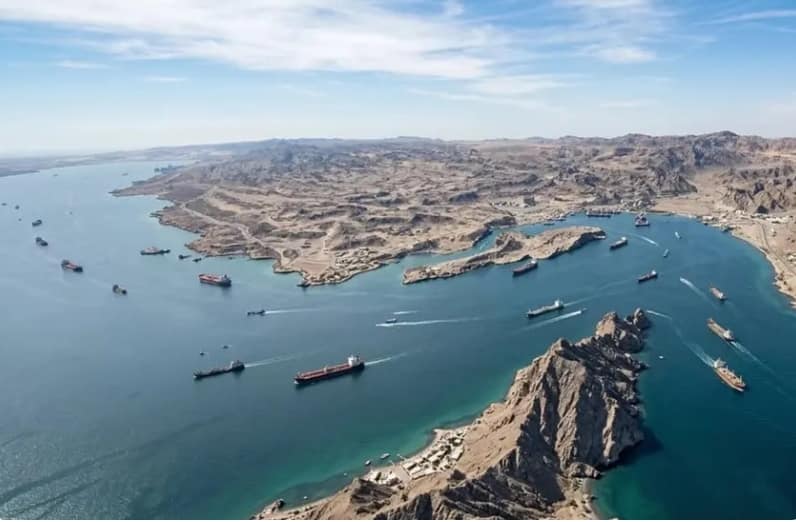




The collapse of high-stakes negotiations between the United States and Iran in Islamabad has reintroduced a familiar and deeply destabilising variable into global markets: uncertainty around the Strait of Hormuz. What was initially framed as a rare diplomatic opening—bringing the two adversaries into direct engagement for the first time in decades—has instead underscored the structural rigidity of their conflict and the enduring fragility of energy security.
At the heart of the failed talks lies a convergence of irreconcilable priorities. Washington entered negotiations with a narrow but firm objective: curtailment of Iran’s nuclear ambitions and broader regional recalibration. Tehran, by contrast, sought sanctions relief, recognition of its strategic autonomy, and—critically—retention of leverage over maritime access in the Gulf. The Strait of Hormuz, through which a significant portion of the world’s oil supply transits, became both symbol and instrument of this deadlock.
Despite nearly 21 hours of continuous engagement, the discussions ended without a framework for de-escalation. Iranian officials characterised U.S. demands as excessive, while American negotiators pointed to Tehran’s unwillingness to compromise on its nuclear programme and regional posture. The result is not merely a diplomatic failure, but a reaffirmation of a deeper strategic impasse: neither side can concede its core leverage without fundamentally weakening its negotiating position.
Markets responded swiftly. Oil prices surged above $100 per barrel, reflecting renewed fears of supply disruption and constrained shipping routes. The Strait’s centrality to global energy flows means even the perception of instability carries outsized economic consequences. Analysts now warn that sustained tensions could entrench an energy price floor well above recent expectations, complicating inflation trajectories and monetary policy decisions worldwide.
More concerning, however, is the shift from diplomatic stalemate to potential strategic escalation. In the immediate aftermath of the talks, the United States signalled a more assertive posture, including the announcement of a maritime blockade targeting Iranian ports. While officials indicated that transit through Hormuz would not be directly impeded, the distinction may prove tenuous in practice. Iran has already warned that increased military presence in the Strait could be interpreted as a violation of ceasefire conditions, raising the risk of miscalculation.
This evolving posture reflects a broader recalibration of leverage. For Tehran, control over Hormuz remains its most potent strategic asset—a pressure point capable of amplifying its geopolitical relevance despite economic sanctions. For Washington, ensuring freedom of navigation is both an economic imperative and a demonstration of global leadership. The intersection of these imperatives creates a zero-sum dynamic that diplomacy alone has thus far failed to resolve.
The implications extend beyond the immediate U.S.–Iran axis. Energy-importing economies, particularly in Europe and Asia, face renewed exposure to price volatility and supply uncertainty. Financial markets, already navigating a complex mix of inflationary pressures and geopolitical risk, must now incorporate the possibility of prolonged disruption in one of the world’s most critical trade corridors. Even limited interference in Hormuz could cascade through shipping insurance costs, logistics chains, and broader commodity pricing.
At a structural level, the breakdown of the Islamabad talks highlights a persistent flaw in crisis diplomacy: the absence of a mutually acceptable sequencing mechanism. The United States demands upfront concessions on nuclear capability; Iran insists on prior guarantees regarding sanctions and sovereignty. Without a credible framework for phased reciprocity, negotiations risk becoming performative rather than transformative.
Looking ahead, the path to de-escalation remains uncertain. While both sides have left open the possibility of future engagement, the immediate trajectory points toward heightened tension rather than reconciliation. The re-emergence of Hormuz as a focal point of geopolitical risk serves as a reminder that certain chokepoints—geographic and strategic—retain an enduring capacity to shape global outcomes.
In this context, the failure in Islamabad is less an isolated diplomatic setback than a reaffirmation of a deeper equilibrium: one defined by deterrence, distrust, and the persistent threat of disruption. Until that equilibrium shifts, the Strait of Hormuz will remain not just a passage for oil, but a barometer of global stability.