



A renewed convergence between Taiwan’s opposition Kuomintang (KMT) and mainland China’s ruling Chinese Communist Party (CCP) is raising fresh concerns about the future of Taiwan’s sovereignty and political autonomy. While not a formal alliance, the alignment of messaging and strategic priorities between the two parties signals a growing “united front” dynamic—one that places increasing pressure on Taipei’s current political direction.
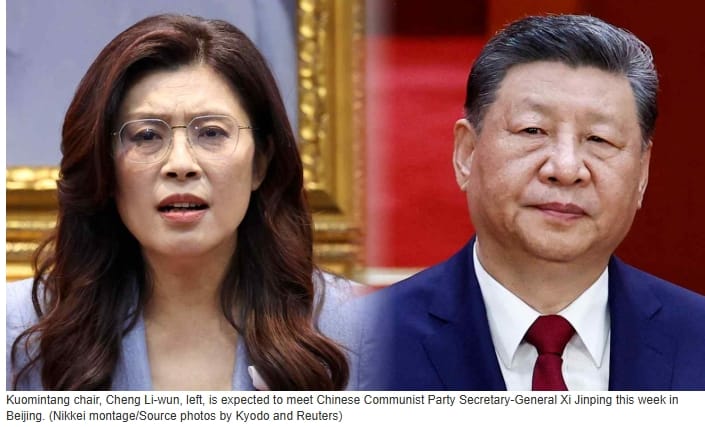
At the core of this convergence is a shared opposition to moves perceived as advancing formal Taiwanese independence. Beijing has long maintained that Taiwan is an inseparable part of China, reserving the option of force to prevent secession. The KMT, while historically rooted in Chinese nationalism and once the ruling party of all China, now positions itself as a stabilising force advocating dialogue, economic cooperation, and reduced tensions with the mainland. However, critics argue that this posture increasingly mirrors CCP narratives, particularly in its resistance to policies that emphasise a distinct Taiwanese identity.
The implications of this alignment are most visible in domestic political discourse within Taiwan. The KMT has intensified criticism of the ruling government’s cross-strait policies, warning that assertive pro-sovereignty rhetoric risks provoking conflict. In doing so, it has found common ground with Beijing’s framing of the issue as one of peace versus provocation. This rhetorical overlap, whether coordinated or coincidental, amplifies pressure on Taiwan’s leadership by presenting a dual-front challenge—external from Beijing and internal from opposition forces.
For the CCP, engagement with the KMT offers a strategic pathway to influence Taiwan’s political landscape without direct confrontation. By fostering ties with opposition figures and emphasising shared cultural and historical linkages, Beijing seeks to shape public opinion and policy debates on the island. This approach aligns with its broader united front strategy, which prioritises influence-building and narrative alignment alongside traditional diplomatic and military tools.
Yet, the effectiveness of this dynamic is far from assured. Taiwan’s electorate has, in recent years, demonstrated a strong inclination toward preserving its democratic system and distinct political identity. Public sentiment remains wary of Beijing’s intentions, particularly in light of developments in Hong Kong and increasing military activity in the Taiwan Strait. These factors complicate efforts to normalise closer political alignment with the mainland, regardless of KMT advocacy.
Ultimately, the emerging united front dynamic underscores a deeper contest over Taiwan’s future—one that extends beyond elections and party politics into questions of identity, security, and self-determination. As Beijing refines its influence strategies and domestic divisions persist, Taiwan finds itself navigating an increasingly complex landscape where sovereignty is challenged not only from across the strait, but also within its own political arena.

