



“Natural resources are no longer just export commodities — they are instruments of national strategy.”
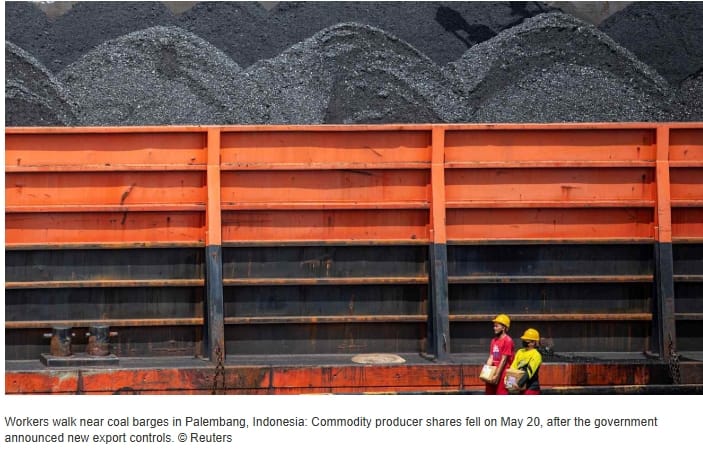
Indonesia has moved to tighten government control over some of its most valuable export commodities through the creation of a new state body tasked with overseeing strategic resources including palm oil, coal, nickel, and other critical minerals.
The move marks a significant expansion of Jakarta’s resource nationalism strategy as Southeast Asia’s largest economy seeks greater influence over global commodity supply chains while maximising long-term economic returns from its natural wealth.
Government officials say the new agency will help coordinate export policies, stabilise domestic supply, strengthen downstream industrialisation, and ensure that Indonesia benefits more directly from rising global demand for strategic resources.
Indonesia is one of the world’s largest producers of palm oil and thermal coal, while also holding major reserves of nickel and other minerals critical to electric vehicle batteries and clean energy technologies. In recent years, the government has increasingly pushed policies aimed at processing more raw materials domestically rather than exporting them in unprocessed form.
Authorities argue that stronger state coordination is necessary to protect national interests in an increasingly competitive global economic environment shaped by energy transition demands, geopolitical tensions, and supply chain disruptions.
However, the announcement unsettled investors and commodity markets, with shares in several mining and plantation-related companies falling sharply following the policy announcement. Industry groups and analysts expressed concern over the possibility of tighter export controls, increased bureaucracy, pricing interventions, and reduced flexibility for private operators.
Some business leaders fear the expanded role of the state could create uncertainty for investors already navigating regulatory changes within Indonesia’s resource sector. Others worry that aggressive intervention could affect export competitiveness and discourage foreign capital at a time when global demand for critical minerals remains strong.
Despite these concerns, the Indonesian government appears determined to continue strengthening domestic control over strategic industries. Officials insist the policy is not designed to discourage investment but to ensure that national resources contribute more effectively to industrial growth, job creation, and economic resilience.
The policy also reflects a broader global trend where resource-rich nations are seeking greater leverage over commodities linked to energy security, manufacturing, and technological competition.
Indonesia has increasingly positioned itself as a key player in global electric vehicle supply chains through its nickel processing ambitions and downstream manufacturing strategy. By tightening oversight of exports, policymakers hope to attract more investment into local refining, battery production, and industrial processing facilities.
As global competition for critical minerals intensifies, Indonesia’s latest move signals that control over natural resources is becoming as much about geopolitics and industrial strategy as it is about trade and revenue generation.

