




In a powerful display of international cooperation, five global leaders convened at a recent high-level forum to announce the launch of the Japan-India Cooperation Initiative for Sustainable Economic Development in Africa. This strategic framework, jointly spearheaded by Japan’s Ministry of Economy, Trade and Industry (METI) and key Indian stakeholders, is aimed at driving inclusive, long-term economic growth across the African continent through trilateral partnerships with Japan, India, and Africa.
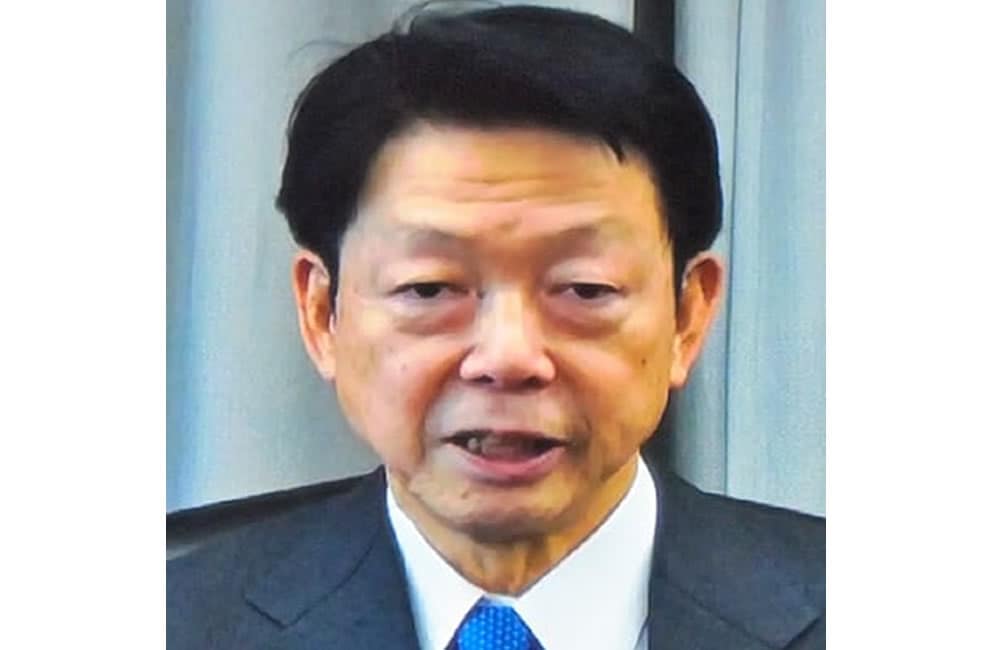
Japan’s Minister of Economy, Trade and Industry, Yoji Muto, set the tone by outlining the historic depth of Japan–India relations, spotlighting the 10th anniversary of the Special Strategic and Global Partnership between the two countries in 2025. “We’ve seen fruitful cooperation through the Quad framework—Japan, India, the U.S., and Australia—but we must now expand our vision westward,” he said.
Muto reaffirmed Japan’s commitment to a Free and Open Indo-Pacific, noting, “That concept has long centered on Asia. But extending it to Africa as a free and fair economic zone is an urgent task.” He revealed the establishment of the Japan-India Cooperation Initiative for Sustainable Economic Development in Africa, which METI is driving to increase Japanese private investment in India, while facilitating Indian and Japanese business platforms focused on Africa.
“This is about more than economics,” Muto stressed. “It’s about mutual respect, job creation, industrial clustering, and human capital development—elements vital for Africa’s sustainable future.”
India’s External Affairs Minister, Subrahmanyam Jaishankar, echoed these sentiments and emphasized India’s enduring commitment to the Global South. “Our shared values—democracy, freedom, and the rule of law—unite Japan and India,” Jaishankar stated. “Together, we’ve built strong foundations in infrastructure, technology, healthcare, and education.”
He also reaffirmed India’s voice for emerging economies: “We believe the aspirations of the Global South must be fully represented on the world stage. India has consistently advocated this through the G20, the Voice of Global South Summits, and the India-Africa Forum Summits.”
He highlighted India’s consistent investment in capacity building across Africa, stating, “India believes in skills development and technology transfer, empowering African countries to build self-sustaining growth ecosystems.”
India’s Ambassador to Japan, Sibi George, described the growing momentum of Japanese business in India. “We have 1,500 Japanese companies operating in India today—each one a success story,” he said. “Our goal is to grow this number tenfold.”
George emphasized India’s demographic advantage—its youthful, skilled workforce and burgeoning entrepreneurial ecosystem—as an attractive partner for Africa. “We’re home to 112 unicorns, collectively valued at over $350 billion. This dynamism is exactly what we bring to the trilateral cooperation with Africa,” he noted.
Importantly, he underscored India’s ethical stance in international development: “Our engagement with Africa is demand-driven, with no political conditions attached. It is based on trust, respect, and mutual benefit.”
Tatsuo Yasunaga, Chair of the Board at Mitsui & Co. and Chairman of the Japan-India Business Cooperation Committee, brought a corporate lens to the discussion. “India and Africa are key engines of the global economy,” he stated. “India’s demographic dividend will continue to drive productivity until the 2050s, while Africa’s natural resources and tech aspirations make it ripe for investment.”
Yasunaga noted the importance of adapting to local contexts in India and Africa. “We must prioritize local management and culturally aware strategies. At Mitsui, we’ve appointed an Indian executive to lead our India operations to reflect this vision.”
He encouraged deeper integration across the Asia-Africa axis, arguing that “a sustainable future lies in organic connections across the Indian and Pacific Oceans, driven by regional cooperation.”
Representing the African Development Bank (AfDB), Marie-Laure Akin-Olugbade, Senior Vice President, expressed deep appreciation for both nations’ contributions. “I want to thank Japan for its unwavering commitment to Africa’s development,” she said, citing recent forums in Côte d’Ivoire and Morocco as examples of Japan’s leadership.
She highlighted Japan’s $5 billion contribution to the Enhanced Private Sector Assistance for Africa initiative, funding critical sectors such as energy, health, and agriculture.
Turning to India, Akin-Olugbade acknowledged its powerful role as a financier and advocate. “India has extended $12 billion in credit through the Export-Import Bank over the past decade, benefiting 42 African nations. And its support for the African Union’s inclusion in the G20 was a game-changer.”
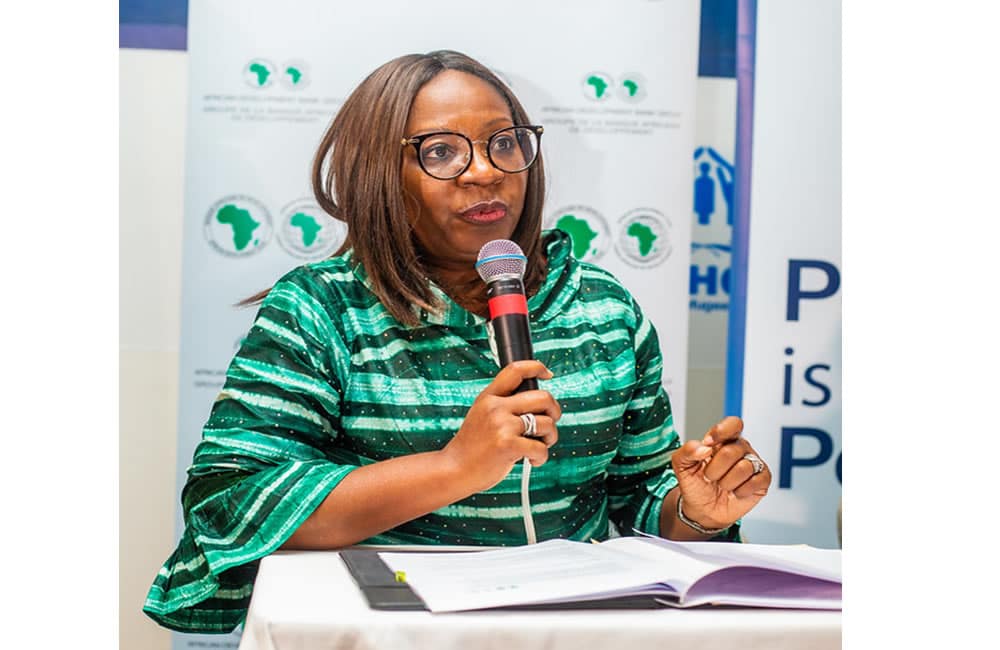
She also celebrated the new bilateral technical cooperation agreement between India and the AfDB, calling it “a step forward in aligning priorities for long-term economic development.”
The launch of this initiative signals a new era in global cooperation, rooted in shared values and mutual benefit. Japan and India, two of Asia’s most dynamic democracies, are deepening ties not only with each other but with Africa—where the future of global growth is increasingly being shaped. As Muto put it, “This isn’t just policy—it’s a generational commitment.”

