



An increasing number of Chinese migrants and asylum seekers are turning to Serbia as both a temporary refuge and a potential gateway into the European Union, driven by visa-free travel arrangements, lower entry barriers, and the Balkan nation’s strategic location near EU member states.
Migration analysts say Serbia has quietly become an attractive destination for Chinese nationals seeking economic opportunities, political freedom, or a pathway toward Western Europe. The country’s relatively open visa policies for Chinese citizens, combined with its growing ties to Beijing through infrastructure and trade partnerships, have contributed to the trend.
Unlike many European Union countries that maintain strict visa requirements and extensive border checks, Serbia has historically offered easier access for Chinese travellers. This has made Belgrade an increasingly important entry point into the Balkans for migrants hoping eventually to move into neighbouring EU states such as Hungary, Croatia, and Romania.
Human rights groups and migration researchers report that some arrivals are professionals, entrepreneurs, and students seeking better opportunities abroad, while others are individuals attempting to escape political pressures, economic uncertainty, or tighter social controls in China.
The movement reflects broader global migration shifts as geopolitical tensions, economic pressures and changing immigration rules reshape traditional migration routes. Serbia’s position outside the EU but close to the Schengen area has created what analysts describe as a “buffer-zone advantage” for migrants looking to establish themselves near Western Europe without immediately facing stricter EU immigration systems.
Chinese investment in Serbia has also strengthened the relationship between the two countries. Beijing has become one of Serbia’s largest foreign investors in recent years, funding roads, railways, mining projects and industrial infrastructure as part of China’s Belt and Road Initiative. The expanding economic relationship has increased travel, business connections and cultural exchanges between both nations.
In Belgrade, small but growing Chinese communities have emerged around business districts, trading centres and technology sectors. Local businesses catering to Chinese residents and visitors have also expanded, reflecting the increasing visibility of the community within the Serbian capital.
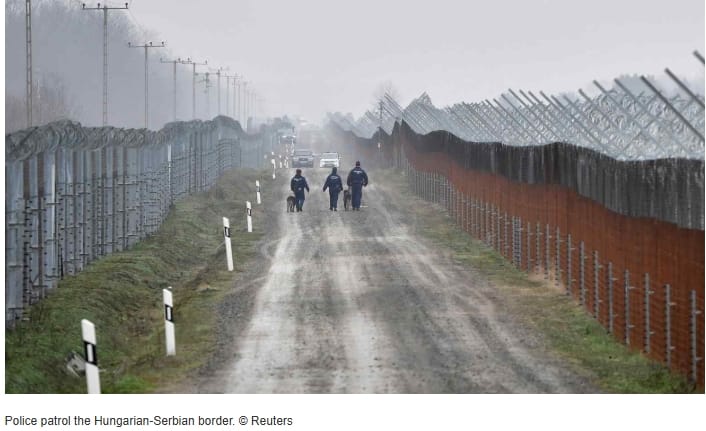
However, the trend has raised concerns among European migration officials. Some EU policymakers fear Serbia’s visa arrangements could indirectly facilitate irregular migration into the bloc, particularly as migrants attempt to cross into neighbouring EU countries through Balkan land routes.
Serbian authorities, meanwhile, have sought to balance their close economic ties with China against growing pressure from Brussels to align more closely with European migration and border management policies. The issue has become increasingly sensitive as Serbia continues its long-standing aspiration to join the European Union.
Migration experts caution that the majority of Chinese arrivals in Serbia are not necessarily refugees in the traditional sense but include a diverse mix of economic migrants, temporary residents, business operators and asylum seekers. Nonetheless, the country’s accessibility and geographic position continue to make it an important transit and settlement point.
A regional migration researcher described Serbia as “an emerging crossroads between East and West,” noting that global migration patterns are no longer dominated solely by traditional routes into Western Europe or North America.
As geopolitical uncertainty and economic mobility continue to shape migration flows, Serbia’s role in connecting Asia to Europe is likely to grow further. For many Chinese migrants, the Balkan nation now represents both a place of opportunity and a stepping stone toward a wider European future.

