



Global economic and geopolitical dynamics continued to shift this week as fresh developments across finance, diplomacy, infrastructure, and the electric vehicle sector underscored a world in rapid transition.
A new assessment from the European Central Bank has revealed a historic milestone in global reserve management: gold has overtaken US Treasuries to become the world’s leading reserve asset. The development reflects growing diversification among central banks, driven by heightened geopolitical uncertainty, inflation concerns, and a reassessment of reliance on dollar-denominated assets. The shift marks one of the most significant changes in global financial architecture in decades, signalling a cautious repositioning by major economies seeking stability outside traditional sovereign debt instruments.
In Asia, diplomatic engagement with isolated states also saw movement. Singapore’s foreign minister made a rare visit to North Korea, where both sides agreed to strengthen bilateral ties. The discussions focused on reopening channels of dialogue and expanding areas of cooperation, marking a tentative step toward broader engagement in a region long defined by strategic tension and limited formal communication.
China’s industrial landscape continues to reflect pressure within its highly competitive automotive sector. GAC Group reported significant financial strain in its electric vehicle operations, losing approximately $1,200 per vehicle in 2025. The losses come at a critical time as its partnership with Honda approaches key renegotiation deadlines. The figures highlight the intense pricing pressures and subsidy dependencies shaping China’s EV market, where rapid scaling has often outpaced profitability.
Elsewhere in the region, tragedy struck the Philippines, where a building collapse claimed at least one life and left more than 21 people trapped under debris. Rescue operations continued as emergency teams worked against time to locate survivors. The incident has renewed concerns over construction standards and urban safety enforcement in rapidly developing areas.
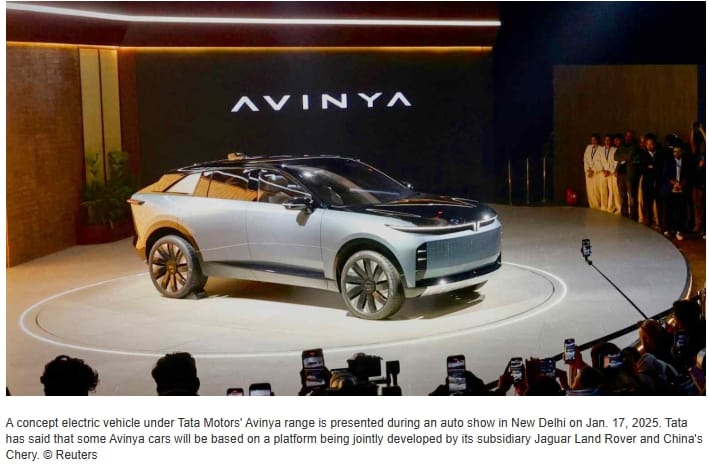
In the electric vehicle sector, attention has turned to cross-border industrial collaboration. A partnership involving Tata Motors and China’s Chery Automobile has highlighted India’s continued reliance on Chinese engineering and platforms in accelerating domestic EV development. The collaboration is being leveraged to shorten development cycles for next-generation models, including the Avinya series, as manufacturers race to bring competitive electric platforms to market.
Industry analysts note that such partnerships reflect a pragmatic balancing act: India’s ambition to build a self-sufficient EV ecosystem while still depending on established Chinese platforms for speed, cost efficiency, and technological maturity.
Together, these developments illustrate a broader global pattern. Financial systems are diversifying away from traditional anchors, diplomatic channels are cautiously reopening in previously isolated contexts, and industrial ecosystems are increasingly interlinked even amid geopolitical competition. The result is a world economy that is simultaneously fragmenting and integrating—where competition and cooperation continue to coexist in uneasy balance.

