




A container ship transiting the strategically vital Strait of Hormuz has come under fire from an Iranian gunboat, according to maritime security sources, in an incident that threatens to further destabilise an already fragile regional security environment.
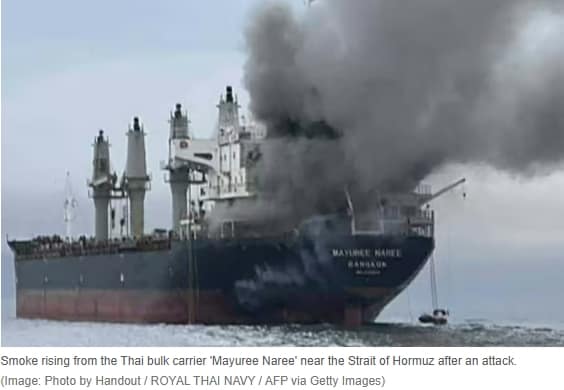
The confrontation reportedly occurred shortly after former U.S. President Donald Trump announced an extension of a ceasefire arrangement linked to ongoing tensions in the Middle East. While details remain limited, initial reports suggest that warning shots—or possibly direct fire—were aimed at the commercial vessel, prompting immediate concern among international shipping operators.
No casualties have been confirmed, and the extent of any damage to the ship remains unclear. However, the incident has heightened fears about the safety of one of the world’s most critical maritime corridors, through which a significant portion of global oil and trade flows pass each day.
A maritime security analyst described the situation as deeply concerning:
“Even isolated incidents in the Strait of Hormuz carry global implications. The risk is not just to one vessel, but to the stability of international shipping and energy markets.”
Iranian authorities have not issued an official statement detailing the circumstances of the encounter. In the past, similar incidents have been framed by Tehran as enforcement of territorial waters or responses to perceived provocations. Western officials, however, have often characterised such actions as escalatory and destabilising.
The timing of the incident is particularly significant. The extension of the ceasefire had been viewed by some observers as a step toward de-escalation in a region marked by months of heightened tension. Instead, the latest development underscores how quickly fragile diplomatic efforts can be undermined by events at sea.
Shipping companies operating in the region are now reassessing risk levels, with some reportedly considering route adjustments or enhanced security measures. Insurance premiums for vessels passing through the Strait could also rise sharply if tensions persist, adding further pressure to global supply chains already strained by geopolitical uncertainty.
A senior executive at a global logistics firm noted:
“The Strait of Hormuz is not just a regional issue—it’s a global artery. Any disruption, even temporary, has ripple effects across energy prices, trade routes, and economic stability.”
The international response is likely to be closely watched. Previous incidents in the Strait have prompted increased naval presence from Western and allied forces, aimed at ensuring freedom of navigation and deterring further escalation. Whether this latest episode will trigger a similar response remains to be seen.
Analysts warn that the situation could evolve quickly, particularly if additional confrontations occur or if diplomatic channels fail to contain rising tensions. The complexity of regional dynamics—combined with overlapping military, political, and economic interests—makes the risk of miscalculation a persistent concern.
For now, the focus remains on de-escalation and ensuring the নিরাপ of maritime traffic. However, the incident serves as a stark reminder of the volatility of the region and the delicate balance that underpins global trade flows.
As investigations continue and more details emerge, governments and industry stakeholders alike will be watching closely, aware that even a single flashpoint in the Strait of Hormuz can have far-reaching consequences for the global economy.

