




President Donald Trump’s latest State of the Nation address was less a ceremonial constitutional obligation and more a forceful political manifesto. Delivered with trademark confidence and confrontational clarity, the speech underscored the pillars that have long defined Trump’s political identity: economic nationalism, border security, military strength and an unapologetic assertion of American sovereignty.
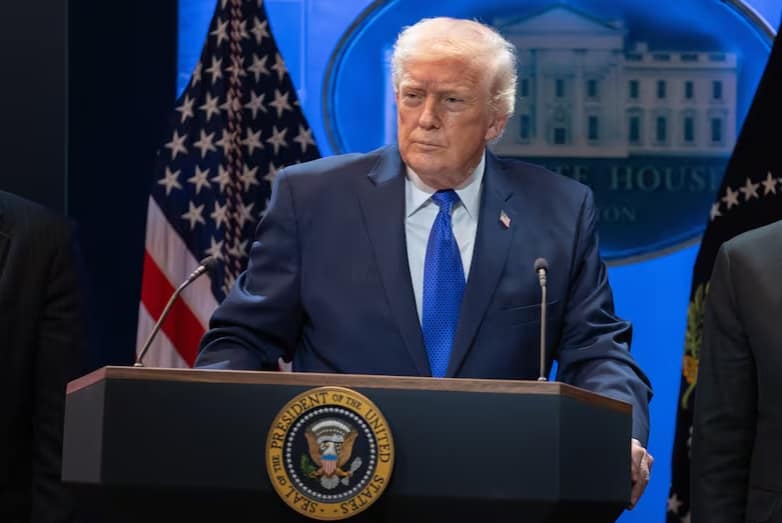
From the outset, the tone was assertive. Trump framed the nation as resilient, economically revitalised and globally respected. He cited manufacturing growth, energy expansion and domestic investment as evidence that his policies are restoring industrial strength. The president once again championed tariffs as protective tools rather than punitive measures, arguing that strategic trade pressure shields American workers from unfair competition.
Yet this economic narrative carries complexity. While protectionist policies appeal strongly to segments of the electorate concerned about deindustrialisation, financial markets remain sensitive to renewed trade tensions. The address offered limited reassurance to multinational businesses seeking policy predictability. Trump’s vision prioritises leverage and negotiation strength over multilateral consensus, reinforcing his belief that economic power is best exercised assertively.
Immigration remained the emotional core of the speech. Trump reiterated his commitment to border enforcement, presenting it as essential to national security and economic stability. He portrayed stricter controls not simply as a policy preference but as a moral obligation to protect American communities. The rhetoric was unyielding, drawing sharp applause from supporters while highlighting the enduring partisan divide on immigration reform.
Notably absent, however, were detailed proposals for bipartisan compromise. The address leaned heavily on executive authority and enforcement mechanisms, suggesting that the administration anticipates limited legislative cooperation. This approach reinforces Trump’s image as a leader who prefers decisive action over negotiated consensus — a trait admired by supporters but criticised by opponents who see it as polarising.
On foreign policy, the president projected strength and deterrence. While avoiding overt escalation language, his remarks carried clear signals regarding strategic competitors. He emphasised military investment, energy independence and technological leadership as foundations of national security. The subtext pointed unmistakably toward China, framed as both economic rival and geopolitical competitor.
Trump’s doctrine of “peace through strength” remains consistent with his broader worldview: alliances are valuable but must be equitable; diplomacy is effective when backed by leverage; and American interests must come first. The speech reinforced a transactional approach to global engagement, one that prioritises measurable advantage over traditional diplomatic norms.
Politically, the address functioned as both governance statement and campaign positioning. Its structure and cadence carried the energy of a rally, with pointed contrasts drawn between his leadership and that of previous administrations. Rather than reaching across the aisle, Trump sharpened distinctions — a strategy that solidifies core supporters but risks limiting broader coalition-building.
The address also revealed a deeper theme: the framing of national identity as central to policy. Economic independence, secure borders and military readiness were presented not merely as administrative objectives but as defining characteristics of American strength. This narrative resonates with voters who view globalisation and rapid social change with scepticism.
Ultimately, Trump’s State of the Nation speech reaffirmed the continuity of his political philosophy. It was defiant, disciplined and deliberately polarising. For supporters, it reinforced confidence in decisive leadership. For critics, it underscored concerns about economic volatility and deepening division.
Whether the address broadens his appeal or further entrenches partisan lines will depend less on rhetoric and more on outcomes — economic performance, global stability and domestic cohesion. What is certain is that Trump remains firmly anchored in a vision of America defined by sovereignty, strength and strategic confrontation rather than accommodation.

