




The decision by the United Arab Emirates to withdraw from the OPEC and its wider alliance OPEC+ marks one of the most consequential shifts in global energy politics in decades. Announced against the backdrop of escalating tensions linked to the Strait of Hormuz and the ongoing conflict involving Iran, the move has sent shockwaves through oil markets already grappling with historic volatility.
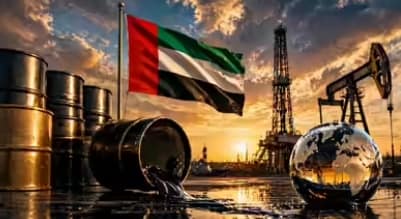
For more than half a century, the UAE has been a key pillar of OPEC, helping coordinate production levels to influence global oil prices. Its exit—effective May 2026—signals a decisive break from collective discipline toward a more independent, market-driven strategy. Officials in Abu Dhabi framed the decision as a matter of long-term national interest, reflecting both evolving production capacity and shifting geopolitical priorities.
“The time has come to focus our efforts on what our national interest dictates,” the UAE government said in an official statement, underscoring a strategic pivot away from group constraints toward sovereign control of output and investment direction.
The timing is critical. The war-linked disruptions in the Gulf—particularly fears of blockades and shipping instability—have already driven oil prices above $110 per barrel, amplifying concerns over global supply security. Analysts argue that the UAE’s departure adds a new layer of uncertainty to an already fragile market. “This is a pivotal moment for the oil system,” said Suhail Al Mazrouei, noting that the country’s policy shift is aligned with “long-term market fundamentals” and the need for flexibility.
At its core, the decision reflects growing tensions within OPEC itself. The UAE, one of the group’s largest producers, has long expressed frustration with production quotas that limit its ability to fully utilise expanding capacity. With output potential approaching 5 million barrels per day, Abu Dhabi increasingly views such restrictions as economically counterproductive.
Beyond economics, geopolitics has played a decisive role. The Iran-linked conflict has exposed vulnerabilities in Gulf security arrangements and raised questions about collective responses within regional alliances. Analysts suggest the UAE is now pursuing a strategy of “strategic autonomy,” recalibrating both its energy policy and broader international alignments.
“This move is not just about oil,” said Anwar Gargash. “It reflects a wider reassessment of alliances and how we secure our economic future in an increasingly unstable region.”
For OPEC, the implications are profound. The loss of one of its most capable and technologically advanced members weakens the group’s cohesion and its long-standing ability to manage global supply. Some analysts warn that this could mark the beginning of a more fragmented oil market, where national strategies override coordinated action.
Yet, the immediate impact may be tempered by the very crisis that triggered the shift. With supply routes constrained and geopolitical risks elevated, markets remain tight regardless of OPEC dynamics. Over the longer term, however, the UAE’s exit could reshape pricing power, production strategies, and the balance of influence in global energy.
In a world already navigating the transition toward cleaner energy, the UAE’s move underscores a deeper truth: the age of unified oil diplomacy is fracturing, replaced by a more complex—and uncertain—energy order.

