



In a moment rich with symbolism, diplomacy, and cultural sensitivity, King Charles III and Queen Camilla hosted Bola Ahmed Tinubu and First Lady Oluremi Tinubu at Windsor Castle, marking the first Nigerian state visit to the United Kingdom in 37 years. The two-day visit, steeped in royal tradition yet thoughtfully adapted for the Muslim holy month of Ramadan, stands as a defining moment in contemporary UK–Nigeria relations.
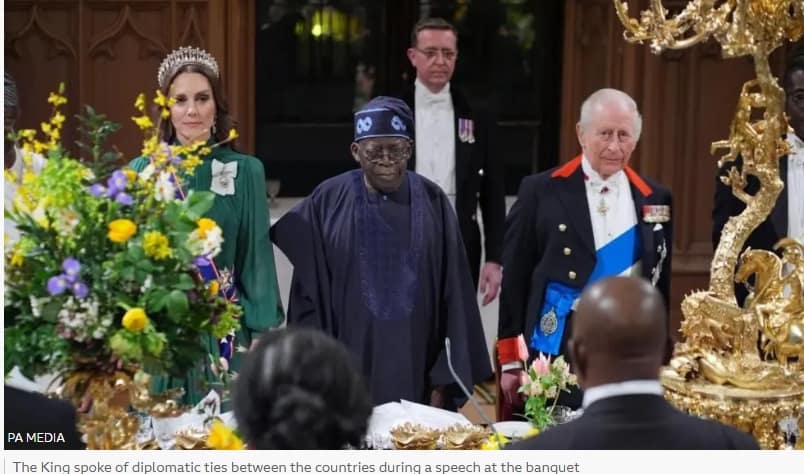
From the very outset, the visit signalled both grandeur and intention. President Tinubu and his wife were received with full ceremonial honours, reflecting the enduring diplomatic ties between the two nations. Their arrival was met with a carefully choreographed display of British pageantry, beginning with a reception by senior royals including Prince William and Catherine, Princess of Wales at Fairmont Windsor Park, before proceeding to Windsor Castle for the formal welcome.

As the royal procession entered the castle’s quadrangle, a guard of honour stood in immaculate formation while the band of the Grenadier Guards performed both the Nigerian and British national anthems. Under clear spring skies, President Tinubu inspected the troops, with King Charles walking just behind him—a subtle yet powerful gesture underscoring mutual respect and partnership.
The ceremonial welcome was followed by a carriage procession and military parade within the castle grounds, evoking centuries-old traditions that continue to define British statecraft. Yet this visit was not merely about spectacle. It was carefully shaped to reflect modern realities, including religious observance, cultural diversity, and evolving geopolitical priorities.
One of the most striking features of the visit was its adaptation to Ramadan. In recognition of the fasting month observed by Muslims worldwide, the usual state visit programme was thoughtfully adjusted. A formal luncheon, traditionally hosted by the monarch, was omitted. Instead, provisions were made for a prayer room within Windsor Castle, allowing Muslim guests to observe their religious duties in a setting of dignity and respect.
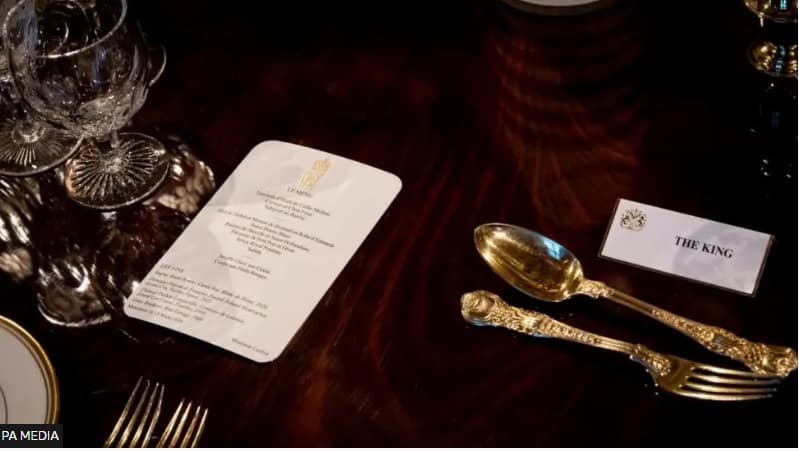
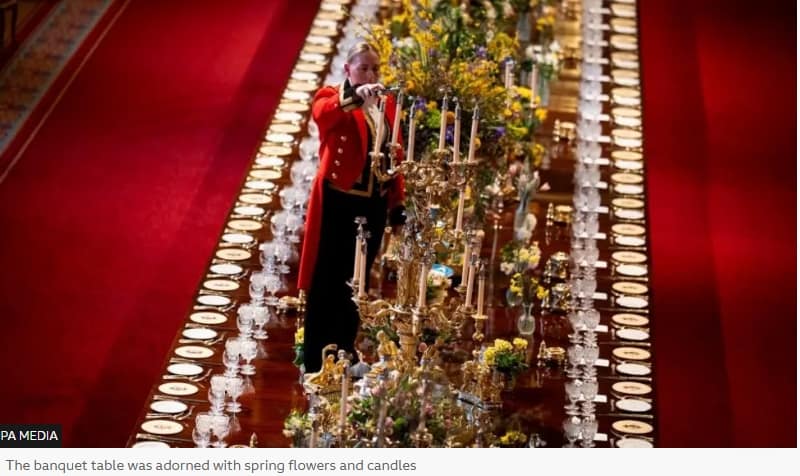
The state banquet, held in the magnificent St George’s Hall, was similarly tailored. While maintaining its customary elegance—with long tables adorned with spring flowers, candles, and fine tableware—the menu was entirely meat-free, reflecting both inclusivity and sensitivity to dietary considerations. Guests were also offered a specially crafted non-alcoholic cocktail, the “crimson bloom,” which blended the Nigerian drink Zobo with English rose soda, hibiscus, and ginger syrup. Alcoholic beverages, including fine wines, port, and whisky, were available for those who wished.

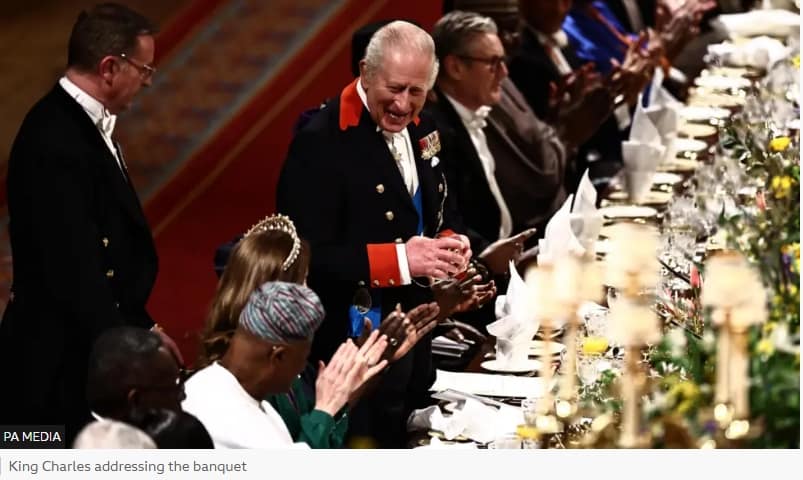
In his banquet speech, King Charles III struck a tone that was both reflective and forward-looking. Beginning with a greeting in Yoruba, he paid tribute to the deep cultural and human connections between the United Kingdom and Nigeria, describing the Nigerian community in Britain as a “living bridge” between the two nations.

“People of different faiths can, do, and must live alongside one another in peace,” the King declared, emphasising the importance of religious tolerance in an increasingly complex world. He went on to describe Nigeria as “an economic powerhouse, a cultural force and an influential diplomatic voice,” highlighting its growing global significance.

The King also acknowledged the shared cultural landscape, noting how “Afrobeats fills our concert halls and Nollywood captivates our screens,” a recognition of Nigeria’s expanding influence in global entertainment and the arts. Yet his speech did not shy away from history. In a candid reflection on the legacy of colonialism, he spoke of the “painful marks” of the past, adding, “I do not seek to offer words that dissolve the past, for no words can,” while expressing hope for a future built on mutual respect and shared progress.
The banquet brought together an extraordinary gathering of guests, reflecting the breadth of UK–Nigeria connections. Among those present were prominent figures such as Maro Itoje, Olympic champion Christine Ohuruogu, and celebrated poet Ben Okri. They were joined by political leaders, cultural icons, and members of the royal family, including Keir Starmer.

The broader programme of the visit blended ceremonial tradition with substantive engagement. Official gifts were exchanged, symbolising goodwill and cultural appreciation. The King and Queen presented handcrafted pottery, a silver photo frame, and an enamel bowl, while President Tinubu offered a traditional Yoruba statuette and a jewellery box honouring notable Nigerian women.
Beyond the pageantry, the visit carried significant diplomatic weight. It comes at a time when both nations are seeking to strengthen economic and strategic ties. With more than 270,000 Nigerian-born residents in the UK, the human connection between the two countries is already profound. This visit aims to build on that foundation, transforming historical links into a modern partnership centred on trade, investment, and shared innovation.
“This state visit is about turning a historic relationship into a modern economic partnership—transforming trust into opportunity,” said Nigeria’s government spokesman, Mohammed Idris. His remarks reflect a broader ambition to deepen collaboration, particularly in sectors such as financial services, technology, and infrastructure.
The visit also carried an interfaith dimension. President Tinubu, a Muslim, and First Lady Oluremi Tinubu, a Christian, participated in an interfaith event at Windsor Castle, symbolising unity across religious lines. This aspect of the visit resonated strongly with King Charles’s longstanding commitment to interfaith dialogue and mutual understanding.
However, the backdrop to the visit was not without challenges. Developments in Nigeria, including recent attacks in the north-eastern state of Borno attributed to Boko Haram militants, served as a reminder of the security issues facing the country. Against this context, the emphasis on partnership and cooperation took on added urgency.
Ultimately, the state visit represents more than a ceremonial occasion. It is a statement of intent—a reaffirmation of a relationship that has evolved over decades and continues to adapt to new realities. By blending tradition with inclusivity, and history with forward-looking ambition, the visit underscores the potential for the United Kingdom and Nigeria to navigate the complexities of the modern world together.
As King Charles concluded in his address, the future must be “worthy of those who bore the pains of the past.” In Windsor, amid the grandeur of royal ceremony and the quiet reflection of Ramadan, that future was not only imagined—it was actively being shaped.

