




As the Iran war drags on, Bangladesh is being forced into a critical reassessment of its energy sector—one that goes beyond short-term survival and into long-term structural reform. What began as an external shock has now evolved into a defining test of the country’s economic resilience and policy direction.
At the centre of the crisis is Bangladesh’s heavy dependence on imported fuel. With nearly all of its energy needs tied to global markets, disruptions linked to the conflict—particularly around key supply routes like the Strait of Hormuz—have driven up costs and strained supply chains.
The financial pressure is mounting rapidly. Recent estimates suggest that rising global fuel prices have added between $760 million and $830 million per month to Bangladesh’s energy import bill, pushing the sector toward what analysts describe as a “fiscal emergency.”
In response, the government has moved swiftly to stabilise the situation in the short term. Measures include reducing working hours, enforcing early market closures, and urging industries to cut electricity consumption. These steps are designed to conserve energy, manage limited supplies, and prevent a deeper crisis.
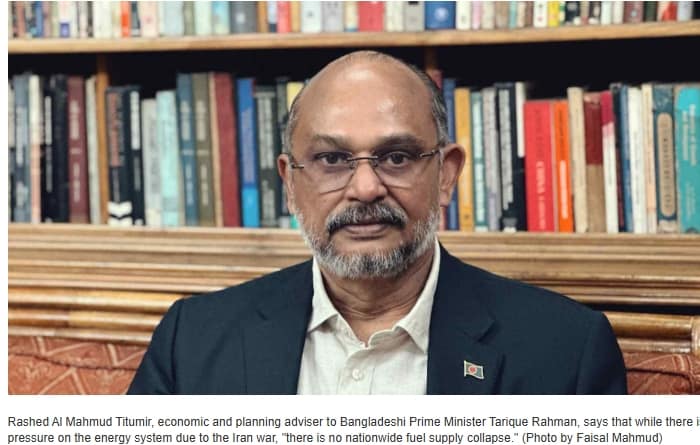
Yet policymakers acknowledge that these are temporary fixes. According to economic advisers to the Prime Minister, the immediate priority is stabilisation—but the real challenge lies in addressing long-standing structural vulnerabilities.
“If the war continues for a longer period, it will create pressure on us,” a senior adviser noted, underscoring the fragile balance between managing current shocks and preparing for prolonged disruption.
The deeper issue is systemic. Bangladesh’s economy remains highly sensitive to global energy volatility, with limited domestic capacity to absorb shocks. This exposure is now being laid bare, as fuel shortages ripple across industries, transport networks, and everyday life.
Factories are adjusting production schedules, fuel queues are lengthening, and key sectors such as agriculture and manufacturing are facing rising input costs. The knock-on effects extend to inflation, foreign exchange reserves, and overall economic stability.
The crisis has also triggered broader concerns about social and economic stability. Reports of panic buying, supply inconsistencies, and rising public anxiety highlight how quickly energy disruptions can translate into wider societal pressures.
Against this backdrop, calls for structural reform are gaining urgency. Analysts and policymakers alike are pointing to the need for:
- Diversification of energy sources
- Increased investment in renewables
- Reduced reliance on volatile global fuel markets
- Stronger domestic energy infrastructure
The current situation is increasingly seen as a turning point—a moment that could reshape Bangladesh’s energy strategy for decades to come.
While short-term measures may help cushion the immediate impact, they do little to address the underlying fragility. The longer the conflict persists, the clearer it becomes that temporary adjustments are not enough.
For Bangladesh, the lesson is stark: energy security is no longer just an economic issue—it is a matter of national resilience. The Iran war may have triggered the crisis, but its legacy could well be a fundamental transformation of how the country powers its future.

