




The ripple effects of the ongoing Iran war are being felt far beyond the battlefield, reaching deep into the everyday lives of households and businesses in Japan. From rising utility bills to increased food prices, the crisis is steadily tightening its grip on one of the world’s most energy-dependent economies.
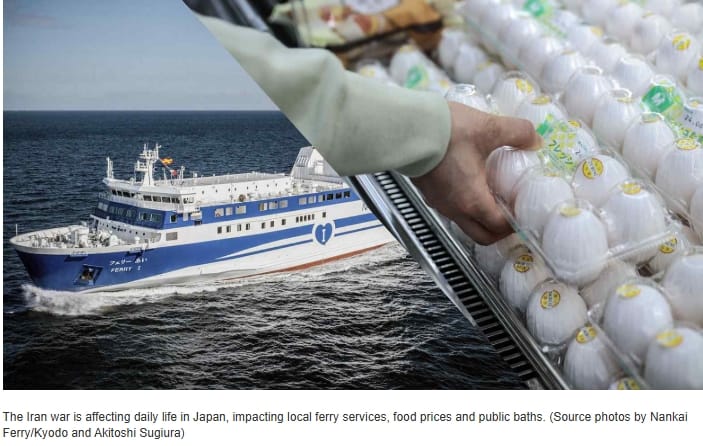
At the heart of the disruption lies energy. Japan relies heavily on imported oil and liquefied natural gas, much of which passes through the strategically vital Strait of Hormuz. With supply routes destabilised, fuel costs have surged, pushing up electricity prices and straining both households and industries.
The impact is immediate and visible. Businesses—from manufacturers to small service providers—are grappling with higher operational costs, while consumers are beginning to feel the squeeze in daily expenses. Analysts warn that prolonged disruption could trigger a return to nationwide energy-saving measures, a familiar but unwelcome reality in a country still shaped by past energy crises.
Economic indicators are already showing signs of stress. Recent data suggests weakening momentum, with declines in industrial output linked to reduced production in key sectors such as automobiles and semiconductors. The situation is further complicated by inflationary pressures, as rising oil prices feed into broader cost increases across the economy.
The financial system is also under strain. Government bond yields have climbed to multi-decade highs, while the yen has weakened significantly, reflecting growing uncertainty and capital market volatility. Policymakers now face a difficult balancing act—supporting economic growth while managing inflation driven by external shocks.
At the same time, pressure is mounting on the Bank of Japan to respond. Some analysts believe interest rate hikes may be necessary to contain inflation, though such moves risk slowing an already fragile recovery.
For businesses, the outlook is increasingly uncertain. Energy-intensive industries, including chemicals, transport, and manufacturing, are particularly exposed. Rising input costs are squeezing margins, and smaller firms are especially vulnerable, with some already facing financial distress.
Yet perhaps the most striking impact is on everyday life. Higher electricity bills, rising food prices, and the possibility of conservation measures mean that the consequences of a distant conflict are being felt in kitchens, offices, and public spaces across Japan.
If the conflict persists, the effects could deepen, reshaping consumer behaviour, slowing economic growth, and testing the resilience of Japan’s energy strategy. What began as a geopolitical crisis is rapidly evolving into a full-scale economic challenge—one that underscores the fragile interdependence of the global economy.
In Japan, the message is becoming clear: the cost of war is no longer distant—it is now part of daily life.

