



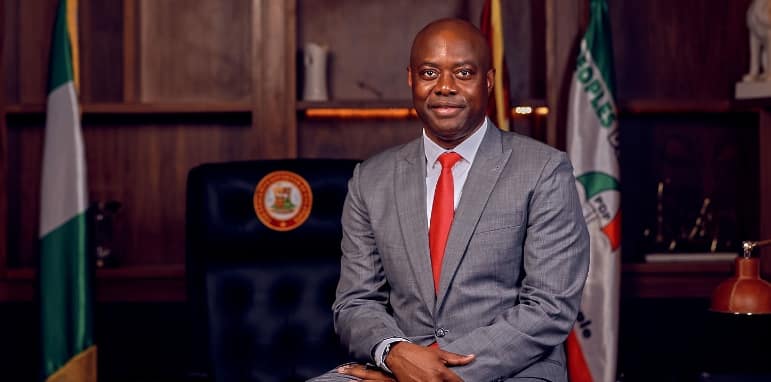
Nigeria’s democratic journey, though resilient, stands at a critical crossroads. In a firm and timely intervention, Oyo State Governor, Seyi Makinde, has warned against the dangers of the country sliding into a one-party state—an outcome he believes would undermine the very essence of democratic governance.
Speaking with clarity and conviction, Makinde stressed that democracy thrives not on dominance, but on competition, accountability, and plurality of voices. According to him, any political environment that suppresses opposition or weakens alternative platforms ultimately erodes public trust and institutional balance.
“Nigeria must not become a one-party state. Democracy is strengthened when there are viable options, when people can choose, and when power is constantly checked,” he stated.
His remarks come at a time when concerns are growing over political realignments, defections, and the increasing concentration of power within a single political structure. While political shifts are not uncommon in democratic systems, Makinde cautioned that the pattern must not evolve into a culture where opposition becomes ineffective or irrelevant.
For Makinde, the issue goes beyond party politics—it is about safeguarding the future of governance in Nigeria. A one-party system, he implied, risks creating complacency in leadership, reducing the incentive for performance, and weakening democratic institutions that rely on checks and balances.
He emphasized that strong opposition is not an obstacle to governance but a necessary pillar of democracy. Constructive criticism, he argued, ensures that governments remain responsive and accountable to the people.
“Opposition is not the enemy of progress; it is a partner in ensuring that governance delivers real value to the people,” he noted.
Makinde also highlighted the responsibility of political actors, institutions, and citizens in preserving democratic integrity. He urged leaders across party lines to prioritise national interest over political expediency, warning that short-term gains could have long-term consequences for the country’s stability.
In his view, democracy must be actively protected, not passively assumed. This includes strengthening electoral processes, promoting political inclusion, and ensuring that all voices—regardless of affiliation—have a fair chance to be heard.
Beyond the political class, Makinde’s message extends to the electorate. He called on citizens to remain vigilant, engaged, and discerning, reminding them that democracy ultimately belongs to the people.
“The power of democracy lies with the people. When citizens demand accountability and transparency, the system works. But when participation declines, democracy weakens,” he said.
His stance resonates with broader global concerns about democratic backsliding, where dominant-party systems have, in some cases, led to reduced freedoms and weakened institutions. By raising this issue now, Makinde positions himself as a voice advocating for balance, fairness, and the preservation of democratic ideals.
Ultimately, his warning is both a caution and a call to action. Nigeria’s strength, he suggests, lies in its diversity—of people, perspectives, and political choices. Preserving that diversity within the political space is essential for sustainable development and national cohesion.
As the country continues to evolve politically, Makinde’s message serves as a reminder that democracy is not just about winning elections—it is about maintaining a system where competition is fair, governance is accountable, and power remains truly in the hands of the people.

