




An Iranian delegation is expected to arrive in Islamabad on Tuesday for renewed talks with Pakistan, according to senior Pakistani officials, marking a potential diplomatic opening despite escalating tensions involving the United States and ongoing disputes over maritime restrictions affecting Iranian ports.
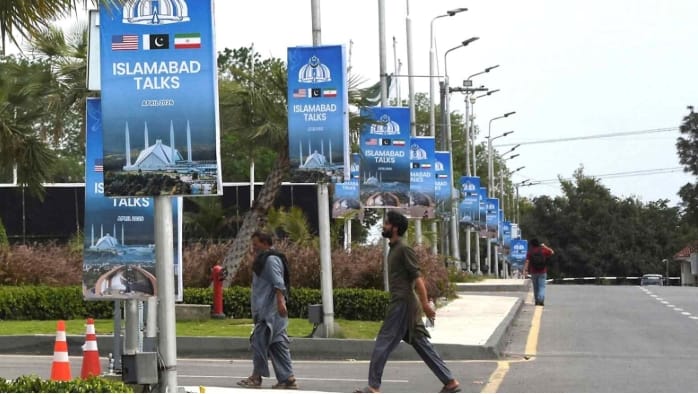
The development comes amid conflicting signals from Tehran, which has publicly stated it does not intend to send negotiators while what it describes as a U.S. naval blockade continues to restrict access to key shipping routes. However, Pakistani sources familiar with the matter insist that preparations for the visit are already underway.
An official in the Pakistani foreign policy establishment, speaking on condition of anonymity, confirmed the expected arrival. “We are anticipating the Iranian delegation in Islamabad as planned,” the official said. “Despite the rhetoric from both sides, diplomatic channels remain open, and there is still willingness to engage.”
The talks are seen as a continuation of earlier discussions that collapsed on April 12 without reaching any agreement. Those negotiations reportedly broke down over disagreements related to regional security arrangements, maritime access, and broader geopolitical alignments in the Gulf and South Asian corridor.
A second Pakistani official described the renewed engagement as fragile but necessary. “The situation is delicate, but dialogue is the only viable path forward,” the official said. “Both sides recognise the risks of escalation, especially given the current regional environment.”
Tensions between Iran and external naval forces have intensified in recent weeks, particularly in relation to shipping lanes that are critical for global energy flows. While Iran has accused the United States of imposing restrictive measures on its maritime operations, Washington has maintained that its naval presence is aimed at ensuring freedom of navigation and deterring destabilising activity in the region.
Despite the strained backdrop, Pakistan has continued to position itself as a potential mediator, leveraging its geographic and diplomatic ties with both Iran and Western partners. Officials in Islamabad believe that preventing further deterioration in Iran-Pakistan relations is crucial for regional stability, particularly given shared borders and interconnected security concerns.
A senior regional analyst based in Islamabad said the planned visit reflects “a pragmatic recognition on both sides that disengagement carries higher risks than dialogue.” He added, “Even when public statements are sharply worded, backchannel diplomacy often continues because the cost of a breakdown is too high for either party.”
The collapse of the April 12 talks had raised concerns that diplomatic momentum was being lost, with both sides hardening their positions. However, the decision to proceed with another round of engagement suggests that behind-the-scenes communication channels remain active.
Iranian officials have not publicly confirmed the delegation’s travel plans, but sources in Pakistan indicate that logistical arrangements have been made for high-level meetings involving foreign ministry representatives and security officials.
Observers note that the outcome of the Islamabad discussions could have broader implications for regional stability, particularly at a time when multiple geopolitical crises are unfolding simultaneously across the Middle East and South Asia.
A diplomatic source familiar with the negotiations said, “The key question is whether both sides are prepared to compartmentalise broader geopolitical tensions and focus on specific areas of mutual interest. If they can do that, there is still room for progress.”
As the situation develops, both countries are expected to tread carefully, balancing domestic political pressures with the need to avoid further escalation. For now, all eyes are on Islamabad, where the next phase of a fragile diplomatic process is set to begin under intense regional scrutiny.

