




Questions around governance, advisory appointments, and security vetting in the UK have resurfaced following renewed public discussion about the roles of senior political advisers such as Olly Robbins and veteran Labour figure Lord Peter Mandelson, particularly in relation to how sensitive government influence networks are assessed and cleared within Whitehall systems.
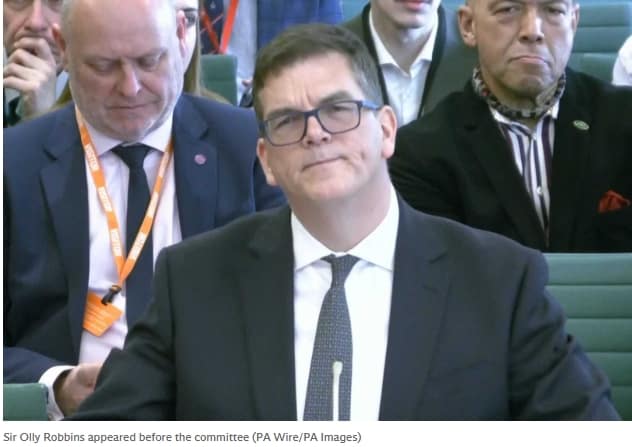
At the centre of the discussion is not a specific allegation of wrongdoing, but a broader concern: how individuals who operate close to the highest levels of government decision-making are vetted, reassessed, and positioned within the evolving structure of UK political and advisory life.
Olly Robbins, a senior British civil servant best known for his role as the UK’s chief Brexit negotiator under Theresa May, has long been regarded as one of the most influential unelected figures in modern UK government. His work placed him at the heart of complex negotiations with the European Union, shaping critical policy direction during one of the most politically sensitive periods in recent British history.
Meanwhile, Lord Mandelson, a former Cabinet minister and key figure in the New Labour era, has remained an influential voice in international diplomacy, business advisory roles, and political commentary, despite stepping away from frontline electoral politics years ago.
The renewed focus on both figures reflects a wider conversation about how Britain manages the intersection between politics, diplomacy, and security clearance—particularly when individuals move between government, advisory positions, and private sector influence.
A former Whitehall official, speaking in general terms about the system, noted:
“Security vetting is not a one-time process. It is meant to be continuous, but in practice there are grey areas when individuals transition between roles of political influence and advisory capacity.”
This comment reflects a long-standing debate within UK governance structures: whether existing vetting systems are fully equipped to deal with modern networks of influence, where political advisers, consultants, and former ministers often operate in overlapping public and private spheres.
In Robbins’ case, his post-government career trajectory and continued association with policy advisory environments have kept him within circles where sensitive economic and geopolitical issues are discussed. Similarly, Mandelson’s advisory and diplomatic engagements—particularly in international trade and geopolitical dialogue—have maintained his visibility in strategic policy conversations.
Critics of the current system argue that the issue is not about individual integrity, but about institutional clarity. They suggest that the boundaries between formal government service, informal advisory roles, and private sector influence are increasingly blurred.
A governance researcher based in London explained:
“The modern challenge is not just who is vetted, but what level of influence requires vetting. In a world of informal advisory networks, the system can appear reactive rather than preventive.”
Supporters of the existing framework, however, argue that the UK’s security vetting system remains one of the most robust globally, particularly for individuals directly handling classified information. They caution against conflating influence with access, noting that not all advisory roles require the same level of clearance.
The conversation has also been fuelled by broader political sensitivity around transparency in government appointments and advisory structures. As public scrutiny of political decision-making increases, questions about who advises government figures—and under what safeguards—have gained renewed attention.
A policy commentator summarised the tension:
“There is always a balance between openness and security. The issue is ensuring that influence is properly understood, even when formal access is not involved.”
Neither Robbins nor Mandelson has been accused of any security breach or misconduct in relation to vetting processes. However, their prominence in political and policy ecosystems makes them natural reference points in discussions about how modern governance manages influence, access, and accountability.
The Cabinet Office and related oversight bodies continue to maintain that security vetting procedures are regularly reviewed and updated in line with evolving risks, particularly around cyber security, foreign influence, and sensitive policy exposure.
Still, the broader debate persists: whether Britain’s traditional systems of vetting and clearance are fully adapted to a political environment where influence is often informal, transnational, and highly networked.
Ultimately, the discussion surrounding Olly Robbins, Lord Mandelson, and security vetting is less about individuals and more about systems—how they adapt, how they are enforced, and whether they remain fit for purpose in an era where the boundaries of political power are increasingly fluid and complex.

