



Nigeria’s political landscape is experiencing renewed turbulence as opposition realignments, governance pressures, and security concerns converge ahead of the next electoral cycle, keeping national attention firmly fixed on Abuja.
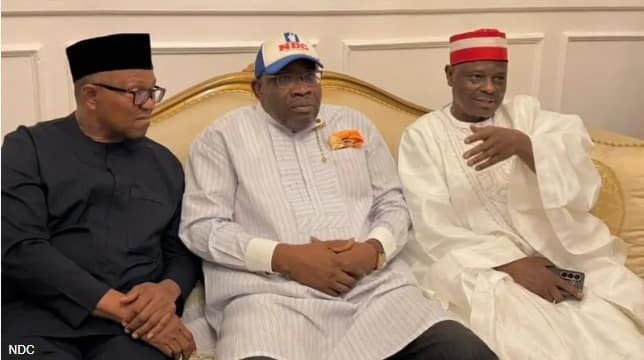
One of the most significant developments is the fragmentation of a major opposition alliance that had been positioned as a united front against the ruling party in 2027. The coalition—initially expected to bring together several high-profile political figures—has suffered internal breakdowns, with key leaders withdrawing over disagreements and mistrust. The collapse of the arrangement has raised questions about the opposition’s ability to mount a coordinated challenge in future elections.At the same time, broader political anxiety is growing over allegations of institutional interference. Recent protests at the Federal High Court in Abuja highlighted public concern about attempts to deregister opposition parties and the perceived weakening of democratic checks and balances. Demonstrators accused authorities of undermining electoral fairness, while security forces were deployed to contain tensions around the court premises.
The ruling administration, led by Bola Tinubu, is also under pressure on the economic and security fronts. The president recently declared insecurity and poverty as national emergencies, describing them as serious threats to livelihoods, productivity, and national stability. This declaration reflects mounting concern over worsening security conditions in several regions and persistent economic hardship affecting households across the country.
Public discourse has increasingly focused on whether current reforms are sufficient to address structural challenges such as inflation, unemployment, and rising living costs. Labour groups and civil society organisations have warned that Nigeria is approaching a critical tipping point unless urgent interventions are implemented.
Meanwhile, political observers are closely watching emerging opposition movements, including new party formations and shifting alliances among major political actors. These realignments are seen as early positioning for what is expected to be a highly competitive and unpredictable 2027 election cycle.
Across the country, citizens are expressing mixed sentiments—ranging from frustration over economic hardship to cautious optimism about political renewal. However, the prevailing mood suggests a growing demand for stronger accountability, improved governance, and credible alternatives within the political system.
As Nigeria moves deeper into a pre-election phase, the intersection of opposition instability, governance pressure, and public discontent is shaping what may become one of the most consequential political periods in recent years.

