



For decades, African leaders have spoken passionately about continental unity, regional integration, and economic independence. Yet for millions of Africans, travelling across the continent remains more difficult than travelling to Europe, Asia, or the Middle East. The irony is stark: a continent rich in shared history, culture, and economic potential continues to maintain some of the world’s most restrictive intra-regional mobility systems.
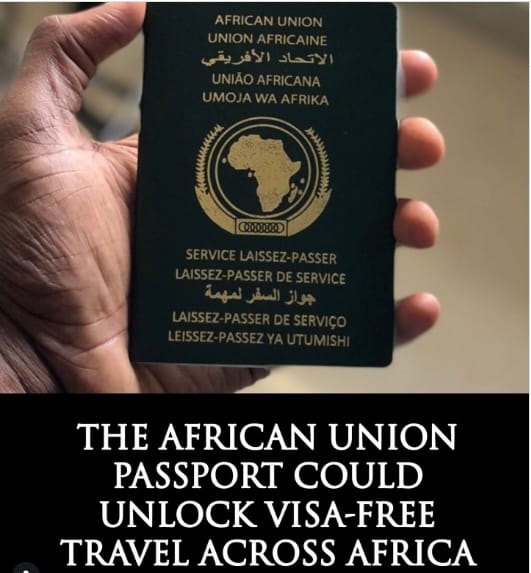
The question is no longer whether Africa needs greater visa-free access among its nations, but whether its leaders possess the political courage to embrace the economic transformation such openness could deliver.
A visa-free Africa would not simply be a symbolic gesture of Pan-Africanism. It would be an economic revolution.
Trade among African countries remains significantly lower than in Europe or Asia. According to the African Development Bank, intra-African trade accounts for less than 20 percent of total African trade, compared with nearly 70 percent within Europe. One major reason is the difficulty Africans face when attempting to move, trade, attend conferences, invest, or establish businesses across borders.
“Freedom of movement is not merely about people crossing borders; it is about ideas, innovation, labour, and capital flowing where they are most needed,” as many African economists have argued in recent years.
Small and emerging economies stand to gain enormously from visa-free access. Countries with developing tourism sectors could attract regional travellers more easily. Small business owners, traders, students, creatives, and entrepreneurs would gain direct access to wider markets without expensive visa barriers, lengthy embassy processes, or humiliating travel restrictions.
Across Africa, informal trade already sustains millions of families, particularly women-led businesses operating across borders. Simplifying movement would formalise many of these economic activities, improve tax revenues, strengthen local industries, and encourage investment in transport and infrastructure.
The African Continental Free Trade Area (AfCFTA) itself cannot fully succeed without freer movement of people. Goods do not move themselves. Investors cannot operate effectively if obtaining visas becomes an obstacle. Skilled workers, engineers, teachers, healthcare professionals, and innovators need mobility if Africa is to compete globally.
A Kenyan technology expert should be able to work in Ghana as easily as a European can work within the European Union. A Nigerian entrepreneur should be able to attend trade fairs in Rwanda without bureaucratic delay. An academic from Senegal should be able to collaborate with universities in South Africa without unnecessary restrictions.
The benefits extend beyond economics. Visa-free access could strengthen African identity, reduce xenophobia, and foster deeper cultural understanding. Young Africans would increasingly see the continent not as fragmented territories inherited from colonial borders, but as a shared economic and social space.
Yet despite these obvious advantages, many African leaders remain hesitant.
The greatest concern is security.
Governments fear that open borders may facilitate terrorism, organised crime, human trafficking, illegal migration, arms smuggling, and cross-border insurgencies. In regions already battling instability, leaders worry that relaxing border controls could worsen insecurity rather than improve prosperity.
These concerns are not without merit. The Sahel region continues to face extremist violence. Human trafficking networks operate across North and West Africa. Weak border management systems in some countries make effective monitoring difficult. In addition, some governments fear economic migration pressures from neighbouring states with weaker economies or ongoing conflicts.
There is also a political dimension rarely discussed openly. Visa restrictions often function as tools of state control. Some governments remain cautious about exposing domestic labour markets to regional competition or fear public backlash if citizens perceive foreigners as competing for jobs, housing, or public services. Others worry that political dissidents, activists, or opposition movements could operate more freely across borders.
In truth, the reluctance reflects a tension between sovereignty and integration. African leaders overwhelmingly support integration in speeches and summits, but implementation requires surrendering some control over borders, immigration systems, and labour mobility. Many governments are simply not yet ready for that level of openness.
However, maintaining restrictive systems carries its own costs. Africa risks remaining economically fragmented while other regions deepen integration and strengthen collective competitiveness.
The solution is not reckless openness, but managed mobility. Visa-free access can be introduced gradually through regional blocs, biometric identification systems, intelligence-sharing agreements, harmonised immigration databases, and stronger border technology. Rwanda, Seychelles, Benin, and Ghana have already demonstrated that more open visa regimes can coexist with effective national security systems.
Incentives will also matter. Wealthier African economies and continental institutions could support weaker states with border modernisation funding, digital immigration systems, training, and counterterrorism cooperation. The African Union could establish mobility adjustment funds to help countries manage transitional pressures.
Economic incentives could encourage participation. States embracing freer movement could receive priority access to regional infrastructure funding, trade financing, tourism partnerships, and development investment programmes.
Importantly, leaders must also educate their populations about the long-term benefits of integration. Fear often grows where misinformation dominates. Citizens must see visa-free access not as a threat, but as an opportunity for jobs, commerce, education, and continental advancement.
Kwame Nkrumah once declared, “The forces that unite us are intrinsic and greater than the superimposed influences that keep us apart.”
His words remain relevant today. Africa possesses the youngest population in the world, immense natural wealth, expanding digital innovation, and growing consumer markets. But no continent can fully prosper while its own people struggle to move freely within it.
Visa-free Africa is not simply about passports and border crossings. It is about unlocking Africa’s collective economic power, empowering its people, and transforming the continent from a collection of isolated markets into a globally competitive force.
The future of Africa may well depend on how boldly it chooses openness over hesitation.

