




Shipping lanes between China and the United States are facing a new challenge as operators of China-built vessels increasingly steer clear of American ports. Industry analysts warn that by October, only a fraction of these ships may call at the U.S., reshaping trade flows at a time of already heightened tensions between Washington and Beijing.
According to new estimates from Drewry, a leading maritime research firm, China-built vessels could account for as little as 5% of port calls in the United States within the next two months. This marks a sharp decline from current levels and underscores the impact of impending port fee hikes that target vessels originating from Chinese shipyards.
“The economics are shifting rapidly,” said Simon Heaney, Senior Manager of Container Research at Drewry. “Once the new fees come into play, it becomes much less viable for operators to deploy China-built ships on U.S. services. Many carriers are already looking to reconfigure their networks.”
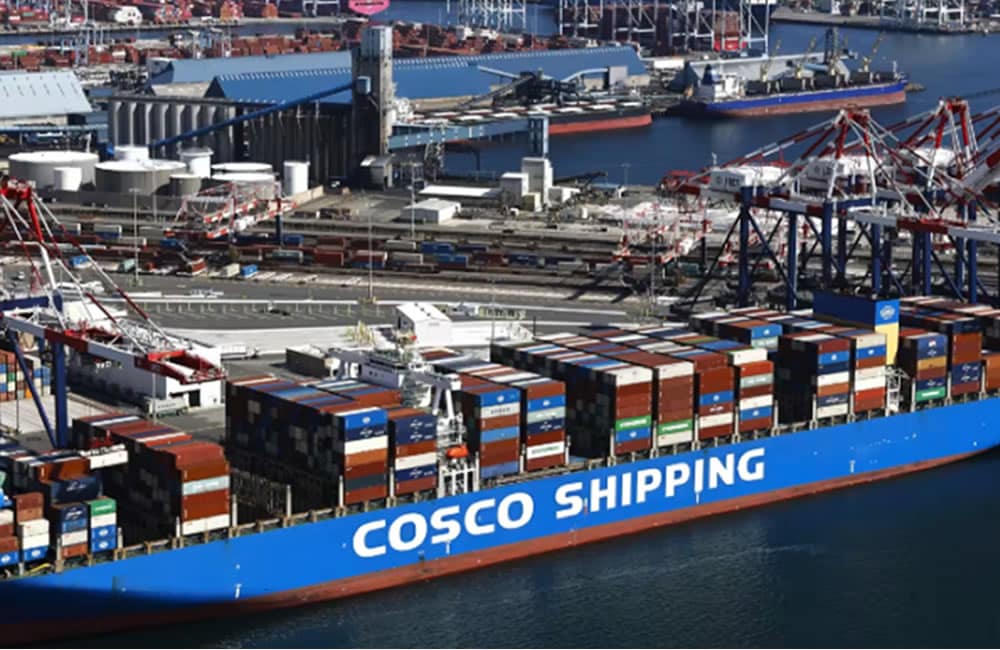
The U.S. Federal Maritime Commission (FMC) has been considering a tiered fee structure that would charge higher rates for ships constructed in Chinese yards, a move framed as a response to concerns about unfair state subsidies and national security risks. Though the final details are still under consultation, anticipation of the measure has already begun reshaping market behavior.
Shipowners and charterers are weighing alternatives. Some are shifting their most modern, non-China-built tonnage onto trans-Pacific lanes, while relegating Chinese-built ships to routes in Asia, Africa, and parts of Europe. Others are considering longer detours to avoid fees altogether.
“This isn’t just about cost—it’s about predictability,” explained a senior executive at a European carrier who requested anonymity. “If the rules keep changing, you can’t risk sending your assets into markets where you don’t know what the next penalty will be.”
The development comes at a delicate moment for global trade. The U.S. has already imposed a series of tariffs on Chinese goods, and Beijing has responded with its own measures. Now, the maritime sector—long seen as a neutral conduit for commerce—is being pulled deeper into the geopolitical fray.
Critics of the planned fees argue they could raise shipping costs for U.S. importers and exporters, feeding inflationary pressures. “The U.S. depends heavily on efficient maritime supply chains,” said Mei Lin, a trade policy expert at the University of Hong Kong. “If carriers reduce sailings, it will ultimately be American businesses and consumers who bear the cost.”
For now, industry observers expect a period of adjustment as shipping lines reshuffle fleets. The longer-term question is whether these measures will permanently alter global maritime patterns. As Heaney of Drewry noted, “Once operators redesign their networks, history shows they don’t rush back unless the incentives are compelling.”

